


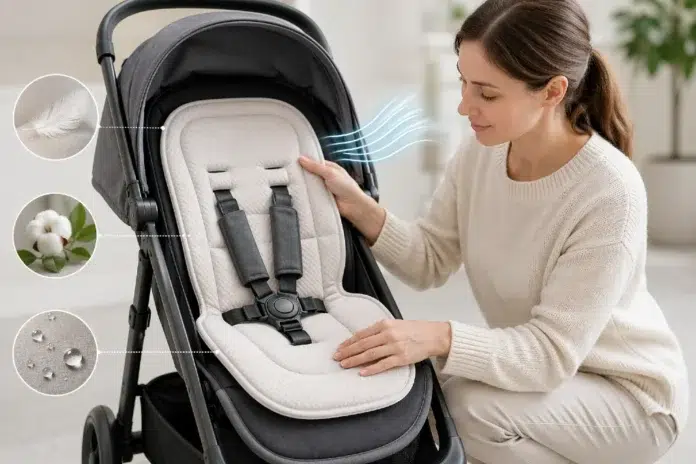
A Pram Liner can seem like a small add-on, but in everyday parenting, it often makes a big difference. It affects comfort, cleanup, temperature control, and even how long your stroller stays in good condition. If you are choosing one for the first time, it helps to know what actually matters before you spend money on the wrong fit.
The best Pram Liner is not just the prettiest one or the one with the most padding. Parents usually end up happiest with a liner that fits well, feels breathable, washes easily, and works with the stroller they already use. When you look at it that way, buying a Pram Liner becomes less about color and more about practicality.
A stroller also has to stay safe and functional. The American Academy of Pediatrics advises parents to pay attention to key stroller safety basics such as proper harness use, brakes, and a stable design, which is a good reminder that any accessory added to a stroller should support safe everyday use rather than interfere with it.
What Is a Pram Liner and Why Do Parents Buy One?
A Pram Liner is a padded insert placed on the stroller or pram seat to create a softer, cleaner, and often more stylish surface for a baby or toddler. Some are universal, while others are made to match a specific stroller model. Most parents buy one for comfort first, then realize the real value shows up in daily life.
It protects the original stroller fabric from crumbs, spills, sunscreen marks, sweat, and the endless mess that comes with family outings. Instead of washing the whole stroller seat every time something leaks or smears, you can remove the Pram Liner and clean that instead.
It can also help with seasonal comfort. In warm weather, a breathable liner can feel less sticky than the stroller’s original upholstery. In cooler weather, extra padding can make the seat feel softer and less harsh. That does not turn a liner into a safety product, but it does make outings more comfortable when chosen carefully.
The First Thing to Check: Fit
Fit is the feature that matters most, and it is the one many parents overlook. A Pram Liner that bunches, slides down, or blocks the harness openings becomes annoying very quickly. It can also make the seat look untidy and feel awkward for your child.
Before buying, look closely at the stroller seat shape. Some seats are narrow and curved. Others are flatter, longer, or more bucket-shaped. A good Pram Liner should sit smoothly along the back and seat without curling up at the sides or leaving large empty gaps.
Harness compatibility is just as important. You want clear, properly placed slots for the stroller straps so the harness can be threaded through cleanly. If the liner covers or distorts the harness position, skip it. The stroller’s safety system should never be compromised by an accessory. That principle aligns with pediatric stroller safety advice that emphasizes proper restraint use and secure stroller function.
Universal vs. Brand-Specific Fit
A universal Pram Liner works for many families because it can move from one stroller to another. That makes it useful if you switch between a full-size stroller and a travel stroller. Still, universal does not always mean perfect.
A brand-specific Pram Liner usually gives a cleaner, more tailored fit. The harness slots, seat contour, and head area often line up better. If you care about appearance and want the liner to stay in place with less adjusting, model-specific options can be worth the extra cost.
Breathable Fabric Matters More Than Extra Padding
A lot of parents assume thicker always means better. In real life, that is not always true. A heavily padded Pram Liner may look luxurious, but if it traps heat or makes the seat feel stuffy, your child may become uncomfortable faster.
Babies and young children can struggle in hot weather more quickly than adults. The NHS notes that babies and young children can become unwell during very hot weather, with risks including dehydration, heat exhaustion, and heatstroke. Signs a baby may be too hot can include feeling hotter than usual on the back or chest, flushed cheeks, and skin that feels sweaty or clammy.
That is why fabric choice matters. Look for breathable cotton, bamboo blends, moisture-wicking mesh panels, or fabrics marketed for airflow. A Pram Liner should feel comfortable against the skin without turning the stroller seat into a heat trap.
This matters especially if you live somewhere warm, walk outdoors often, or use the stroller for longer stretches. In those cases, a lightweight Pram Liner with good airflow often performs better than a thick one with heavy quilting.
Easy Cleaning Is Not Optional
Parents rarely regret buying a Pram Liner that is easy to wash. They often regret buying one that looks beautiful online but becomes a hassle after the first spill, snack crush, or diaper leak.
Check whether it is machine washable. Read whether the shape stays intact after washing and whether the colors fade. A Pram Liner that can handle repeated laundry cycles is far more useful than one that needs delicate treatment every time.
Quick-drying fabric is another underrated feature. If a liner takes forever to air dry, you may end up going without it for longer than you want. Families who use the stroller daily often prefer a Pram Liner that can be washed at night and ready again by the next day.
Darker colors and patterned fabrics also hide minor marks better between washes. Lighter shades can look fresh and elegant, but they show everything. The right choice depends on whether you value aesthetics more or low-maintenance use.
Comfort Should Feel Supportive, Not Bulky
Comfort is one of the biggest reasons parents buy a Pram Liner, but there is a difference between soft and overstuffed. A liner should add a comfortable layer without changing how the child sits in the stroller.
A supportive Pram Liner helps reduce that stiff, flat-seat feeling some strollers have. It can also make older prams feel refreshed instead of worn. This is especially useful if you bought a practical stroller with a basic seat and want to improve the day-to-day ride.
What you do not want is a liner so thick that it pushes your child forward, alters their posture, or makes the harness fit awkwardly. If possible, think in terms of medium padding rather than maximum padding. In many cases, balance works better than excess.
Reversible Designs Can Be More Useful Than They Look
Many parents see reversible liners as a style feature, but they can also be practical. One side may be softer and cozier, while the other may be smoother and cooler. That gives you some flexibility without buying multiple accessories.
A reversible Pram Liner can also help with wear and tear. If one side gets stained or starts looking tired, you have another side ready to use. That extends the life of the product and makes it feel like better value.
For families who like changing the look of the stroller with the seasons, reversible options can also make the stroller feel fresh without requiring a whole new setup.
Anti-Slip Backing Helps More Than Most Product Photos Suggest
One of the most frustrating things about a bad Pram Liner is constant slipping. If it slides down every time you lift your child in or out, it becomes an irritation fast. This is where anti-slip backing, tie points, or secure anchor tabs help.
A liner that stays where it belongs simply feels better made. It also keeps the stroller looking neat and reduces the need for constant adjustments during walks, errands, or travel days.
When reading product descriptions, look for phrases such as non-slip backing, secure strap openings, or seat attachment points. They are not flashy features, but they improve the daily experience more than many decorative details do.
Head and Seat Coverage Should Match Your Child’s Age
A newborn, a six-month-old, and a toddler do not use a stroller in exactly the same way. That is why size and coverage matter. Some Pram Liner designs offer more upper-back and head coverage, while others focus mainly on the seat base.
If your child is younger or naps often in the stroller, a liner with better upper-body coverage can feel more comfortable. If your child is older and more active, you may care more about seat durability and easy cleaning than extra softness near the head area.
There is no single best shape for every family. The right Pram Liner depends on your child’s age, how often the stroller is used, and whether your outings are short neighborhood walks or long days out.
Seasonal Use Is Worth Thinking About Before You Buy
Some parents buy a Pram Liner once and use it all year. Others end up preferring a lighter liner in summer and a warmer one in cooler months. If you live in a place with strong seasonal changes, this is worth considering early.
In hotter weather, keeping babies from overheating matters. The NHS says babies and young children can be affected seriously by hot weather, including dehydration and heat-related illness.
That does not mean a Pram Liner is unsafe by itself. It means parents should choose breathable materials and pay attention to how warm the child feels during use. If your baby feels sweaty, clammy, or hotter than usual on the chest or back, it is a sign to reduce layers and reassess comfort.
For winter, some parents prefer a Pram Liner that adds a little warmth beneath a footmuff or blanket. In summer, they want the opposite. That is why all-season claims should be read carefully. A product may be versatile, but fabric still matters.
Skin-Friendly Materials Make a Real Difference
A Pram Liner sits close to your child’s skin, sometimes for long walks, naps, or errands. That is one reason material quality matters beyond appearance. Rough seams, synthetic fabric that traps heat, or stiff quilting can quickly become irritating.
Soft cotton, bamboo viscose blends, and breathable performance fabrics tend to be popular because they feel gentler. For babies with sensitive skin, many parents also prefer liners without overly harsh finishes or strong chemical odor straight from the package.
You do not need to chase premium labels just for the sake of it. What matters is how the Pram Liner feels, whether it breathes well, and how it performs after several washes.
Don’t Ignore Harness Access and Buckle Space
A stroller can only do its job properly if the harness is used correctly. The American Academy of Pediatrics emphasizes safe stroller basics such as effective brakes and secure use, and that same safety mindset applies when accessories are added.
A Pram Liner should not cover the buckle, crowd the crotch strap, or force the straps into a strange angle. After installation, the harness should still sit flat and adjust as intended. If it feels harder to buckle or tighten properly, the liner is not the right match.
This is one of those features that matters more than color, brand, or trend. If the Pram Liner gets in the way of the harness, it fails the practical test.
Travel-Friendly Design Is a Bonus for Busy Families
Some families keep a stroller mostly for neighborhood use. Others fold it into the car, carry it through airports, or use it constantly while out shopping. If you are in the second group, choose a Pram Liner that works with frequent folding and unfolding.
A bulky liner that has to be removed every time the stroller folds becomes a chore. A thinner, well-fitted Pram Liner often works better for travel strollers and compact frames. It saves time and keeps the routine simple.
For travel, easy washing matters even more. When a snack spill happens in a hotel or on a long day out, you want something practical, not precious.
Style Still Matters, Just Not More Than Function
Parents absolutely care about how a stroller looks, and there is nothing wrong with that. A Pram Liner can refresh an older stroller, match a diaper bag, or make a basic frame look more polished.
Still, style should come after the practical checklist. A good-looking liner that slips, overheats, or washes poorly will not stay lovable for long. The best choice usually blends both: clean design and real usability.
If your stroller is used daily, neutral shades or subtle prints often age better than very trend-driven patterns. But if you love a bold look and the material performs well, there is no reason not to choose it.
A Quick Comparison Table for Parents
| Feature | Why It Matters | What to Look For |
|---|---|---|
| Fit | Prevents bunching and sliding | Correct shape, proper harness slots |
| Breathability | Helps with comfort in warm weather | Cotton, bamboo blend, airflow panels |
| Washability | Makes daily mess easier to manage | Machine washable, quick drying |
| Padding | Adds comfort without bulk | Medium cushioning, supportive feel |
| Grip | Keeps liner from shifting | Anti-slip backing, anchor points |
| Coverage | Matches child’s stage and stroller seat | Full back support, good seat coverage |
| Seasonal use | Improves year-round practicality | Lightweight or reversible design |
| Skin feel | Helps prevent irritation | Soft fabric, smooth seams |
Common Mistakes Parents Make When Buying a Pram Liner
One mistake is buying based on looks alone. Product photos can make almost any Pram Liner appear plush and premium, but real life is about fit, washing, and whether your child seems comfortable after thirty minutes in the seat.
Another mistake is ignoring weather. A thick liner may feel cozy indoors or in winter, but it can become a poor choice in warm conditions. Since overheating in babies and young children is a real concern in hot weather, breathable fabric deserves serious attention.
A third mistake is assuming universal always means compatible. Many universal products technically fit, but not neatly. A sloppy fit may still work, yet it rarely feels as good as a liner designed for the seat shape.
How to Tell If Your Current Pram Liner Is Actually Working
Sometimes parents already own a Pram Liner but are not sure whether it is a good one. A few simple questions help.
Does it stay in place during normal use? Does your child seem sweaty or uncomfortable after longer outings? Is it easy to remove and wash? Do the harness straps thread through cleanly and tighten properly?
If the answer is yes to those questions, your Pram Liner is probably doing its job. If not, the issue may be fit, fabric, or padding, not the idea of using a liner itself.
Final Thoughts Before You Buy
The right Pram Liner should make parenting a little easier, not add another fussy item to manage. It should fit well, feel comfortable, wash without drama, and suit the weather and stroller you actually use.
In simple terms, the best Pram Liner is one that works quietly in the background. It keeps the stroller cleaner, makes the seat more comfortable, and helps your outings feel smoother. That is usually what parents are really paying for.
If you are deciding between two options, choose the one with better fit, breathable fabric, and easier cleaning over the one that is only more decorative. In the long run, practicality tends to win. And if you want to understand the broader history of the baby stroller, it is interesting to see how modern prams and strollers evolved into the everyday essentials parents now rely on.
A thoughtful Pram Liner purchase is rarely about trends alone. It is about comfort, convenience, and making daily walks feel a little more manageable for both parent and child.
FAQs
Is a Pram Liner necessary?
A Pram Liner is not essential in every stroller, but many parents find it useful. It adds comfort, protects the original seat fabric, and makes cleanup much easier.
Can a Pram Liner be used in hot weather?
Yes, but breathable fabric is important. In hot weather, babies and young children can overheat, so lightweight materials and regular comfort checks matter.
How often should I wash a Pram Liner?
That depends on use, but frequent stroller users often wash it weekly or whenever spills happen. A machine-washable Pram Liner is usually the easiest choice for everyday family life.
Are universal pram liners worth it?
They can be, especially if you want flexibility or own more than one stroller. Just make sure the harness slots and overall seat shape work properly with your stroller.
Should I choose thick or thin padding?
Usually, medium padding works best. A Pram Liner should feel supportive and comfortable without making the seat bulky or trapping too much heat.

