


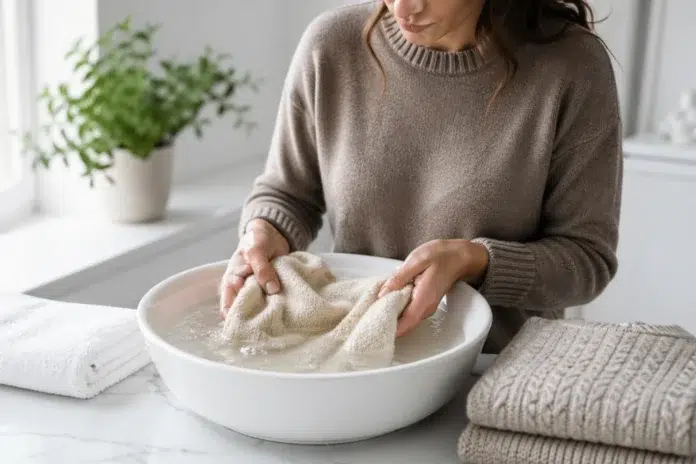
If you have ever pulled a wool sweater out of the wash and realized it looks smaller, rougher, or oddly misshapen, you are definitely not alone. Learning How to Wash Wool Sweater the right way is less about doing something fancy and more about avoiding a few common mistakes. Wool is durable in many ways, but it does not respond well to hot water, rough agitation, or careless drying. When handled gently, though, it can stay soft, cozy, and in great shape for years.
That is what makes wool so interesting. It is naturally odor resistant and does not need constant washing the way many synthetic fabrics do, which means a little restraint actually helps your sweater last longer. Woolmark notes that wool can often be washed less frequently because the fiber is naturally stain resistant, odor resistant, and crease resistant. When it is time to clean it, they recommend lukewarm water, gentle detergent, and careful rinsing rather than aggressive scrubbing or high heat.
In this article, you will learn exactly How to Wash Wool Sweater at home, when to hand wash, when machine washing can work, what products to use, what to avoid, and how to dry and store wool so it stays soft and wearable. If you have a favorite merino pullover, a chunky winter knit, or a delicate wool blend you do not want to ruin, this is the practical routine that makes sense.
Why wool sweaters get damaged so easily in the wash
Wool is not weak, but it is sensitive. The main problem is not water alone. The real issues are heat, friction, and sudden changes in temperature. Those three things can cause shrinking, felting, stretching, and a rough texture that makes the sweater feel older before its time.
That is why wool care instructions sound so repetitive. Cold to lukewarm water matters. Gentle motion matters. Drying flat matters. Woolmark recommends hand washing in clean, lukewarm water of about 30°C with a mild detergent and letting the garment soak briefly before rinsing carefully. Patagonia also advises cold water and gentle settings for merino wool items, along with mild detergent and low-impact drying methods.
A lot of ruined sweaters come from people doing one normal laundry load and assuming wool will behave like cotton. It usually will not.
How to Wash Wool Sweater without shrinking it
The safest answer of How to Wash Wool Sweater is simple. Read the care label first, use a wool-safe detergent, stick with cool or lukewarm water, and dry the sweater flat.
Here is the short version:
- Check the label for “hand wash,” “machine washable,” or “dry clean only”
- Turn the sweater inside out
- Use a mild detergent made for wool or delicates
- Wash in cool to lukewarm water
- Avoid wringing, twisting, or scrubbing
- Rinse thoroughly
- Remove excess water with a towel
- Reshape and dry flat
That basic routine lines up with Woolmark’s garment care advice and with widely accepted sweater care practices from fabric care sources.
Check the care label before you do anything else
Before you fill a sink or start a gentle cycle, look at the tag. This step sounds obvious, but it decides everything.
A wool sweater can fall into one of these categories:
| Care Label Type | What It Usually Means | Best Approach |
|---|---|---|
| Hand Wash Only | The fibers or knit structure need extra care | Hand wash in lukewarm water |
| Machine Washable Wool | Usually treated or structured to handle delicate machine cycles | Use cold water and gentle cycle |
| Dry Clean Only | The brand recommends professional care, often due to structure, lining, embellishment, or dye sensitivity | Follow label, do not guess |
Some wool sweaters are actually blends, and that changes the care routine. Merino wool blends can sometimes handle a delicate machine cycle, but a loosely knit lambswool sweater may do far better with hand washing. The label is not a suggestion. It is the starting point.
The best detergent for washing wool sweaters
One of the easiest ways to damage wool is using the wrong detergent. Standard heavy-duty detergents can be too harsh for natural fibers, especially if they contain strong enzymes, brighteners, or ingredients designed for deep stain removal in sturdier fabrics.
Woolmark specifically recommends a mild, gentle detergent and even suggests using one approved for wool care. The Spruce also advises a gentle detergent suitable for wool and emphasizes that rough washing plus harsh detergent is a bad combination for sweaters.
Look for these words on the bottle:
- Wool detergent
- Delicate wash
- Mild laundry detergent
- pH-balanced for natural fibers
Avoid bleach completely. Avoid fabric softener in most cases too, especially if you are not sure how the sweater will react. If residue builds up, the fabric can feel stiff rather than soft.
How to hand wash a wool sweater step by step
If your sweater matters to you, hand washing is usually the safest method. It gives you full control, and that is exactly what wool likes.
Step 1: Fill a basin with lukewarm water
Use a clean sink, tub, or basin. The water should feel cool to slightly warm, never hot. Woolmark recommends about 30°C for hand washing wool.
Step 2: Add a small amount of wool-safe detergent
Mix the detergent into the water before adding the sweater. You do not need much. Too much soap is harder to rinse out and can leave the fibers feeling coated.
Step 3: Turn the sweater inside out and submerge it
Place the sweater into the water gently. Press it down so the water moves through the fibers. Do not rub it together like you would with a towel or gym clothes.
Step 4: Soak for around 10 minutes
Woolmark’s care advice suggests soaking wool garments for about 10 minutes. That is usually enough time for mild dirt, body oils, and everyday wear to loosen.
Step 5: Gently press, do not scrub
If there is a slightly dirtier area, lightly move the water through the fabric with your hands. Do not twist or scrub.
Step 6: Rinse in clean water
Drain the soapy water and refill the basin with clean lukewarm water. Rinse until the detergent is gone. Woolmark also suggests a final rinse in colder water.
Step 7: Lift carefully
Wet wool is heavier and easier to stretch. Scoop it up from underneath rather than lifting it by the shoulders or sleeves.
This is the hand-washing method most people should use if they want the safest answer to How to Wash Wool Sweater at home.
Can you machine wash a wool sweater?
Sometimes yes, but only if the care label allows it.
Machine washing can work for some merino and machine-washable wool sweaters, especially newer garments designed for easier care. But the conditions need to be controlled. Patagonia recommends cold water and the delicate cycle for merino wool garments, and The Spruce advises using a gentle cycle, cold water, and preferably a mesh bag for extra protection.
If the label says machine washable, follow this process:
- Turn the sweater inside out
- Put it in a mesh laundry bag
- Use cold water
- Choose the delicate or wool cycle
- Use a wool-safe detergent
- Keep the spin low if possible
- Remove it promptly after washing
Do not throw a wool sweater into a mixed load with jeans, towels, or heavy items. Even if the machine cycle is gentle, the other garments can create extra friction and distortion.
Hand wash vs machine wash for wool
Here is the practical difference:
| Method | Best For | Main Benefit | Main Risk |
|---|---|---|---|
| Hand Wash | Delicate wool, chunky knits, expensive sweaters, sentimental pieces | Maximum control | Takes more time |
| Machine Wash | Machine-washable merino or sturdy wool blends | Easier and faster | Higher risk of agitation damage if settings are wrong |
If you are unsure, hand wash wins almost every time.
What temperature should you use for wool?
Cool to lukewarm is best. Hot water is where trouble starts.
Wool care sources consistently warn that high heat increases the risk of shrinkage and texture damage. Woolmark recommends lukewarm water for washing and careful rinsing, while recent fabric care sources also stress cold or slightly warm water and flat drying.
The reason is simple. Wool fibers react poorly to heat plus motion. That combination encourages felting, which is the tightening and matting of the fibers. Once that happens, you usually cannot fully reverse it.
How to remove excess water without stretching the sweater
This is the step many people rush, and it matters more than they realize.
Never wring out a wool sweater. Twisting the fabric can distort the knit and stretch certain sections while compressing others. Instead:
- Lift the sweater carefully from the basin
- Press it gently against the side of the sink or tub
- Lay it flat on a clean towel
- Roll the towel up with the sweater inside
- Press the roll gently to absorb extra moisture
That towel-roll method is one of the best habits you can build into your routine. It reduces drying time and protects the shape.
How to dry a wool sweater the right way
Drying is where shape is either saved or lost.
Always dry wool flat unless the care label clearly says otherwise. Hanging a wet sweater can pull it downward and stretch the shoulders, sleeves, and body. The most reliable approach is to place it on a dry towel or a flat drying rack, reshape it to its original form, and let it air dry away from direct heat or strong sun. That approach is reinforced by care advice from Woolmark and by sweater care experts who warn against hanging and aggressive heat drying.
Here is what to avoid:
- Do not hang it while wet
- Do not place it on a radiator
- Do not blast it with a hair dryer
- Do not use high tumble dry heat unless the care label clearly allows it
Even when a brand allows low tumble drying for certain merino garments, flat drying is still the lower-risk option for preserving fit and lifespan.
How often should you wash a wool sweater?
Less often than you think.
One of wool’s biggest benefits is that it resists odor better than many other fabrics, so it usually does not need to be washed after every wear. Woolmark says wool naturally resists odors and stains, and that makes less frequent washing possible. Similar care advice for fine animal-fiber sweaters also notes that over-washing leads to unnecessary wear.
A good rule is this:
- Spot clean small marks when possible
- Air out the sweater between wears
- Wash when it looks dull, smells off, or feels like it has body oil buildup
- Always wash before seasonal storage
This is a much smarter routine than cleaning it after every single use.
How to deal with stains on a wool sweater
Stains need patience. Wool does not respond well to panic scrubbing.
If you spill something on your sweater:
- Blot the spill immediately with a clean cloth
- Do not rub the stain deeper into the fibers
- Apply a tiny amount of wool-safe detergent diluted with water
- Gently dab the area
- Rinse carefully with cool or lukewarm water
For old, set-in, or oily stains, professional cleaning may be safer, especially if the sweater is expensive or labeled dry clean only. The goal is always to protect the knit first and treat the stain second.
Common mistakes that ruin wool sweaters
A lot of wool damage comes from habits people do without thinking. Here are the biggest ones:
Using hot water
Hot water increases the risk of shrinkage and felting. Stick to cold or lukewarm water.
Using regular detergent
A harsh detergent can strip natural fibers and leave the garment rough. Use one made for wool or delicates.
Scrubbing the sweater
Wool does not like rough treatment. Press and soak instead of rubbing.
Wringing the fabric
Twisting causes distortion and stretching. Towel rolling is safer.
Hanging it to dry
Wet wool stretches under its own weight. Dry flat instead.
Washing too often
Because wool naturally resists odor better than many fabrics, frequent washing creates unnecessary wear.
Real-world example: what usually goes wrong
Imagine someone wears a wool sweater all winter, then tosses it into a warm wash with a regular detergent and hangs it on a hanger afterward. By the next day, the sweater feels tighter in the torso, longer in strange places, and rougher on the skin. That is the classic chain reaction.
Now picture the same sweater being aired out between wears, hand washed in lukewarm water with a wool-safe detergent, pressed gently in a towel, and dried flat. The difference is not subtle. The second sweater keeps its shape, softness, and overall look much longer.
That is why learning How to Wash Wool Sweater properly is not just about cleaning. It is about preservation.
Is vinegar safe for wool sweaters?
Some care sources mention white vinegar in rinse water to help remove detergent residue and soften the feel of the fabric, but it should be used carefully and not as a substitute for proper washing. The Spruce notes that diluted distilled white vinegar may help loosen residue that can leave wool feeling stiff.
Still, if your sweater is delicate, dyed, or expensive, the safer first move is to use less detergent and rinse more thoroughly. Vinegar can be helpful in some situations, but it is not essential for routine care.
How to store wool sweaters after washing
Once the sweater is fully dry, fold it instead of hanging it. Hanging can slowly stretch the shoulders even when the garment is dry.
Store wool in a cool, dry place. Clean it before putting it away for the season because body oils and leftover residue can attract pests over time. Breathable storage is better than trapping natural fibers in damp conditions. This matters for all kinds of animal fibers, especially when you want them to last from one season to the next.
Final thoughts on How to Wash Wool Sweater
The best way to care for wool is to slow down. That really is the secret. If you remember to check the care label, use a mild detergent, stick with cold or lukewarm water, avoid rough agitation, and dry the sweater flat, you will avoid nearly every common problem people run into.
Once you get the routine down, How to Wash Wool Sweater stops feeling intimidating. It becomes one of those small household skills that saves money, protects your favorite clothes, and makes a noticeable difference over time. A good wool sweater can last for years, but only if you treat it like wool and not like an ordinary laundry item. Wash it gently, dry it patiently, and it will keep rewarding you with comfort, warmth, and wearability season after season.

