


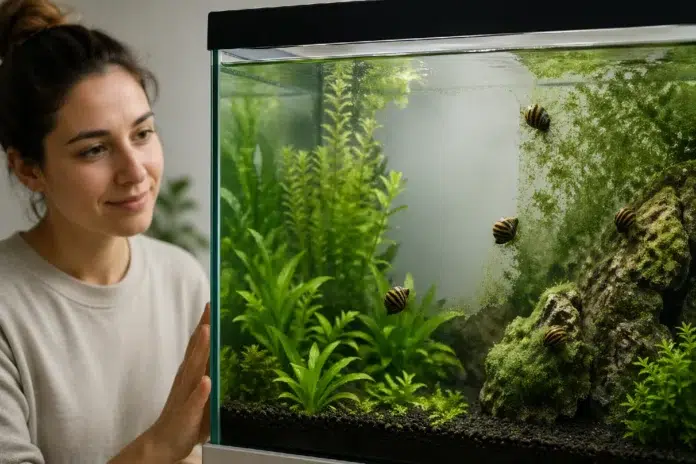
If you want a cleaner aquarium without turning maintenance into a daily chore, Nerite Snails are hard to beat. These small, active snails have earned a loyal following because they graze on algae constantly, stay peaceful in community tanks, and usually do not multiply out of control in freshwater setups. That combination alone makes Nerite Snails one of the most practical additions to many home aquariums.
A lot of aquarium animals are sold as “cleanup crew,” but not all of them live up to the promise. Some eat leftover food more than algae. Some uproot plants. Some reproduce so quickly that they become the next problem you need to solve. They stand out because they are reliable algae grazers, generally safe with plants, and known for needing brackish conditions for successful reproduction, which is why freshwater tanks usually do not get overrun with baby snails.
That does not mean they are magical fixers for every dirty tank. No algae eater can compensate for poor lighting control, overfeeding, or unstable water quality. Still, if your goal is to reduce film algae, soften the workload on tank glass and décor, and add a peaceful invertebrate that actually contributes something useful, Nerite Snails deserve serious attention.
What Makes Nerite Snails So Effective in Aquariums?
The biggest reason Nerite Snails perform so well is the way they feed. Like other snails, they use a radula, a specialized scraping structure, to rasp algae and biofilm from hard surfaces. That natural feeding behavior is exactly what aquarium keepers want when algae starts coating glass, rocks, driftwood, and decorations.
They are also persistent. Fish may take a few pecks and move on. Shrimp often focus on softer patches and leftover food. They keep moving and grazing for long stretches, which makes them especially useful against the everyday algae that builds up slowly and makes a tank look dull. Hobbyist care sources consistently highlight them as top algae eaters for that reason.
Another advantage is temperament. They are peaceful and do not hunt fish, bother healthy plants, or stir up the tank the way larger bottom dwellers sometimes can. In planted tanks, that matters. You want a cleaner that works quietly in the background, not one that creates fresh problems while solving algae.
Their shells also make them visually appealing. Zebra, tiger, olive, horned, and black racer varieties can add texture and pattern to a tank, so they are not just useful. They are decorative in a natural way, which is one more reason so many aquarists choose Nerite Snails over less attractive cleanup crew options.
The Types of Algae Nerite Snails Commonly Eat
This is where expectations matter. Nerite Snails are excellent, but they are not universal algae destroyers.
They are best known for eating soft algae, biofilm, brown diatoms, and the light green film that appears on glass and hardscape. In many tanks, that is exactly the algae that builds up the fastest and makes the aquarium look neglected between cleanings.
They are less reliable with tougher algae. For example, some keepers report that Nerite Snails do not do much against stubborn green spot algae once it becomes thick and hardened. Hair algae can also be hit or miss depending on the tank, the algae type, and whether other food is available.
That is why the smartest way to look at these snails is not as a cure for every algae outbreak, but as part of a balanced algae-control strategy. They help keep everyday algae in check, especially when the tank already has decent husbandry. When lighting, nutrients, and feeding are under control, their work becomes much more noticeable.
Why Nerite Snails Often Beat Other Aquarium Snails
Many aquarium keepers have had one bad snail experience and decided all snails are trouble. Usually that comes from pest snails that arrive accidentally on plants and multiply fast when excess food is present. Nerite Snails are different.
Their reputation rests on three major strengths:
- Strong algae-grazing behavior
- Peaceful community-tank temperament
- No easy population explosion in freshwater aquariums
That last point is huge. A lot of snail species breed readily in freshwater and can cover glass, substrate, and filter intakes if the tank is overfed. They may lay eggs, but successful development typically requires brackish water, so most freshwater aquarists do not end up with endless generations.
Compared with some algae-eating fish, Nerite Snails are also easier to fit into smaller tanks. They do not need the same swimming space as Siamese algae eaters or larger plecos, and they do not bring the same waste load. That makes them especially appealing for nano tanks, planted aquariums, and moderate-sized community setups.
Ideal Tank Setup for Nerite Snails
A good tank for Nerite Snails is stable, mature, and already growing some natural algae or biofilm. Freshly cycled tanks with spotless surfaces may look clean to you, but they can be lean on natural food for newly introduced snails. That is one reason some new keepers lose them early.
Water quality matters more than people think. Snails build and maintain shells with calcium carbonate, so acidic water can work against them. The U.S. EPA notes that snails and other shell-forming invertebrates are intolerant of very low pH because acidic water dissolves calcium carbonate.
In practical aquarium terms, Nerite Snails usually do better in stable water that is not overly soft or acidic. Adequate minerals, reasonable hardness, and a pH that does not trend too low help preserve shell condition. Many aquarists also supplement calcium through mineral-rich foods or aquarium-safe sources when needed.
Here is a simple setup snapshot:
| Tank Factor | What Works Well for Nerite Snails |
|---|---|
| Tank maturity | Established tank with visible biofilm or algae |
| Water stability | Stable, clean parameters with low ammonia and nitrite |
| pH and minerals | Avoid very acidic water; maintain enough minerals for shell health |
| Décor | Rocks, driftwood, glass surfaces, and planted hardscape to graze on |
| Lid | Recommended, because some snails may crawl above the waterline |
A lid is worth mentioning because Nerite Snails sometimes explore outside the waterline. It is not unusual behavior, but in an uncovered tank it can become a problem.
Do Nerite Snails Need Extra Food?
One common mistake is assuming these snails can survive forever on whatever algae happens to be there. In a tank with abundant natural growth, they may do very well for a while. But in very clean aquariums, or once they have already consumed the easy algae, they often need support.
That support can come from algae wafers, blanched vegetables, or foods formulated for herbivorous invertebrates. The goal is not to overfeed, but to make sure the snails are not slowly starving in a tank that looks pristine. A polished aquarium is not always a well-fed aquarium from a snail’s point of view.
You can usually tell a lot by observation. Healthy Nerite Snails stay active, move across surfaces, and continue grazing. A snail that remains inactive for long periods, shows shell deterioration, or appears unusually light and weak may be dealing with poor acclimation, low food availability, or unsuitable water chemistry.
Real Benefits of Nerite Snails in Daily Tank Maintenance
The strongest case for Nerite Snails is not that they eliminate work. It is that they reduce how often you need to intervene manually.
For many aquarists, that means:
- Less film algae on glass
- Cleaner rocks and driftwood
- Better-looking planted hardscape
- A more natural approach to routine algae control
- Less risk of snail overpopulation than with many freshwater snail species
This matters even more in planted tanks, where heavy scrubbing can be annoying and repeated algae blooms can make a healthy aquascape look messy. Nerite Snails work in tight spaces, on leaf surfaces, and around décor where your cleaning tools do not always reach easily. They are not perfect, but they are efficient helpers.
Another real benefit is compatibility with people who want a quieter, lower-maintenance aquarium. Fish that eat algae can outgrow the tank, become territorial, or change diet as they mature. These snails stay focused on grazing and fit a more predictable role in the ecosystem of the tank.
Best Tank Mates for Nerite Snails
In general, these snails do well with peaceful community fish. Tetras, rasboras, corydoras, otocinclus, many livebearers, and most shrimp-safe community species can coexist with them comfortably if the tank is stable.
The main risk comes from fish that nip, crush, or harass invertebrates. Aggressive cichlids, puffers, some loaches, and other snail-eating species are poor matches. Even if a snail survives, constant stress can stop it from feeding normally.
A good rule is simple. If a fish is known to peck at slow-moving invertebrates, leave Nerite Snails out of that setup. Algae control is never worth constant predation stress.
Common Problems With Nerite Snails and How to Avoid Them
The first issue many keepers notice is white egg spots on hard surfaces. Female Nerite Snails can lay eggs in freshwater, but those eggs usually do not hatch successfully there. Some aquarists do not mind the look. Others find it annoying on driftwood, rocks, and equipment.
The second issue is shell damage. Pitted, eroded, or chalky shells often point to mineral shortages, low pH, or long-term water chemistry problems. Because snails rely on calcium carbonate, acidic conditions can literally work against shell integrity over time.
The third issue is starvation in ultra-clean tanks. This happens more often than beginners expect. People buy Nerite Snails because they eat algae, then place them into a spotless aquarium with almost nothing to graze. Without enough supplemental feeding, the snail can slowly decline.
The fourth issue is poor acclimation. Sudden changes in water parameters can stress invertebrates badly. A careful acclimation process gives Nerite Snails a better chance to adjust, especially when moving from store water to a planted home aquarium with different chemistry.
Are Nerite Snails Good for Beginners?
Yes, in many cases they are. Nerite Snails are among the better beginner-friendly invertebrates because they are peaceful, useful, and easy to appreciate. You do not need advanced breeding knowledge just to keep them, and they provide visible value almost immediately when algae is present.
That said, beginner-friendly does not mean zero-care. They still need a stable tank, enough natural or supplemental food, and water that is not too harsh on their shells. If you understand those basics, Nerite Snails are one of the safest first cleanup-crew choices for a freshwater aquarium.
How Many Nerite Snails Should You Add?
There is no perfect universal number because algae growth varies by tank size, lighting, stocking, and feeding. A lightly stocked planted aquarium may only need one or two Nerite Snails. A larger tank with noticeable algae on glass and décor may support several more.
The smarter approach is to start modestly and watch results. If surfaces are cleaned quickly and the snails stay active, you are probably in a good range. If the tank looks spotless and they begin running out of natural food, adding more is the wrong move. The goal is balance, not maximum cleanup crew.
The Bottom Line on Why Nerite Snails Are So Popular
The popularity of Nerite Snails is not hype. It comes from a very practical mix of benefits that hobbyists notice in real tanks. They eat the kind of algae people actually struggle with, they stay peaceful, they suit planted aquariums well, and they usually do not create a breeding headache in freshwater.
They are not a replacement for proper tank care. You still need reasonable stocking, controlled feeding, stable water chemistry, and a sensible light schedule. But once those basics are in place, Nerite Snails can make an aquarium easier to maintain and nicer to look at day after day.
For many aquarists, that is exactly what makes Nerite Snails one of the best algae eaters for aquariums. They are useful without being disruptive, attractive without being demanding, and dependable in a role where many other so-called cleaners fall short. If you want a natural helper that quietly improves your tank, these are often one of the smartest choices you can make. For broader background on the Neritidae family, this group’s natural history helps explain why these snails are such effective surface grazers in aquarium life.
FAQs
Do Nerite Snails eat all types of algae?
No. Nerite Snails are best at soft algae, film algae, biofilm, and brown diatoms. They are less reliable against tougher algae such as heavily established green spot algae.
Will Nerite Snails overpopulate a freshwater tank?
Usually no. They may lay eggs, but successful reproduction generally requires brackish conditions, so freshwater tanks typically do not end up overrun with baby Nerite Snails.
Are Nerite Snails safe with live plants?
Yes, they are generally considered safe with healthy live plants and are often recommended for planted aquariums.
Why is my Nerite Snail not moving much?
Possible reasons include stress from poor acclimation, lack of food, unsuitable water chemistry, or general weakness. Check water quality, pH, mineral availability, and food sources.
Do Nerite Snails need calcium?
Yes. Like other shell-forming snails, they need suitable mineral conditions to support shell health, and very acidic water can damage shells over time.
Conclusion
In a hobby full of products and promises, Nerite Snails remain popular for a simple reason: they work. They help control common algae, fit well in peaceful community tanks, and offer real value without the overpopulation risk that makes many aquarists avoid snails in the first place. When the tank is stable and the snails have enough to graze, Nerite Snails can be one of the most practical and rewarding additions to a freshwater aquarium.

