


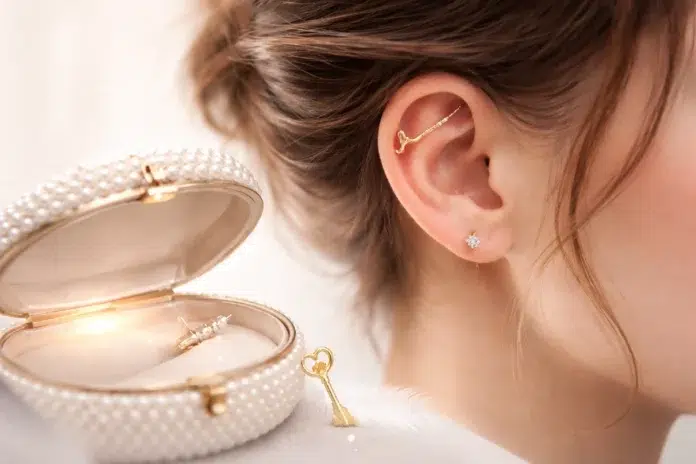
A Hidden Helix piercing has become one of the most talked about ear placements for people who want something delicate, modern, and a little unexpected. Instead of putting all the visual focus on the outer rim of the ear, this look tucks the jewelry into a spot where it peeks out in a softer, more subtle way. That is exactly why it keeps showing up in trend reports and curated ear styling conversations.
What makes this style so appealing is the balance it creates. It feels refined rather than loud, but it still catches the eye. On some ears, the jewelry seems to float under the curve of the upper cartilage, which is why many studios and jewelry sellers also connect it with the idea of a floating helix.
If you are trying to understand whether this placement is just a trend or a genuinely wearable option, the answer is that it can be both. It is trendy, yes, but it also works because it fits the way many people actually want to wear jewelry now: lighter, cleaner, and more personal. A well placed Hidden Helix can look elegant on its own or become part of a layered ear stack that still feels polished instead of crowded.
What Is a Hidden Helix?
A Hidden Helix is a cartilage piercing placed so the jewelry sits beneath or just inside the upper outer fold of the ear, creating a tucked away effect. In simple terms, it is related to the helix family, but its visual goal is different from a standard outer rim helix. Instead of putting the post or decorative top in the most obvious visible line, the look is meant to feel partially concealed, giving the ear a more sculpted and layered appearance.
That “hidden” effect is the whole point. A classic helix is easy to spot because it sits right along the outer edge of the ear. A Hidden Helix, by contrast, plays with angle, fold, and jewelry shape. Dangle pieces, flat backs, and carefully chosen charms are often used because they help create movement and depth without making the placement look bulky.
This is also why not every ear will support the exact same version of the look. Some studios specifically note that this placement is anatomy dependent, which means the shape of your ear matters as much as your style preferences. The fold has to be right, the available space has to be right, and the jewelry has to sit comfortably for the final result to look intentional rather than awkward.
Why the Hidden Helix Looks So Different
The visual appeal comes from restraint. A lot of ear piercings are designed to be immediately visible. This one works because it is not trying too hard. The jewelry appears as a detail that reveals itself when the ear turns, when the hair moves, or when light catches the metal.
That gives it a more editorial feel. It photographs beautifully, especially when paired with sleek hair, minimal makeup, and a curated ear layout. It can read soft and feminine with a tiny chain or crystal drop, but it can also look sharp and contemporary with clean titanium or gold shapes. That flexibility is a big reason it has gained attention in modern piercing trends.
Another reason people like it is that it works well for those who want a statement without a large hoop or an aggressive silhouette. It feels intentional but not overpowering. In a style culture that increasingly values understated details, this placement lands in exactly the right spot.
Hidden Helix Placement: Where It Sits on the Ear
Placement is the defining feature here. A standard helix usually follows the visible outer edge of the upper ear. A Hidden Helix is positioned more strategically under the upper curve so the decorative part of the jewelry can peek from beneath the ear’s fold. Depending on anatomy, the effect may look tucked, floating, or slightly draped.
Because of that, placement should never be copied blindly from a photo. What looks perfect on one person may not translate to another ear at all. The upper cartilage can differ in thickness, curvature, and depth, and those small differences change whether a charm lies flat, swings freely, or presses awkwardly against the skin. Studios that focus on ear styling often emphasize consultation first for exactly this reason.
Here is a simple comparison of nearby styles:
| Piercing style | Main location | Overall effect | Common jewelry look |
|---|---|---|---|
| Hidden Helix | Tucked under the upper outer fold | Subtle, layered, floating | Flatback with charm, dangle, delicate decorative top |
| Standard Helix | Outer rim of upper ear | Clean, visible, classic | Flatback stud, clicker, ring after healing |
| Flat Helix | Flat upper cartilage area | Broad surface styling | Flatback studs, clusters, decorative tops |
This difference matters because search intent around the term usually comes from people trying to understand the look, not just the anatomy. They are often deciding between a more obvious cartilage piercing and something softer with more visual dimension.
Anatomy Matters More Than Aesthetic Mood Boards
This is where real life takes over from social media. A Hidden Helix is one of those placements that can look incredible in photos, but it depends heavily on whether your ear has enough of the right fold to conceal and frame the jewelry. If the upper rim is too flat or the angle is off, the result may look more like a regular helix with decorative jewelry than the tucked effect people usually want.
That does not mean the idea fails. It just means the design has to be adapted. A skilled piercer can adjust angle, entry point, and jewelry choice to create a similar visual outcome even if the exact “viral” version is not possible on your anatomy. In other words, the best Hidden Helix is usually the one designed for your ear, not the one copied from someone else’s.
This is one reason curated ear studios talk about “earscaping” rather than treating every placement as identical. The goal is not just making a hole in cartilage. It is creating a composition that works with the ear’s natural lines.
Jewelry Choices That Make the Look Work
Jewelry is not just decoration here. It is part of the illusion. For many people, the first piece used in a Hidden Helix is a flatback style because it sits more securely during healing. Decorative ends with small chains, drops, or curves can later make the placement look more dimensional once the piercing is stable enough for appropriate jewelry changes.
Studs can work beautifully when the aim is a minimal tucked sparkle. Dangle styles add movement and tend to emphasize the hidden effect even more. Some floating helix descriptions specifically highlight jewelry that gives the impression of hovering just above the skin or tracing the curve of the ear.
Material matters too. Implant grade titanium and high quality gold are popular in professional piercing settings because they are reliable for fresh piercings and everyday wear. If you are building a look around long term comfort, quality metal is not a luxury detail. It is part of what keeps the style wearable over time. The Association of Professional Piercers recommends sterile saline for aftercare and stresses the importance of appropriate jewelry and gentle handling while healing.
Pain, Healing, and What the Experience Is Really Like
A Hidden Helix is still a cartilage piercing, so it should be approached with cartilage expectations, not lobe expectations. Cartilage has limited direct blood supply and heals more slowly than softer tissue, which is one reason these piercings often demand more patience than people expect. NIH educational material on cartilage notes that cartilage lacks its own blood supply and recovers slowly after injury.
Healing times vary, but cartilage ear piercings commonly take several months and may take up to a year depending on the site and aftercare. Cleveland Clinic notes that cartilage piercings may take about four to 12 months to heal, and the Association of Professional Piercers says tougher tissue such as ear cartilage may take six months or longer.
Pain is personal, but most people describe cartilage piercings as a sharp, brief pressure followed by soreness, warmth, and tenderness. The bigger challenge is not usually the initial piercing. It is the healing phase after. Sleeping on that side, catching the jewelry in hair, wearing over ear headphones, or changing jewelry too early can all drag healing out far longer than expected.
That is why the visual payoff and the healing commitment need to be weighed together. This style is beautiful, but it is not a casual impulse placement if you know you are hard on your ears.
Aftercare: What Helps and What Commonly Causes Problems
Good aftercare is simple, but consistency matters. The Association of Professional Piercers recommends washing hands before touching the area, using sterile saline wound wash while healing, and avoiding unnecessary movement or rotation of the jewelry. That last point matters because many people still believe they need to twist jewelry during cleaning, but modern aftercare advice says that can irritate the piercing rather than help it.
A clean pillowcase, careful hair brushing, and awareness of friction make a bigger difference than people realize. Cartilage piercings often become irritated not because of poor hygiene alone, but because of repeated pressure and micro trauma. Even something as ordinary as a tight beanie, helmet strap, or phone pressed against the ear can keep the area angry.
Here are the habits that usually help a Hidden Helix heal more calmly:
- Clean with sterile saline as directed
- Avoid sleeping on the piercing
- Keep hair products off the area
- Do not rotate or play with the jewelry
- Wait for professional timing before downsizing or changing jewelry
- Be cautious with headphones, hats, and anything that presses on the upper ear
The habits that commonly set people back are also predictable:
- Touching it with unwashed hands
- Switching jewelry early for aesthetic reasons
- Using harsh cleansers
- Ignoring swelling, heat, or worsening pain
- Treating persistent irritation like it will “just go away”
If there are signs of possible infection, such as increasing redness, swelling, pain, or drainage, medical guidance matters. Cleveland Clinic notes that infected ear piercings may be treated with saline cleansing, warm compresses, topical treatment, or oral antibiotics depending on severity. They also warn that high cartilage trauma can lead to perichondritis, an infection involving the tissue around the cartilage.
Styling a Hidden Helix So It Looks Intentional
The easiest way to make this placement shine is not to overcrowd it. Because the whole charm of the look is that tucked, slightly secret detail, it often looks best when the surrounding ear styling gives it room to breathe.
A few combinations work especially well. A Hidden Helix can pair beautifully with a simple lobe stack, a tiny second helix, or a clean conch piece. It can also balance an ear that already has a stronger lower section, adding interest to the top without making the entire ear feel too busy.
If your aesthetic is minimal, choose a small stone, polished bead, or barely there gold shape. If your style is more expressive, a fine chain, short drop, or curved decorative end can emphasize the tucked effect. The key is proportion. The jewelry should work with the fold of the ear, not fight it.
This is also where the placement becomes more than just another piercing. It starts to function like styling. It changes how the whole ear reads, which is why it appeals to people who care about detail rather than obvious statement pieces.
Is a Hidden Helix a Good Choice for Everyone?
Not always, and that is actually a good thing to say clearly. Some trends get oversold, but this one has very real anatomy limits. If your ear shape does not support the placement well, a reputable piercer should say so. That honesty is part of good piercing practice, not a drawback.
It is often a strong choice for someone who wants:
- A refined cartilage piercing
- A subtle but distinctive look
- A styling focused ear rather than a bold single statement
- Jewelry that feels elegant and tucked into the ear’s shape
It may be less ideal for someone who:
- Sleeps heavily on one side
- Needs to wear gear that presses on the upper ear often
- Wants very low maintenance healing
- Expects the exact same result seen in someone else’s photo
The best outcome usually comes when the person chooses the style for how it works on their own ear, not just because it looks trendy online.
Common Questions Readers Usually Have
Does a Hidden Helix hurt more than a regular helix?
It is still cartilage, so the experience is generally in the same range as other upper ear cartilage piercings. The pain is usually brief, while the soreness and sensitivity during healing tend to be more noticeable over time.
How long does a Hidden Helix take to heal?
Because it is a cartilage placement, it may take several months and sometimes up to a year to fully settle. Cartilage healing timelines vary, and what looks calm on the surface may still be healing underneath.
Can you start with decorative jewelry?
Sometimes, but the decision depends on anatomy, swelling room, and the piercer’s judgment. Many people heal better with practical starter jewelry first, then switch to more dramatic decorative ends later when appropriate.
Is the Hidden Helix the same as a floating helix?
The terms are often used closely together in trend and jewelry conversations, though studios and sellers do not always define them in exactly the same way. In practice, both usually refer to a helix area style that creates a tucked or floating visual effect.
Final Thoughts
The reason the Hidden Helix stands out is simple: it combines placement and styling in a way that feels subtle, modern, and highly personal. It does not rely on size to make an impression. Instead, it works through angle, shape, and the little reveal of jewelry beneath the upper fold of the ear.
That is also why it has more staying power than many short lived trends. When done well, it does not just look fashionable. It looks considered. And like many forms of body piercing, the best result comes from matching the idea to the person, the anatomy, and the jewelry rather than chasing a one size fits all image. If the placement suits your ear and the jewelry is chosen thoughtfully, the Hidden Helix can be one of the most elegant ways to add character to an ear without making it feel overdone.
Conclusion: The Hidden Helix is appealing because it offers a tucked, refined, and visually layered alternative to more obvious cartilage placements. Its beauty comes from careful placement, anatomy aware design, and jewelry that enhances the fold of the ear rather than overpowering it. For readers drawn to subtle detail and modern ear styling, it makes a strong case for being one of the most visually interesting cartilage looks right now.

