


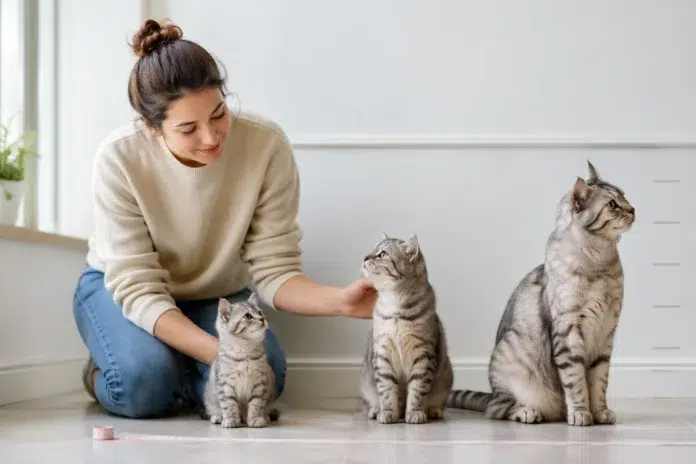
If you have ever looked at your kitten stretched across the couch and wondered, when do cats stop growing, you are definitely not alone. It is one of the most common questions new cat owners ask, especially when their tiny ball of fur suddenly starts looking long, lanky, and surprisingly adult almost overnight. The tricky part is that there is not one single answer for every cat. Growth depends on breed, sex, genetics, nutrition, and overall health. Most cats reach something close to their adult size around their first birthday, but many continue filling out after that, and some larger breeds take much longer.
So, when do cats stop growing in practical, real-life terms? For the average domestic cat, height and length usually level off around 10 to 12 months, while body weight, muscle, and chest width may continue changing into the 12 to 18 month range. That is why a cat can look fully grown but still not be fully mature. If your cat is a slow-maturing breed such as a Maine Coon, the timeline can stretch out to three to five years.
Understanding that difference matters. Many owners assume a cat that looks adult should be switched to adult routines immediately, but growth and maturity are not always finished at the same time. Feeding, exercise, and regular weight checks still matter during that in-between stage because what happens in late kittenhood can shape long-term health.
When Do Cats Stop Growing for Most House Cats?
For most mixed-breed house cats, the biggest growth burst happens in the first six months. After that, the pace slows. According to VCA, kittens approach about 80 percent of their adult size by around 30 weeks and reach adult body size at roughly 40 weeks, which is close to 10 months. Merck also notes that kittenhood nutrition remains important until adulthood, which is usually around 9 to 12 months.
Still, that does not always mean a cat is completely done developing. Many cats continue gaining a bit of healthy body mass after their first birthday. This is especially true in male cats, who often stay a little larger and may continue maturing slightly longer than females. PetMD notes that many typical cats reach adult size by 12 to 18 months, with females often finishing earlier than males.
That is why the best answer to when do cats stop growing is usually this: most cats stop obvious growth around 10 to 12 months, but full physical maturity often lands closer to 12 to 18 months.
Why Your Cat May Look Grown Before Growth Is Actually Finished
A lot of cats hit that awkward teenage phase where they look big but still feel unfinished. Their legs may seem long, their frame may look lean, and their face may still have a kitten-like softness. Owners often think their cat is already done growing at this stage, but what is happening is more like a final adjustment period.
Height and body length often level off first. Weight and muscle come later. A cat can stop getting taller but still broaden through the shoulders, deepen through the chest, and gain lean mass over the following months. That is part of why when do cats stop growing can feel confusing. What people notice visually is not always the same as what is happening physically.
Behavior adds to the confusion. Even after a cat looks adult-sized, they may still behave like a teenager for many months. The 2021 AAHA and AAFP feline life stage guidelines note that kittens and young cats continue showing high play drive and active predatory-style play throughout the first year. So a cat may look grown and still act gloriously immature.
A Simple Cat Growth Timeline
Here is a practical way to think about feline growth.
| Age | What Usually Happens |
|---|---|
| 0 to 8 weeks | Rapid early growth, nursing, major developmental milestones |
| 2 to 6 months | Fastest visible growth, steady weight gain, long limbs, changing proportions |
| 6 to 10 months | Growth slows, body shape becomes more adult |
| 10 to 12 months | Many cats reach adult height and length |
| 12 to 18 months | Filling out phase, muscle and weight may still increase |
| 3 to 5 years | Possible final maturity window for slow-growing large breeds like Maine Coons |
This table reflects the general pattern described by veterinary sources, but individual cats can land a little earlier or later.
What Affects When Do Cats Stop Growing?
If two kittens are the same age but look completely different in size, that is not unusual. Several factors influence growth.
Breed
Breed is one of the biggest reasons the answer to when do cats stop growing is not identical for every cat. A typical domestic shorthair may look fully grown around one year old. A Maine Coon, on the other hand, is famous for slow development and may not reach full size until three to five years. TICA describes Maine Coons as slow-developing cats that do not achieve full size until that later window.
Sex
Male cats are often larger than females in height, length, and weight. That does not mean every male grows longer than every female, but on average, males may take a bit more time to finish filling out. PetMD notes that females often finish around 10 to 12 months, while males can continue closer to 18 months in some cases.
Genetics
Genetics quietly shape almost everything about cat size. Cornell notes that with pedigreed cats, size is more predictable because the breed profile gives you clues. With mixed-breed cats, adult size is harder to forecast. If your kitten’s parents were large, sturdy cats, your kitten may trend that way too.
Nutrition
Good nutrition supports healthy growth, but overfeeding does not create a healthier cat. It usually creates a heavier one. Merck emphasizes that growing kittens need diets formulated for growth, with the right balance of calories, protein, fat, vitamins, and minerals. That is very different from simply feeding extra food without monitoring body condition.
Health Status
Parasites, chronic illness, poor digestion, or congenital problems can all affect growth. A cat that is not gaining well, seems small for age, or suddenly plateaus should be checked by a veterinarian. Healthy development is not only about size. It is also about body condition, energy, coat quality, and normal progression over time.
When Do Cats Stop Growing by Breed Type?
If your cat is not a typical mixed-breed house cat, the timeline may be different.
Domestic shorthairs and domestic longhairs usually follow the common pattern of reaching most of their adult size by 10 to 12 months, then filling out into the next several months.
Larger and slow-maturing breeds can keep developing much longer. Maine Coons are the classic example. TICA states that Maine Coons develop slowly and do not achieve full size until three to five years. That does not mean they are growing rapidly for all those years. It means they continue maturing, adding mass, and finishing their frame over a longer period.
Some owners worry when a large-breed adolescent cat seems awkward or oversized in certain body parts. In many cases, that is normal. Slow-growing cats can look uneven for a while before everything balances out.
Signs Your Cat Is Near Full Growth
If you are still asking when do cats stop growing, it helps to look for patterns instead of focusing on one random week.
Your cat is probably close to full size when:
- Their height and body length have not changed much for a few months
- Weekly or monthly weight gain has slowed noticeably
- Their proportions look more balanced and less kittenish
- Their chest and shoulders start looking more developed
- Their veterinarian says body condition and growth pattern look appropriate
The most reliable way to tell is not by eyeballing alone. Weigh your cat regularly, ideally once every few weeks during kittenhood and adolescence, and log the results. A stable pattern tells you much more than memory does.
The Difference Between Growing and Getting Fat
This part matters more than many owners realize. Sometimes people think a cat is “still growing” when the cat is actually just gaining excess weight. That is a very different situation.
Cornell warns that feline obesity is a major problem, and AAHA notes that published studies show obesity prevalence in cats ranging widely, with excess weight linked to diabetes, lameness, skin disease, urinary problems, and other chronic issues. In other words, once a cat is near adult size, continued weight gain should not automatically be dismissed as normal growth.
A growing cat tends to gain weight gradually while also changing shape and proportions. An overweight cat may start losing a visible waist, develop a rounded abdomen, and feel harder to assess under the ribs because of fat cover. If you are unsure, your veterinarian can use a body condition score to tell the difference. AAHA describes a 9-point body condition system, with 6 to 7 considered overweight and 8 or more considered obese.
That is one reason the question when do cats stop growing should always be paired with another question: is my cat growing normally or just eating more than they need?
Feeding Your Cat Through the Final Growth Stage
One of the most practical concerns for owners is food. Should you keep feeding kitten food after your cat looks full-sized?
Veterinary sources generally place the transition to adulthood around 9 to 12 months for average cats, but the exact timing should match your cat’s breed, body condition, and growth pattern. Merck says kittens need growth-formulated food until adulthood, while MSD Veterinary Manual notes that transition to adult food often happens sometime between 8 and 12 months.
Here is the real-world version. If your average cat is around one year old, maintaining a healthy weight, and no longer showing obvious growth, the switch to adult food is usually appropriate. If your cat is a giant breed, underweight, or still clearly developing, your veterinarian may suggest a different timeline.
A smart feeding routine includes portion control, regular weigh-ins, and paying attention to body shape rather than feeding by guesswork. Cats are very good at convincing humans they are starving. They are much less reliable at setting their own calorie limits.
Should You Worry If Your Cat Seems Small?
Not always. Some adult cats are naturally petite. A smaller frame is not automatically a problem, especially in mixed-breed cats where adult size is less predictable. Cornell points out that pedigreed cats give you a better size forecast, while mixed-breed cats can vary a lot more.
You should be more alert if your cat is small and also has any of these signs:
- Poor appetite
- Dull coat
- Low energy
- Chronic diarrhea or vomiting
- A visibly bony body condition
- No steady growth during kittenhood
- Sudden slowdown after previously normal growth
In those cases, the issue may not be the final size. It may be an underlying health problem affecting development.
Real-World Example: Why One-Year-Old Cats Can Look So Different
Picture two cats that are both 12 months old. One is a female domestic shorthair living indoors, eating a balanced kitten diet, and weighing a healthy eight pounds. She may already be very close to her adult size. Another is a young male Maine Coon who looks big but gangly, still has oversized paws, and keeps slowly adding muscle. He may have years of gradual maturing ahead. Both are normal.
That is why asking when do cats stop growing without considering breed and body type can lead to the wrong expectations. Age matters, but context matters just as much.
When to Talk to Your Vet
Most growth questions are routine, but there are times when professional guidance is the right move.
You should check in with your veterinarian if your cat is losing weight during growth, not gaining appropriately as a kitten, becoming noticeably overweight, or showing digestive or developmental concerns. Routine veterinary visits also help because your vet can compare weight changes over time rather than relying on one single number. The feline life stage guidelines strongly support preventive care throughout each life stage, starting in kittenhood.
This is especially useful during the late kitten and adolescent months, when owners are deciding whether their cat is still growing, ready for adult food, or starting to put on excess weight.
Conclusion
So, when do cats stop growing? For most cats, the short answer is around 10 to 12 months for adult size, with continued filling out through about 12 to 18 months. Large breeds may take much longer, and Maine Coons are a well-known exception that can keep maturing for three to five years. What pet owners should really expect is not one magical finish line, but a gradual shift from rapid kitten growth to slower physical maturity.
The best thing you can do is watch your cat’s overall pattern. Track weight, keep meals balanced, stay on top of vet visits, and look at body condition instead of guessing based on appearance alone. If you do that, the question when do cats stop growing becomes much easier to answer for your own cat, not just for cats in general.
As your cat moves from kittenhood into adulthood, it helps to understand both development and normal variation. Even the domestic cat has a surprisingly wide range of body types, growth rates, and adult sizes. That is exactly why patient observation matters so much.

