


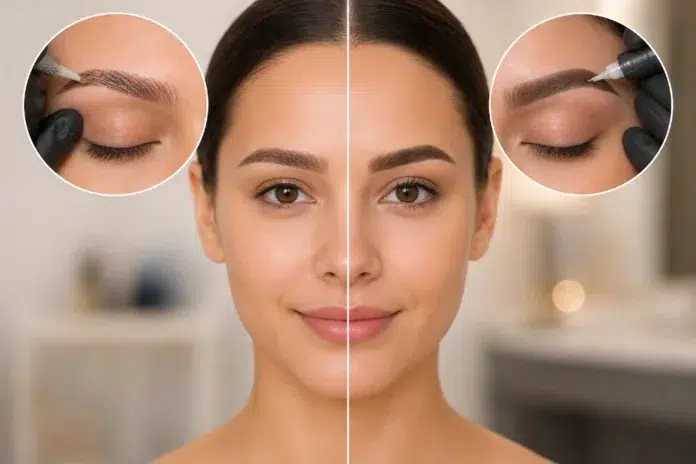
If you are torn between Powder Brows and microblading, you are not alone. Both treatments promise fuller, better-shaped brows, less time in front of the mirror, and a more polished everyday look. But they do not create the same finish, they do not heal the same way, and they are not equally suited to every skin type.
That is where many people get stuck. One artist may recommend microblading for a natural hair-stroke effect, while another may say Powder Brows last better and fade more evenly. The truth is that the right choice depends on your skin, lifestyle, pain tolerance, beauty goals, and how much upkeep you are willing to do. Permanent makeup is still a form of cosmetic tattooing, so safety, pigment quality, healing, and practitioner skill all matter. The American Academy of Dermatology and the FDA both stress that permanent makeup carries real considerations, including allergic reactions, infection risk, and the need for proper aftercare.
So which one is better for you?
For most people who want a soft makeup effect, longer-lasting definition, and better results on oily or mature skin, Powder Brows usually come out ahead. For people who specifically want crisp, hair-like strokes and have normal to dry skin, microblading can still be a beautiful option. The key is understanding what each treatment really does before you book.
What Are Powder Brows?
Powder Brows are a semi-permanent brow treatment created with a machine technique that deposits pigment into the skin in tiny pixels. Instead of drawing individual hair strokes, the artist builds a shaded effect that looks like softly filled-in brows. Depending on technique and pressure, the result can range from airy and natural to more defined and makeup-like.
This method is often called ombré brows or pixel brows, although some artists use slightly different names depending on how soft or gradient-based the final look is. The main idea stays the same: a smooth, powdered finish rather than sharply etched strokes.
Many clients like Powder Brows because they wake up looking more put together without needing to fill in sparse areas every morning. The finish usually photographs well, suits a wide age range, and tends to fade more evenly than stroke-only techniques. That matters because semi-permanent makeup is not just about how brows look on day one. It is also about how they soften over time.
What Is Microblading?
Microblading is also a semi-permanent brow treatment, but it works differently. Instead of using a digital machine to create a soft-shaded effect, the artist uses a handheld tool with very fine needles to create tiny incisions in the skin and place pigment in hair-like lines.
That is why microblading became so popular. When it is done well on the right skin type, the strokes can mimic real brow hairs and look incredibly natural at first glance. It is especially appealing to people who want brows that look fuller without appearing obviously filled in.
The catch is that microblading is more skin-type dependent than many first-time clients realize. On oily skin, large pores, or skin that bleeds more easily, those crisp lines can blur faster. On mature or thinner skin, healing can also be less predictable. The result is not always the neat hair-stroke effect people see in fresh social media photos.
The Real Difference Between Powder Brows and Microblading
The simplest way to understand the difference is this:
Powder Brows create shading. Microblading creates strokes.
That one distinction changes almost everything else, including the final look, healing pattern, maintenance schedule, and how well the treatment performs on different skin types.
Here is a quick comparison table that makes the decision easier.
| Feature | Powder Brows | Microblading |
|---|---|---|
| Technique | Machine shading | Hand tool hair strokes |
| Final look | Soft, filled-in, polished | Hair-like, natural stroke effect |
| Best for | Most skin types, especially oily or mature skin | Normal to dry skin |
| Healing | Often more predictable | Can vary more by skin type |
| Longevity | Often longer and more even fading | May fade faster or blur |
| Pain level | Often described as milder | Can feel sharper for some clients |
| Maintenance | Periodic touch-ups | Usually needs more careful upkeep |
This does not mean one is universally better than the other. It means each treatment has strengths, and your decision should match the result you want in real life, not just in an edited before-and-after post.
Which Looks More Natural?
This is one of the biggest questions people ask, and the honest answer is: it depends on what you mean by natural.
If your idea of natural is “looks like individual brow hairs,” microblading usually wins. It is designed to imitate hair growth, especially in sparse areas or tails. Freshly done microblading can look very realistic when performed by a skilled artist on suitable skin.
But if your idea of natural is “looks like I have naturally fuller, softly groomed brows,” then Powder Brows often look more believable over time. They mimic the effect of tinted brow powder or pencil, not literal strands of hair. That finish can be more forgiving and more polished in day-to-day life.
This is important because many people choose microblading for a natural look, only to find that healed strokes are not as crisp as the initial photos suggested. Powder Brows may look more cosmetic on day one, but after healing, they often soften into a very flattering, wearable finish.
Which One Lasts Longer?
In many cases, Powder Brows last longer and age more gracefully than microblading.
That is one reason the treatment has become more popular. Because the pigment is implanted in a soft, diffused pattern rather than thin individual cuts, healed results often remain visible longer and fade more evenly. Microblading strokes, on the other hand, can disappear patchily or blur together depending on skin type and aftercare.
No semi-permanent brow treatment is truly permanent in the way many people imagine. Fading is expected, and touch-ups are part of maintaining the look. The exact timeline depends on skin type, sun exposure, skincare products, immune response, pigment choice, and how deep the artist works.
People who use retinoids, exfoliating acids, or frequent facials often notice faster fading. So do people with oily skin or very active lifestyles. That is why a treatment that looks amazing on a friend may not last the same way on you.
Which Is Better for Oily Skin?
If you have oily skin, Powder Brows are usually the better choice.
This is one of the most practical decision points, and it is a big one. Oily skin tends to push pigment out more quickly and can soften or blur ultra-fine microblading strokes during healing. That does not automatically mean microblading will fail, but it does mean the result may not stay as crisp as intended.
Powder Brows are generally more forgiving because the technique is already based on shading. A little softening does not ruin the design. In fact, the treatment is meant to look soft and blended.
That is why many reputable brow artists now steer oily-skin clients toward powder or combination brows instead of classic microblading. It is not a sales tactic when done honestly. It is often the more realistic recommendation.
Which Is Better for Mature Skin?
For mature skin, Powder Brows are often the safer and more flattering option.
Skin changes with age. It may become thinner, looser, drier in some areas, and more textured in others. Hand-drawn microblading strokes can sometimes heal unevenly on mature skin or fail to stay crisp. Powder Brows, by contrast, can create definition without relying on ultra-sharp lines.
A soft-shaded brow can also be more forgiving visually. It restores shape and density without emphasizing skin texture the way harsh strokes sometimes can. Many clients over 40 or 50 prefer the smoother, softer finish because it looks elegant rather than overly drawn.
This is not a hard rule. Some people with mature skin still do well with microblading or a combination technique. But if you want the more dependable option, Powder Brows usually have the edge.
Which Hurts More?
Pain is subjective, but many clients say Powder Brows feel easier to tolerate than microblading.
That does not mean they are painless. Both treatments involve needles or blades working on the brow area, and both can cause discomfort. Most artists use numbing products to make the experience more manageable.
Still, the sensation is different. Microblading can feel scratchier or sharper because of the manual stroke technique. Powder Brows, done with a machine, are often described as more of a vibration or light stinging feeling.
Your menstrual cycle, stress level, sleep, caffeine intake, and sensitivity all affect how the procedure feels. So does artist technique. A gentle, skilled practitioner can make a huge difference.
Healing and Aftercare: What to Expect
Healing matters just as much as the appointment itself. Even beautifully mapped brows can heal poorly if aftercare is ignored.
The American Academy of Dermatology advises people with permanent makeup to keep hands clean before touching the area, use fragrance-free products, and seek help if signs of infection appear. The NHS also emphasizes asking about recovery, risks, and complications before agreeing to a cosmetic procedure. The FDA has repeatedly warned that tattoo and permanent makeup products can be associated with allergic reactions and infections, including contamination concerns in some inks.
For most clients, the typical healing pattern looks something like this:
- Brows appear darker and bolder right after the appointment
- Mild tenderness, tightness, or light scabbing may develop
- Color often looks patchy during the flaking stage
- Brows soften significantly after the skin settles
- A touch-up is usually needed to perfect shape and pigment retention
Powder Brows often heal with a more uniform fade. Microblading can be a little less predictable because each stroke has to heal cleanly to stay defined.
Good aftercare usually includes:
- Keeping the area clean and dry as directed
- Avoiding sweating, pools, steam rooms, and heavy sun exposure early on
- Not picking flakes or scabs
- Avoiding active skincare around the brows until healing is complete
- Following your artist’s exact instructions, not random social media advice
Who Should Avoid These Treatments?
Not everyone is a good candidate right away.
You may need to postpone or avoid Powder Brows or microblading if you have an active skin infection, uncontrolled skin condition in the brow area, recent chemical peels, recent Botox too close to the appointment, or a history of poor wound healing. People who are pregnant, breastfeeding, on blood-thinning medication, or undergoing certain medical treatments are often advised to get medical clearance first.
This is also where consultation quality matters. A responsible artist should review your health history, skincare routine, allergies, previous brow tattoos, and expectations before touching your skin. If someone is ready to book you in five minutes without any questions, that is a red flag.
Powder Brows vs Microblading Cost
Prices vary by city, artist experience, and whether the touch-up is included, but neither treatment should be chosen by price alone.
Lower-cost work can end up being the most expensive if shape, pigment placement, or sanitation is poor. Corrective brow work is harder, more expensive, and emotionally draining than getting it done properly the first time.
In many markets, Powder Brows and microblading are priced similarly, though advanced artists may charge more for either service. Instead of asking only “How much is it?” ask:
- Is the touch-up included?
- What training and licensing does the artist have?
- Do they show healed results, not just fresh ones?
- How do they handle color correction and skin type assessment?
- What hygiene standards do they follow?
That last point matters more than most people realize. The FDA notes ongoing safety concerns tied to tattoo pigments and contamination, while dermatology experts emphasize infection prevention and informed decision-making.
Which Brow Treatment Is Better for You?
Here is the practical answer most readers actually need.
Choose Powder Brows if:
- You have oily skin
- You want a soft makeup effect
- You prefer longer-lasting, more even fading
- You have mature skin
- You want a polished everyday brow with less risk of blurred strokes
Choose microblading if:
- You have normal to dry skin
- You strongly prefer the appearance of individual hair strokes
- You like a very natural, stroke-based look
- You understand that maintenance may be higher
- You are working with an artist who has excellent healed results
Choose a combination brow if:
- You want some hair-like detail at the front with soft shading through the body and tail
- Your artist thinks your skin can support both techniques
- You want a middle ground between realism and fullness
For many first-time clients, Powder Brows end up being the more versatile choice. They are easier to recommend broadly because they suit more skin types and tend to age more gracefully. Microblading can still be beautiful, but it is often best for a narrower group of clients.
A Real-World Example
Imagine two clients.
The first is 27, has dry-to-normal skin, wears minimal makeup, and wants brows that look like her own but better. She may love microblading because the hair-stroke effect fits her style and skin type.
The second is 39, has combination-to-oily skin, uses SPF and active skincare, and wants her brows to look softly done every day without filling them in. Powder Brows are probably the better fit for her because the technique works with her skin rather than against it.
Neither client is wrong. They simply have different priorities.
How to Choose the Right Artist
The artist you choose can matter even more than the technique you choose.
Look for someone who:
- Shows healed results in natural lighting
- Works on a range of skin tones and skin types
- Gives honest recommendations instead of pushing one service on everyone
- Uses safe, hygienic procedures
- Explains risks, healing, and touch-up expectations clearly
The NHS advises asking what recovery is like, how long results should last, and what risks or complications may happen before having a cosmetic procedure. That kind of conversation should be normal, not awkward.
You should also pay attention to communication style. A good artist will tell you when your dream brows are unrealistic, when a previous tattoo needs correction first, or when a different technique would serve you better.
Final Verdict
If you want the simplest answer, here it is: Powder Brows are better for more people, while microblading is better for a more specific type of client.
That is not hype. It is just the most practical conclusion once you compare skin compatibility, healing, longevity, and overall maintenance. Powder Brows deliver a soft, flattering, low-fuss finish that works well across a wider range of skin types. Microblading can still be stunning, but it asks for the right skin, the right expectations, and the right artist.
So before booking, do not ask only which technique is more popular. Ask which one is more likely to heal beautifully on your skin and still look good months from now. That is the question that leads to better brows, less regret, and a result you actually enjoy living with.
In the beauty world, trends come and go, but well-shaped brows that suit your face never go out of style. If you are leaning toward a softer, longer-lasting finish, Powder Brows may be the smarter investment. If you want to read more about the broader history and practice of permanent makeup, it helps to see where both of these treatments fit in the larger cosmetic tattoo space.
The best choice is the one that matches your skin, your routine, and your idea of feeling confident when you look in the mirror. And for a large number of people, that choice ends up being Powder Brows.

