


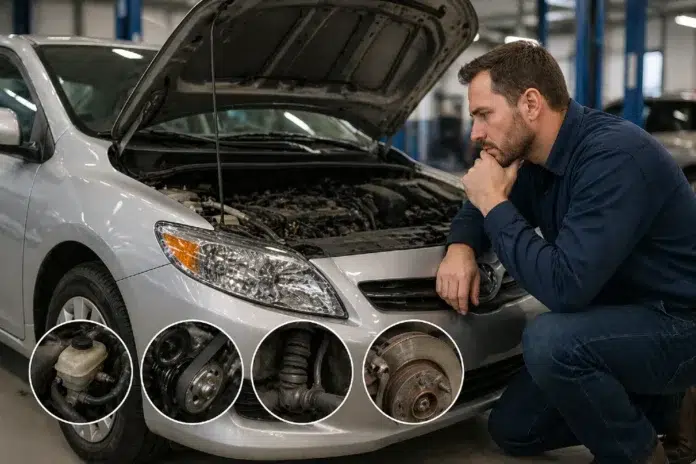
A Used Toyota Corolla is one of the easiest cars to recommend to everyday drivers. It has a long reputation for reliability, low running costs, and solid resale value. But that does not mean every Used Toyota Corolla is automatically a safe buy. Some years have known oil-consumption issues, some have transmission concerns, and older models may have open recalls or safety equipment differences that matter more than buyers expect.
That is why smart buyers do not stop at “it’s a Corolla, so it must be fine.” They look at the model year, service history, recall status, transmission behavior, tire wear, warning lights, and how the car feels during a cold start and a proper road test. A Used Toyota Corolla can be a great value, but the best results usually come from buying the right example, not just the right badge.
If you are shopping seriously, the good news is that most Corolla problems are not hard to spot when you know where to look. This article walks through the common trouble areas buyers should check first, which model years deserve extra attention, and how to avoid paying good money for someone else’s neglected daily driver.
Why a Used Toyota Corolla Still Attracts So Many Buyers
There is a reason the Corolla stays near the top of so many used-car shortlists. It is practical, easy to drive, inexpensive to maintain compared with many rivals, and fuel economy is strong across multiple generations. For example, EPA data for the 2022 Corolla shows many versions in the low-to-mid 30s combined MPG range, which gives you a good sense of the efficiency buyers expect from recent models.
Safety also improved meaningfully over time. IIHS ratings show a clear gap between older and newer generations. The 2009 to 2013 Corolla sedan earned good ratings in major crash categories, and the 2014 to 2019 generation also performed well in key IIHS tests. Older 2003 to 2008 cars can still be decent budget choices, but side curtain airbags were not standard across the board, and that matters if safety is high on your list.
That is why many buyers see a Used Toyota Corolla as the “safe default” sedan. Still, safe default does not mean problem-free. The smartest approach is to treat each Used Toyota Corolla as an individual vehicle with its own maintenance story.
The Most Common Problems Buyers Should Check First
When you inspect a Used Toyota Corolla, start with the issues that can turn a cheap car into an expensive one.
1. Excessive Oil Consumption on Certain Model Years
This is one of the biggest items to check on some older Corolla years. Toyota issued a Warranty Enhancement Program for excessive engine oil consumption covering certain 2009 to 2011 Corolla models, and related service information also expanded applicability to some 2010 to 2011 Corolla vehicles in Toyota’s bulletin history. In simple terms, Toyota acknowledged that some vehicles could exhibit abnormal oil use and required a dealer-performed oil consumption test to verify the condition.
For a buyer, this matters because oil consumption does not always announce itself dramatically. The car may drive fine during a short test drive. But if the seller has been topping off oil between changes, you may not notice the pattern until after you buy it.
What to check:
- Ask for oil-change records and see whether intervals were regular.
- Check the dipstick before and after the test drive if possible.
- Look for blue smoke on startup or after idling.
- Ask directly whether the engine ever needed oil added between services.
- Look for sludge, varnish, or signs of poor maintenance under the oil cap.
If you are considering a 2009, 2010, or 2011 Used Toyota Corolla, this should be near the top of your list. Even if the issue was never severe enough to trigger a repair, poor oil habits over time can shorten engine life.
2. CVT Concerns on Certain Newer Models
Corolla buyers often like newer models because they want updated styling, better safety tech, and better MPG. That is sensible, but transmission behavior still needs attention. Toyota documentation filed with NHTSA shows certain 2017 Corolla vehicles were covered by a customer support action involving CVT assembly replacement, and later technical material clarified the process for out-of-warranty CVT replacement approvals in some cases.
That does not mean every CVT Corolla is a bad buy. In fact, many owners have perfectly normal long-term experiences. It does mean buyers should never assume a smooth-shifting automatic equals a healthy CVT without testing it properly.
On the road, pay attention to:
- hesitation from a stop
- shuddering under light acceleration
- surging RPM without matching speed increase
- delayed engagement when shifting into drive or reverse
- warning lights or transmission-related messages
A warm transmission can hide problems, so try to test the car from a cold start if possible. On a Used Toyota Corolla, the first few minutes can tell you more than a polished exterior ever will.
3. Open Recalls, Especially Airbag-Related Issues
Recall checks are non-negotiable on any used car, but they matter even more on older Toyotas because of the long-running Takata airbag crisis. NHTSA states that approximately 67 million Takata air bags were recalled, and Toyota recall documentation includes affected Corolla-related vehicles in certain year groups. NHTSA’s Do Not Drive advisory also specifically lists certain 2003 to 2004 Corollas, including Matrix models.
This is not a minor paperwork step. An open recall can mean a real safety risk, and it can also give you leverage in a negotiation if the seller has ignored it.
Before you buy any Used Toyota Corolla:
- run the VIN through NHTSA’s recall database
- ask the seller for proof of recall completion
- confirm airbag and safety-system warning lights are off
- avoid any seller who dismisses recall questions as unimportant
A Corolla’s reputation is strong, but recall history still matters more than reputation.
4. Accident Damage Hidden Behind a Clean Test Drive
A Used Toyota Corolla is common enough that many accident-damaged cars get repaired and resold quickly. Some are fixed well. Some are not. The problem is that a car can track straight on one road and still have hidden structural or cosmetic issues.
Look for clues such as:
- mismatched paint tone between panels
- overspray around trim or weather seals
- uneven panel gaps
- headlights or taillights that look newer than the rest of the car
- fresh undercoating in suspicious spots
- tire wear that suggests alignment trouble
This matters because Corolla buyers are usually shopping for dependable transportation, not a project. A repaired front-end hit may not scare an experienced bargain hunter, but it should absolutely affect price and inspection standards.
5. Worn Suspension, Steering, and Brake Components on High-Mileage Cars
A Used Toyota Corolla often becomes a commuter car, rideshare car, student car, or family backup car. That means many examples cover serious mileage. Even if the engine and transmission are strong, suspension and braking wear can change the ownership experience fast.
During your inspection, listen for:
- clunks over bumps
- vibration through the steering wheel
- squealing or grinding under braking
- pulling to one side
- uneven tire wear
- loose steering feel at highway speed
These are not unique Corolla flaws. They are normal used-car wear items. But they matter because they stack up. A cheap Used Toyota Corolla can stop being cheap once it needs tires, brakes, struts, and alignment all at once.
6. Neglected Basic Maintenance
Sometimes the biggest “problem” with a Used Toyota Corolla is not a design flaw at all. It is neglect. Corolla buyers often assume the car can handle abuse because the model has such a durable image. That assumption leads some owners to postpone maintenance.
Red flags include:
- missing service records
- dirty transmission or brake fluid
- badly worn tires from skipped rotations
- noisy cold starts
- rough idle
- cheap mismatched replacement parts
- dashboard warning lights that the seller calls “nothing serious”
A reliable car still needs consistent care. On a Used Toyota Corolla, maintenance history is often more important than trim level.
Which Used Toyota Corolla Years Need the Most Attention
If you want a quick buyer-focused summary, here is the practical version.
A 2009 to 2011 Used Toyota Corolla deserves extra scrutiny for oil-consumption concerns because Toyota formally acknowledged that issue on certain vehicles.
A 2017 Used Toyota Corolla deserves a careful CVT check and a VIN history review because Toyota issued support-related documentation tied to certain CVT assemblies.
A 2003 to 2008 Used Toyota Corolla can work as a budget buy, but safety equipment differences matter. IIHS notes that side curtain airbags became optional beginning with 2005 models in that generation, so buyers should verify the equipment instead of assuming every car has the same protection.
If safety is a priority and your budget allows, newer models often make the most sense. IIHS and Consumer Reports’ joint recommendations for teen drivers include the Toyota Corolla sedan from model years 2017 to 2019 as a used “Best Choice,” which is a strong signal for buyers who want a balance of safety and everyday practicality.
What to Check During the Test Drive
A proper test drive should tell you more than the seller’s ad ever will. With a Used Toyota Corolla, focus on behavior, not just comfort.
Start the car cold if possible. Listen for rattles, long cranking, rough idle, or smoke from the exhaust. Check that the check engine light comes on briefly with ignition and then turns off normally.
On city streets, make sure the car accelerates smoothly and the transmission behaves consistently. On the highway, note whether it tracks straight, whether the steering feels stable, and whether braking is smooth and confident. Turn off the radio and listen carefully.
Then check the practical stuff buyers often ignore:
- Does the AC blow cold quickly?
- Do all windows and locks work?
- Does the infotainment system respond normally?
- Are there leaks under the car after the drive?
- Is there a burning smell after parking?
A well-kept Used Toyota Corolla usually feels tight, predictable, and boring in the best possible way. If the car feels strangely noisy, hesitant, or patched together, trust that instinct.
A Realistic Buying Scenario
Imagine two cars at similar prices.
The first Used Toyota Corolla has slightly higher mileage, but it comes with service records, matching tires, smooth transmission behavior, a clean recall check, and an owner who can explain what has been done and when.
The second Used Toyota Corolla has lower mileage and shinier paint, but the seller has no records, the oil level is low, the tires are unevenly worn, and the car hesitates slightly from a stop.
A lot of buyers still choose the second car because the odometer looks better. That is usually the wrong move. Mileage matters, but maintenance history and current condition matter more.
Final Verdict
A Used Toyota Corolla can still be one of the smartest buys in the used-car market. The model’s reputation for durability is not imaginary. Strong safety performance on newer generations, solid fuel economy, and broad parts availability all help explain why it remains popular with commuters, students, and value-focused families.
But the right way to shop for a Used Toyota Corolla is with a checklist, not blind trust. Pay extra attention to oil consumption on certain 2009 to 2011 cars, CVT behavior on certain newer examples, open recalls on older vehicles, and signs of neglect on any high-mileage car. When a Corolla has been maintained properly, it often rewards buyers with exactly what they wanted in the first place: simple, affordable, low-stress transportation.
And if you want a little background on the model’s long history before making a purchase decision, you can read more about the Toyota Corolla.
In the end, the best Used Toyota Corolla is not the cheapest one or the newest one. It is the one with the cleanest maintenance story, the best inspection results, and the fewest unanswered questions.

