


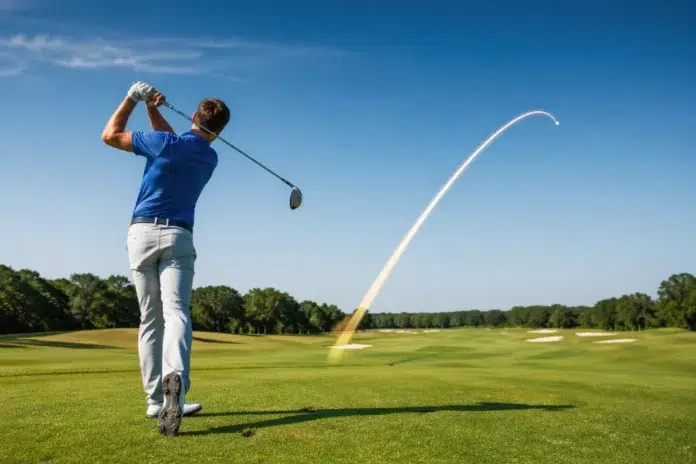
Distance Club Golf is all about knowing how far you truly hit each club and using that knowledge to create more power, better control, and smarter decisions on the course. Many golfers chase longer shots by swinging harder, but real distance usually comes from cleaner contact, better launch, improved club selection, and a swing that transfers energy efficiently.
Power in golf is not just about strength. It is about timing, setup, balance, equipment, and confidence. A player with a smooth swing and the right club can often outdrive someone who swings aggressively but misses the center of the clubface.
If you want to hit longer, straighter, and more consistent shots, Distance Club Golf can help you understand your yardages, sharpen your swing strategy, and stop guessing when you stand over the ball.
What Does Distance Club Golf Really Mean?
Distance Club Golf refers to the practical relationship between your golf clubs and the distance each one produces. It includes knowing your carry distance, total distance, shot shape, launch angle, spin rate, and how different conditions affect the ball.
For example, your 7-iron may carry 145 yards on a calm day, but only 135 yards into the wind. Your driver may travel 240 yards total when you strike it well, but only 210 when contact is low on the face.
That is why Distance Club Golf is not just about hitting far. It is about knowing your real numbers and using them wisely.
The best players do not simply ask, “Can I reach this target?” They ask, “Which club gives me the best chance to hit the right distance with control?”
That small shift can change your entire round.
Why Distance Matters So Much in Golf
Distance affects almost every part of the game. A longer tee shot can leave a shorter approach. A well-struck iron can create more birdie chances. Better wedge distance control can save strokes around the green.
The USGA and The R&A have studied driving distance for many years, and their distance reports show how important distance has become across professional tours. The 2024 Distance Report noted that average measured driving distance on the PGA TOUR was 14.3 yards longer in 2024 than in 2003.
That does not mean every golfer needs to chase professional-level distance. It means modern golf rewards players who understand power, launch, and efficiency.
For amateur players, the goal should not be reckless distance. The goal should be usable distance.
Usable distance means:
- More yards without losing control
- Better launch with less wasted spin
- Straighter misses
- Smarter club selection
- Confidence in carry numbers
- Less pressure on short game recovery
Distance Club Golf helps players focus on distance that actually improves scoring, not just distance that looks impressive on one swing.
Distance Club Golf Starts With Knowing Your Real Yardages
One of the biggest mistakes average golfers make is choosing clubs based on their best-ever shot.
A player may say, “I hit my 8-iron 160,” but in reality, that only happened once with perfect contact, firm ground, and a little helping wind. Their normal carry may be closer to 145 yards.
That difference matters.
If you choose clubs based on your best shot, you will often come up short. If you choose based on your average carry, you give yourself a much better chance to hit the green.
To improve Distance Club Golf accuracy, track three numbers for each club:
- Carry distance: How far the ball travels in the air
- Total distance: Carry plus roll
- Reliable distance: The number you can repeat most often
Carry distance is especially important for approach shots because hazards, bunkers, water, and front pins all depend on how far the ball flies.
A simple example:
| Club | Best Shot | Average Carry | Reliable Playing Number |
|---|---|---|---|
| Driver | 260 yards | 235 yards | 230 yards |
| 5-Iron | 190 yards | 175 yards | 170 yards |
| 7-Iron | 165 yards | 150 yards | 148 yards |
| Pitching Wedge | 125 yards | 112 yards | 110 yards |
Your reliable playing number is the one that helps you score.
The Center of the Clubface Is Your First Power Source
Before buying new equipment or trying to swing faster, check your strike location.
Many golfers lose distance because they miss the center of the clubface. A driver hit off the heel, toe, crown, or low face will usually lose ball speed, launch poorly, and curve more.
Center contact creates better energy transfer.
This is why a smooth swing that hits the middle can go farther than a wild swing with higher effort. Distance Club Golf becomes much easier when your contact pattern improves.
A simple practice drill is to use impact spray or face tape on your driver and irons. Hit ten balls and look at the pattern. If most marks are scattered, your swing may not need more speed yet. It needs better contact.
Try this:
- Tee the ball slightly higher with driver if contact is low on the face
- Stand a little farther from the ball if contact is mostly toward the heel
- Stand slightly closer if contact is mostly toward the toe
- Slow your tempo if contact becomes inconsistent under pressure
- Focus on balance at the finish
Small changes can add real yards because they improve strike quality.
Swing Speed Helps, But Ball Speed Matters More
Golfers often talk about swing speed, but ball speed is the number that shows how efficiently the club delivered power to the ball.
Two players can swing at the same speed, but the one who strikes the ball better will usually hit it farther.
That is why Distance Club Golf is not only about swinging harder. It is about turning your swing speed into ball speed.
For driver distance, three numbers matter a lot:
- Club speed
- Ball speed
- Smash factor
Smash factor compares ball speed to club speed. A higher smash factor usually means better energy transfer.
For example:
| Club Speed | Poor Strike Ball Speed | Solid Strike Ball Speed |
|---|---|---|
| 90 mph | 120 mph | 132 mph |
| 95 mph | 128 mph | 140 mph |
| 100 mph | 135 mph | 148 mph |
The player with cleaner contact can gain distance without swinging faster. That is a huge lesson for weekend golfers.
Launch Angle and Spin Can Change Your Distance
A powerful golf shot needs the right launch and spin. Too much spin can make the ball climb and fall short. Too little spin can make the ball drop too quickly. Launch too low and the ball does not carry. Launch too high with excess spin and it floats.
TrackMan’s golf data shows how launch angle and spin rate are key parts of optimized distance. For example, TrackMan notes that with a 94 mph driver club speed, optimized carry conditions include a launch angle around 13.6 degrees and a spin rate around 2,772 rpm.
You do not need to memorize every number. But you should understand the idea.
If your driver shots balloon high and fall straight down, you may have too much spin. If your drives launch low and run only when the ground is firm, you may need more launch.
Distance Club Golf improves when your launch conditions match your swing.
Common driver distance problems include:
- Ball too far back in stance
- Downward attack angle with driver
- Too much loft delivered at impact
- Weak grip causing an open face
- Shaft or loft not suited to your swing
- Poor contact low on the clubface
A launch monitor session with a coach or club fitter can reveal these issues quickly.
Club Selection Is a Distance Skill
Power is not useful if you choose the wrong club.
Many players lose shots because they under-club. They see 155 yards to the pin and reach for the club they hit 155 once. Then they miss short, land in a bunker, or leave themselves a difficult chip.
Better Distance Club Golf means selecting clubs based on realistic outcomes.
Ask these questions before choosing:
- What is the carry distance to the front of the green?
- Is the pin front, middle, or back?
- Is there wind?
- Is the lie clean, rough, uphill, or downhill?
- What happens if I miss long?
- What happens if I miss short?
- Am I feeling comfortable with this club today?
The safest club is often the one that covers the front trouble and still gives you room if you hit it well.
For example, if the pin is 150 yards but water guards the front at 140, do not hit a club that only carries 145 when struck perfectly. Take the club that carries 155 with a normal swing.
That is not playing scared. That is playing smart.
Distance Club Golf Tips for More Driver Power
The driver is the club most golfers think about when they want more distance. It is also the club where small setup mistakes create big misses.
Here are practical ways to gain more driver power without losing control.
Tee the Ball at the Right Height
A good driver strike usually happens slightly above the center of the face. If the ball is teed too low, many golfers hit down on it or make contact low on the face. That can increase spin and reduce carry.
A simple checkpoint is to tee the ball so about half of it sits above the top edge of the driver.
This gives you room to hit up on the ball and launch it higher.
Move the Ball Forward
For most players, driver works best when the ball is played near the inside of the lead heel. This helps the club meet the ball on a slightly upward path.
If the ball is too far back, your driver may launch low and spin too much.
Distance Club Golf improves when your setup gives the club a chance to do its job.
Widen Your Stance
A slightly wider stance gives you a stronger base for driver swings. It also helps you turn fully without losing balance.
Do not go so wide that you feel stuck. You still need rotation.
A good driver stance feels athletic, stable, and ready to move.
Make a Full Shoulder Turn
Many golfers shorten the backswing because they are trying to guide the ball. That can reduce power and create tension.
A full shoulder turn helps store energy. The key is to turn, not sway.
Your upper body should rotate while your lower body stays stable enough to support the motion.
Finish in Balance
If you cannot hold your finish, you may be swinging beyond your control.
A balanced finish is one of the easiest signs of efficient power. You do not have to swing softly, but you should swing in a way that lets you stay on your feet.
Power that knocks you off balance is usually not reliable.
Iron Distance Comes From Compression, Not Force
Many players try to lift iron shots into the air. That usually creates weak contact.
Good iron distance comes from compressing the ball with a descending strike. The club has loft built into it, so you do not need to scoop.
With irons, the ball should usually be struck first, then the turf. That creates better energy transfer, cleaner launch, and more predictable carry.
Distance Club Golf with irons depends on three things:
- Solid contact
- Proper shaft lean
- Controlled swing tempo
You do not need to take a huge divot. You just need ball-first contact.
A useful drill is the towel drill. Place a small towel a few inches behind the ball. Practice hitting the ball without touching the towel. This encourages cleaner contact and reduces early ground strikes.
Wedge Distance Is About Control, Not Maximum Power
Wedges are scoring clubs. You should not swing your wedges at maximum effort on every shot.
A full wedge may fly farther, but it can also spin too much, launch too high, or become difficult to control.
Better players often use partial wedge swings because they are easier to repeat.
For example:
| Swing Length | Possible Wedge Distance |
|---|---|
| Half swing | 50 yards |
| Three-quarter swing | 75 yards |
| Full swing | 100 yards |
Your numbers will be different, but the concept is the same.
Distance Club Golf includes wedge control because scoring depends heavily on shots inside 120 yards.
Practice three distances with each wedge. Learn a half swing, a three-quarter swing, and a full swing. That gives you more options on the course.
How Fitness Supports Golf Distance
Power in golf comes from the whole body, not just the arms.
Your legs, hips, core, back, shoulders, and wrists all play a role. A stronger and more mobile body can help you swing faster while staying balanced.
Golf fitness does not need to mean heavy gym training. Many players can improve distance by working on mobility, stability, and basic strength.
Helpful areas include:
- Hip rotation
- Thoracic spine mobility
- Core stability
- Glute strength
- Shoulder flexibility
- Grip strength
- Balance training
The R&A’s Golf and Health materials have highlighted golf’s physical and mental health benefits, including walking, movement, and wider wellness advantages.
For distance, the key is building a body that can rotate freely and control speed.
Even ten minutes a day can help. Try hip openers, torso rotations, bodyweight squats, planks, and resistance band turns.
Equipment Can Help, But It Cannot Fix Everything
Modern clubs can support better distance, but equipment is not magic.
A driver with the wrong loft, shaft, or length can cost you yards. Irons with poor lie angles can send shots offline. Worn grips can make the club harder to control.
Still, new clubs will not solve poor contact or bad strategy by themselves.
Distance Club Golf works best when equipment matches your swing.
A fitting can help with:
- Driver loft
- Shaft flex
- Shaft weight
- Club length
- Iron lie angle
- Grip size
- Wedge gapping
- Hybrid or fairway wood selection
One common mistake is carrying clubs that overlap in distance. For example, a 5-wood, 3-hybrid, and 4-iron may all go almost the same distance for some players.
That creates confusion.
Your bag should have clear distance gaps so you know which club to use.
Build a Better Distance Gap Chart
A distance gap chart is one of the best tools for smarter golf.
It shows how far you hit each club and helps you avoid guessing.
Here is a simple format:
| Club | Carry Distance | Total Distance | Notes |
|---|---|---|---|
| Driver | 230 | 245 | Best from wide tee shots |
| 3-Wood | 210 | 225 | Safer option on tight holes |
| 5-Hybrid | 185 | 195 | Good from light rough |
| 7-Iron | 150 | 155 | Reliable approach club |
| 9-Iron | 125 | 128 | Good for controlled shots |
| Sand Wedge | 85 | 87 | Full swing only when needed |
You can build this chart at a driving range, indoor simulator, launch monitor session, or during practice rounds.
For more accurate results:
- Hit at least 8 to 10 shots per club
- Remove obvious mishits from the average
- Track carry distance, not only total distance
- Test in calm weather if possible
- Update your chart every few months
Distance Club Golf becomes much easier when your numbers are written down.
Course Conditions Change Distance
The same club does not always travel the same distance.
Wind, temperature, elevation, turf firmness, humidity, and lie conditions all affect the shot.
A ball can fly shorter in cold weather because air is denser and the ball may not compress as well. Downwind shots can carry farther but may be harder to stop. Into-the-wind shots often require more club and a smoother swing.
Uphill shots usually play longer. Downhill shots usually play shorter.
Rough can reduce spin and create flyers, especially with short irons. Wet fairways reduce roll. Firm fairways increase total distance.
Distance Club Golf means adjusting for these factors instead of blindly trusting one yardage.
A simple rule: when conditions are difficult, choose the club that protects you from the worst miss.
Do Not Swing Harder Into the Wind
This is a common mistake.
When golfers face wind, they often swing harder. That adds spin, sends the ball higher, and makes the wind affect it more.
A better move is to take more club and swing smoother.
For example, instead of forcing an 8-iron into the wind, hit a controlled 7-iron. Keep your tempo steady and finish balanced.
The ball will usually fly lower, spin less, and hold its line better.
This is a major part of Distance Club Golf because power is not always about more effort. Sometimes power means using less effort with a smarter club.
How Beginners Can Improve Distance Faster
Beginners often think they need advanced swing mechanics to gain distance. In reality, they usually need a few basics done well.
Start with grip, posture, alignment, and contact.
A poor grip can leave the clubface open. Bad posture can limit rotation. Poor alignment can cause compensations. Weak contact can waste speed.
Beginners should focus on:
- Learning a neutral grip
- Making a relaxed athletic setup
- Turning the body instead of only lifting the arms
- Hitting the center of the clubface
- Using enough club instead of forcing shots
- Practicing with purpose, not just hitting balls
Distance Club Golf gives beginners a structure. Instead of asking, “How do I hit it far?” they can ask, “How do I hit this club better and understand my distance?”
That is a much more useful question.
Real-World Example: The Weekend Golfer Who Gained Distance Without Swinging Harder
Imagine a weekend golfer named Mark. He usually shoots in the low 90s and believes he needs more driver speed.
His average drive is around 220 yards, but his contact is inconsistent. Some shots go 245, others barely reach 190. He swings hard because he wants more distance, but he often finishes off balance.
After checking his strike pattern, he realizes most drives are low on the face and toward the heel.
Instead of trying to swing faster, he makes three changes:
- Tees the ball slightly higher
- Moves the ball closer to his lead heel
- Swings at 85 percent effort with a balanced finish
Within a few practice sessions, his average drive moves from 220 to 235 yards. More importantly, his misses are playable.
That is the value of Distance Club Golf. It helps players gain distance by improving the quality of the shot, not just the violence of the swing.
Common Distance Mistakes Golfers Should Avoid
Many distance problems come from habits that feel powerful but create poor results.
Swinging Too Hard
Trying to crush the ball often tightens the hands, arms, and shoulders. Tension slows the club down and makes contact worse.
Power needs speed, but speed needs freedom.
Ignoring Carry Distance
Total distance can be misleading. A ball that rolls 30 yards on dry turf may stop quickly on wet grass.
Carry distance is more reliable for club selection.
Using the Wrong Tee Box
Playing from tees that are too long can make golf frustrating. It forces long approach shots, adds pressure, and removes scoring chances.
Choosing the right tees can make the game more enjoyable and strategic.
Copying Professional Swings
Professional golfers train for years and often have mobility, speed, and strength that average players do not. Copying their moves without context can hurt your game.
It is better to build a swing that fits your body.
Forgetting the Short Game
Distance helps, but it does not replace putting, chipping, and wedge control. The best scoring comes from a balanced game.
Distance Club Golf should support your full game, not distract from it.
Practice Routine for Better Club Distance
You do not need hours every day to improve. You need focused practice.
Try this weekly routine:
Day 1: Contact Practice
Hit short and mid irons while focusing only on center contact. Use face tape or foot spray if possible.
Day 2: Driver Setup
Practice tee height, ball position, and balanced finishes. Do not chase maximum speed at first.
Day 3: Wedge Ladder
Hit wedges to three different distances. For example, 50, 70, and 90 yards.
Day 4: Club Gapping
Hit several balls with each club and write down average carry numbers.
Day 5: On-Course Strategy
During a practice round, choose clubs based on safe targets, not just pin distance.
This type of routine builds skill and confidence at the same time.
How to Use Distance Club Golf During a Round
The course is not the place to search for a new swing. It is the place to use what you know.
Before each shot, follow a simple process:
- Find the target distance.
- Check wind, lie, elevation, and trouble.
- Choose the club that covers the safest number.
- Commit to a smooth swing.
- Accept the result and move on.
This routine prevents rushed decisions.
It also helps you avoid emotional club selection. After a bad shot, many players try to make up for it by forcing the next one. That usually creates another mistake.
Distance Club Golf teaches patience. You do not need a perfect shot. You need the right shot often enough.
Should You Use a Rangefinder or GPS?
Both can help.
A rangefinder gives exact distance to a target, such as a flag, tree, or bunker lip. GPS devices show front, middle, and back distances to the green.
For most golfers, GPS numbers may be more useful on approach shots because aiming at the middle of the green is often smarter than firing at every pin.
A rangefinder is helpful when you need exact carry numbers over hazards or to specific landing areas.
The best option is using both if possible. But even one reliable distance tool can improve club choice.
Distance Club Golf is built on information. Better information usually leads to better decisions.
Mental Confidence Adds Distance Too
Confidence affects tempo. Tempo affects contact. Contact affects distance.
When you know your club numbers, you swing with more trust. You stop making last-second doubts over the ball. That alone can improve your strike.
A confident golfer does not always hit farther because they are stronger. They hit farther because they swing freely.
Fear creates tension. Tension ruins speed.
The more you practice Distance Club Golf, the more comfortable you become with your own numbers. That comfort can turn into better rhythm and stronger shots.
Final Thoughts on Distance Club Golf
Distance Club Golf is not about chasing one huge drive or copying what tour players do on television. It is about understanding your clubs, improving contact, choosing smarter targets, and creating power that actually helps your score.
Longer shots are useful, but only when they stay playable. A 250-yard drive in the fairway is more valuable than a 280-yard shot lost in the trees. A controlled 7-iron to the middle of the green is often better than a forced 8-iron that comes up short.
The real secret is combining power with awareness. Learn your carry numbers. Improve your launch. Build better contact. Use the right club for the shot in front of you. Over time, those small decisions add up to better golf.
As the history of the golf club shows, equipment has always shaped how the game is played, but the player still has to make the right swing and the right decision. That is where Distance Club Golf becomes valuable for everyday golfers.
When you understand your distances, you stop guessing. When you stop guessing, you start playing with more confidence. And when confidence meets solid contact, real power finally shows up on the course.
Frequently Asked Questions About Distance Club Golf
What is Distance Club Golf?
Distance Club Golf means understanding how far each golf club travels and using that knowledge to choose better shots. It includes carry distance, total distance, launch, spin, club selection, and course conditions.
How can I increase golf distance without swinging harder?
You can increase distance by improving center contact, optimizing launch angle, reducing wasted spin, using the right club, improving flexibility, and maintaining better balance through the swing.
Why do my golf shots go shorter than expected?
Your shots may go shorter because of poor contact, too much spin, low launch, wrong club selection, cold weather, wind, bad lie, or choosing clubs based on your best shot instead of your average distance.
Should I focus on driver distance or iron distance first?
Most golfers should focus on contact first across all clubs. Driver distance helps, but iron and wedge distance control often creates more scoring chances.
How often should I check my club distances?
Check your club distances every few months or whenever your swing, fitness, equipment, or ball choice changes. Your yardages can shift as your game improves.
Conclusion
Distance Club Golf gives players a smarter way to gain power and control on the course. Instead of guessing, swinging harder, or relying on one lucky shot, you learn your real numbers and build a game around them.
Better distance comes from cleaner contact, proper launch, useful equipment, smart club selection, and a body that can move well. When those pieces work together, you do not just hit the ball farther. You play better golf.
Whether you are a beginner, weekend player, or improving golfer, Distance Club Golf can help you make better decisions, avoid costly mistakes, and enjoy the game with more confidence.

