


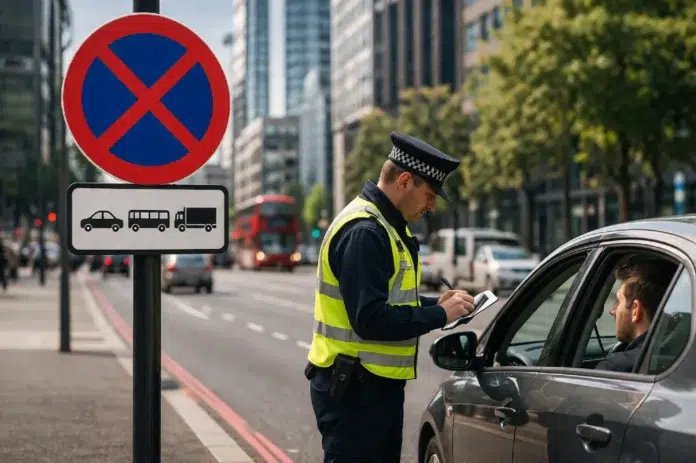
Most drivers have seen the sign at some point, slowed down for a second, and then kept moving without being fully sure what it meant. That is exactly why Urban Clearway rules catch people out. The wording sounds technical, the sign is easy to overlook in busy streets, and many drivers confuse it with ordinary no waiting or no parking restrictions.
In simple terms, an urban clearway is there to keep traffic flowing on busy built up roads, usually during set hours. During those operating times, you are not allowed to stop on the carriageway or verge except to pick up or set down passengers. The rule is set out in the Highway Code, and the government’s traffic-signs guidance makes clear that the restriction is about stopping, not just parking.
That difference matters. A lot of drivers assume they are fine as long as they stay in the car, put the hazard lights on, or stop only for a minute. In many cases, that assumption is what leads to a penalty. On an urban clearway, the question is not whether you intended to park. The question is whether you stopped when the restriction was in force and whether your reason fell within the narrow exception for passenger pick up or drop off.
This is where the rule starts to feel more serious than it first appears. It is designed for peak traffic conditions, especially on roads where even a brief stop can create congestion, block sight lines, or trigger sudden lane changes. That is why councils and enforcement bodies treat it differently from a casual roadside stop.
What an Urban Clearway actually means
The simplest definition is this: an urban clearway is a road restriction used in built up areas where stopping is banned during the times shown on the sign, except for picking up or setting down passengers. The government’s “Know Your Traffic Signs” material says there are usually no special road markings for this restriction, and the signs are commonly repeated along the route, especially after junctions.
That last point is important because many drivers go looking at the road surface for clues. With some restrictions, yellow lines or marked bays tell the story. With an urban clearway, the upright sign does most of the work. If you are relying only on the road markings, you can miss the restriction entirely.
The rule also exists for a practical reason. Urban routes can become unstable very quickly when one vehicle stops in the wrong place. A single car pulling over outside the allowed conditions can slow buses, force overtakes, hold up delivery traffic, or create a risky squeeze point for cyclists and motorcyclists. Transport guidance is built around keeping those corridors moving, particularly at busy times.
How the sign works in real life
The urban clearway sign normally shows the restriction with times underneath, such as morning and evening peak periods. Those times are not decoration. They tell you exactly when the stopping ban applies. Outside those hours, different local rules may apply depending on the road, but during the stated period the stopping restriction is active.
So if a sign says the road is an urban clearway from 7:30 a.m. to 9:30 a.m. and from 4:00 p.m. to 6:30 p.m., stopping during those periods is restricted even if the road feels quiet at that particular moment. Drivers often make the mistake of judging by traffic conditions instead of the sign. Enforcement is based on the restriction, not on whether the road looked busy when you stopped.
Another thing that causes confusion is the word “urban.” Some drivers assume it is a broader zone like a congestion area or environmental scheme. It is not. It is a specific roadside traffic restriction on a specific stretch of road, usually indicated by repeated signs.
Urban Clearway vs no waiting vs no parking
This is where readers usually need the clearest explanation because a lot of fines start with a simple misunderstanding of terms.
A no waiting restriction usually concerns leaving a vehicle in place and is often linked with yellow lines. In some situations, loading or unloading may still be allowed depending on the signs and markings. An urban clearway is stricter during its operating hours because it is about stopping at all, not merely waiting. The permitted exception is generally limited to picking up or setting down passengers.
That distinction sounds small, but it changes everything. If you pull over to check directions, answer a call, send a message, sort out a child seat, or wait for someone who is not yet at the curb, you may already be in breach. If you stop to unload shopping, collect a parcel, or make a quick delivery, that is also a problem because loading is not permitted under the urban clearway contravention reference published by NI Direct.
Drivers also ask whether hazard lights make it acceptable. They do not override the restriction. Hazard lights may warn other road users, but they do not turn a prohibited stop into a lawful one.
The one main exception drivers should know
The key exception is passenger pick up or drop off. The Highway Code and government sign guidance both recognize this. During operational hours, stopping is allowed for that limited purpose.
But even here, drivers get into trouble because they stretch the exception too far. The safe reading of the rule is that this should be brief and directly connected to passengers getting in or out. It is not an open ended excuse to wait while somebody finishes shopping, comes down from an office, or takes several minutes to appear.
Think about the difference between these two scenarios. In the first, a passenger is standing at the curb, gets in quickly, and the car moves off. In the second, the driver stops outside a shop, stays in the vehicle, and waits two or three minutes while the passenger pays and comes out. The first is much closer to the permitted exception. The second is the kind of situation that can still attract enforcement because the vehicle has effectively stopped and is waiting. The rule is built for traffic flow, so time matters even when the driver never leaves the seat.
Why drivers get fined on an Urban Clearway
Most penalties do not happen because people never heard of the rule. They happen because drivers misread what counts as stopping, or they assume a short stop does not matter.
Here are the most common reasons people get fined:
- They think staying inside the vehicle makes the stop legal
- They confuse passenger pick up with waiting for a passenger
- They stop to load, unload, or run a quick errand
- They miss the operating hours on the sign
- They assume the lack of yellow lines means the road is unrestricted
- They believe Blue Badge status creates an automatic exemption
That final point catches many motorists by surprise. The NI Direct enforcement page for clearway contravention code 46C states that loading or unloading is not permitted and Blue Badge holders are not exempt for that contravention. Local enforcement practice can vary by jurisdiction and the precise type of restriction, but as a practical rule drivers should not assume disability parking concessions override an urban clearway sign.
The reason enforcement can feel unforgiving is that the rule is designed to prevent disruption before it starts. Authorities do not need to prove the stop caused a traffic jam. The contravention is the stop itself during the active hours, unless it falls into the allowed passenger exception.
Are fines the same everywhere
Not always. The exact penalty amount and enforcement process can vary by local authority and by whether the matter is handled under local civil parking enforcement rules or another enforcement framework. What remains consistent is the basic legal and practical meaning of the restriction: stopping is banned during the hours shown, except to pick up or set down passengers.
So when people search for why drivers get fined, the better answer is not a single national fee figure. It is the fact that the rule is stricter than many drivers expect, and local enforcement officers or camera systems may treat even brief, casual stops as contraventions if they occur during operational hours.
A quick real world example
Picture a commuter road outside a row of shops. The sign shows an urban clearway from 8:00 a.m. to 9:30 a.m. and 4:30 p.m. to 6:30 p.m. A driver pulls in at 5:10 p.m. to grab a takeaway order that is “already waiting.” The driver expects to be back in less than a minute.
From the driver’s point of view, that feels harmless. From an enforcement point of view, the vehicle has stopped on an urban clearway during its active period for a reason that is not the permitted passenger pick up or drop off exception. That is exactly the type of stop the restriction is there to prevent.
Now change the scenario slightly. A parent pulls over and a child immediately gets out at the curb for school or an activity. That is much closer to the passenger exception. Even then, the stop should be as brief as possible and should not drift into waiting.
How to read the sign properly
When you see an urban clearway sign, focus on three things right away.
First, check the hours. The restriction is only active during the times shown. Second, remember that the sign is about stopping, not just parking. Third, ask yourself whether your reason is truly limited to passenger pick up or set down. If the answer is no, keep moving.
This small mental checklist prevents most mistakes:
- Is the sign active right now
- Am I about to stop rather than just slow down in traffic
- Is this only for passengers getting in or out right away
If you cannot answer yes to the third point, do not stop there.
The road markings confusion problem
One reason this topic gets so many searches is that drivers are trained to rely heavily on painted lines. With an urban clearway, there are generally no special road markings tied to the restriction itself. The government’s published signs material says exactly that.
That means a road can look visually open while still carrying a live stopping ban at the hours shown on the sign. On a busy street, signs can blend into the visual clutter of buses, shopfronts, lane directions, and pedestrian crossings. That does not weaken the rule. It just means drivers need to be more intentional about scanning roadside signs rather than waiting for yellow lines to confirm everything.
What the Highway Code says
The Highway Code is direct on this point. In its waiting and parking rules, it states that you must not stop or park on an urban clearway within its hours of operation, except to pick up or set down passengers. That wording is the backbone of the rule and clears up the biggest misconception right away. It is not only about parking. It covers stopping too.
That wording also explains why quick errands are risky. A “just one minute” stop is still a stop. If it is not for passenger pick up or drop off, the driver is exposed to enforcement.
Practical tips to avoid getting caught out
The best protection is not memorizing legal language. It is building a better road habit.
Start treating urban clearway signs the same way you treat school zone signs or bus lane hours. Read the timing and apply it immediately. If you need to collect food, wait for someone, check navigation, sort a child seat, or answer a message, find a lawful side road or designated bay instead.
It also helps to stop using your own intentions as the test. Drivers often tell themselves, “I’m not parking, I’m just stopping for a second.” On an urban clearway, that mindset is exactly what causes trouble. The restriction is based on what the vehicle does, not on what the driver calls it.
If you drive for work, do school runs, or make regular pickups in town centers, this matters even more. Repeated exposure to the same road can create false confidence. Familiar roads are where people stop paying attention to signs because they think they already know the layout.
Common questions readers ask
Can you stop on an Urban Clearway to answer a phone call?
No, not during its operating hours. The exception is for picking up or setting down passengers, not for personal convenience or vehicle admin.
Can you load or unload on an Urban Clearway?
The enforcement reference for contravention code 46C says loading and unloading are not permitted. That aligns with the stricter nature of the stopping ban.
Can Blue Badge holders stop on an Urban Clearway?
Do not assume they can. The same enforcement reference says Blue Badge holders are not exempt for that clearway contravention.
Does it apply all day?
Only during the hours displayed on the sign. Outside those hours, other local restrictions may still apply, so drivers should still check the full signage on the road.
Is an Urban Clearway the same as a red route?
No. They are different restrictions with different signing and enforcement setups. The safest approach is not to merge categories in your head. Read the exact sign in front of you.
Final thoughts
The reason Urban Clearway causes so much confusion is simple. It looks like a minor roadside sign, but it carries a strict rule that many drivers misread. The moment you understand that it is about stopping, not only parking, the rest of the rule becomes much easier to follow.
If you remember one thing, let it be this: during the hours shown, do not stop unless you are briefly picking up or setting down passengers. Not for loading. Not for waiting. Not for a quick errand. That one habit can save you from unnecessary fines and make you a more alert city driver.
Road rules like this are part of wider traffic management systems that keep urban roads moving safely. Once you know what the sign actually means, it stops being obscure and starts being practical.
Sources: The Highway Code; UK Department for Transport traffic-sign materials; NI Direct contravention reference.

