


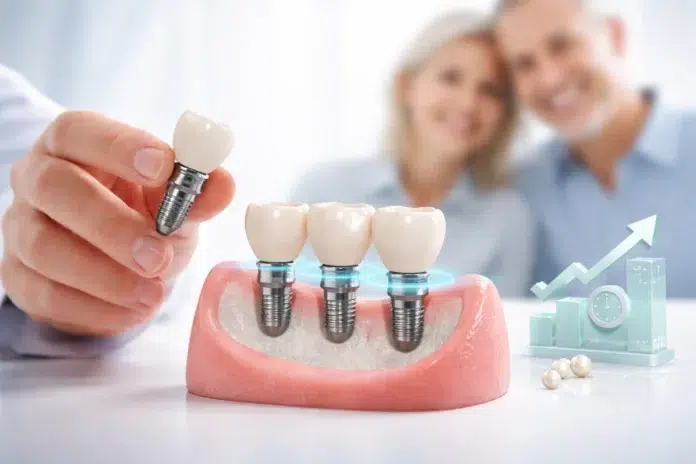
Losing a tooth changes more than your smile. It can affect how you chew, how you speak, and even how confident you feel in everyday conversations. That is why interest in Screwless Dental Implants has grown so quickly. Many patients like the idea of a restoration that looks cleaner, feels more natural, and avoids the visible access hole often associated with screw-retained crowns.
That said, the term is a little broader than it sounds. In real clinical practice, screwless restorations usually refer to implant crowns or prostheses that are retained without a traditional prosthetic screw, often through conometric or locking-taper designs, and in some cases through cement-retained solutions. These systems are used to improve esthetics and simplify the visible final result, but the right choice depends on bone quality, bite forces, gum shape, and how easily the restoration may need to be removed later. Clinical studies on conometric and locking-taper approaches show promising short- and medium-term performance, while mainstream implant treatment overall continues to post high survival rates when planned and maintained properly.
For patients, the big questions are usually simple. What happens during the procedure? How painful is recovery? And do the results actually last? The good news is that the process is usually more manageable than people expect. The more important part is careful case selection, good oral hygiene, and long-term follow-up, because implants succeed best when the surgery, prosthetic design, and maintenance plan all work together.
What Are Screwless Dental Implants?
When people search for Screwless Dental Implants, they are usually talking about implant restorations that do not rely on a visible screw channel in the final crown. The implant itself is still placed in the jawbone much like a standard dental implant. What changes is the way the visible tooth portion is attached.
In many modern systems, the connection can be friction-based or locking-based. Conometric and Morse taper designs are the most commonly discussed in the research. These create a tight fit between components and may reduce micro-movement while improving the cosmetic finish. In simpler terms, the crown can look more like a natural tooth because there is no screw access opening on the biting surface.
That cosmetic advantage is one reason these restorations attract attention, especially for front teeth or smile-zone cases. But esthetics are not the whole story. Dentists also consider retrievability, tissue health, bite load, and the risk of complications from excess cement when cement-retained designs are used. An ITI consensus review found that cemented implant restorations had higher biologic complication rates, while screw-retained options tended to have more technical complications, and the authors favored screw-retained reconstructions because they are easier to retrieve when maintenance is needed.
So, are Screwless Dental Implants real? Yes, but the term works better as a patient-friendly label than as a single formal clinical category. It usually points to a screw-free final restoration rather than a completely different implant surgery.
Who May Be a Good Candidate?
Not everyone needs the same implant design. A patient missing one tooth in the front of the mouth has very different priorities from someone replacing multiple molars or wearing a full-arch prosthesis. The best candidates for Screwless Dental Implants usually have enough healthy bone for implant placement, stable gum health, and a treatment plan that benefits from a highly esthetic final crown.
A dentist will usually look at these factors before recommending this option:
- The amount and quality of jawbone
- Gum thickness and smile line
- The position of the missing tooth
- Bite pressure and grinding habits
- Smoking status
- History of gum disease
- Blood sugar control if the patient has diabetes
This evaluation matters because implants are not just about placing titanium in bone. They are about creating a stable long-term environment. Smoking has been repeatedly linked to higher implant failure risk, and poorly controlled diabetes may delay osseointegration and make early loading less predictable. Periodontitis history also remains an important risk factor for peri-implant disease.
A patient with excellent oral hygiene and strong follow-up habits may do very well with a screwless restoration. A patient with untreated gum inflammation, heavy smoking, or uncontrolled diabetes may need risk reduction first before any implant is placed.
How the Procedure Usually Works
The surgery for Screwless Dental Implants is not dramatically different from standard implant surgery. The difference usually appears in the restorative stage, when the crown or prosthesis is connected.
Step 1: Consultation and Planning
Everything begins with an exam, digital imaging, and a discussion about goals. The dentist checks whether the missing tooth area has enough bone and whether grafting might be needed. Mayo Clinic notes that implant treatment is often done in stages and may include tooth removal, bone grafting, implant placement, healing, abutment placement, and then the artificial tooth.
This planning phase is where decisions about screw-retained versus screwless designs are made. It is also where your dentist considers esthetics, bite alignment, and future maintenance.
Step 2: Tooth Removal and Site Preparation
If a damaged tooth is still present, it may be removed first. Some patients can receive immediate implant placement, while others need healing time. If the area lacks enough bone, grafting may be performed before or during implant placement, depending on the case.
Step 3: Implant Placement
The implant itself is placed into the jawbone under local anesthesia, and sometimes sedation is offered. The process is usually outpatient. Most patients are surprised that the surgery is more about pressure and vibration than sharp pain.
After placement, the body begins osseointegration, the biological process in which bone bonds to the implant surface. This is the foundation of long-term stability. Cleveland Clinic states that osseointegration commonly takes about three to nine months, though timing varies by healing speed, bone quality, and whether grafting was required.
Step 4: Healing Phase
This is the quiet part of treatment, but it is one of the most important. The implant is left to integrate with bone. In some cases, a temporary crown is worn, but in others the area is kept unloaded to protect healing.
If a patient has diabetes, healing may still be successful, but clinicians often take a more cautious approach when glycemic control is poor because delayed osseointegration is more likely.
Step 5: Final Restoration
Once the implant is stable, the final crown or prosthesis is connected. In Screwless Dental Implants, this may be done through a conometric, taper-lock, or other screw-free retention concept, depending on the system. Some studies on conometric restorations have reported encouraging one-year and five-year outcomes, suggesting that properly selected cases can perform well over time.
The key point for patients is simple: the surgery is familiar, but the visible attachment method can be different.
What Recovery Really Feels Like
Recovery has two layers. The first is short-term surgical recovery. The second is deeper bone healing.
In the first few days, mild swelling, soreness, and light bleeding are common. Many people manage well with prescribed or over-the-counter pain relief, soft foods, and rest. Most daily discomfort improves within about a week or two, though the exact timeline varies. Clinical patient guidance from major health sources consistently describes implant surgery as a staged process with a much longer healing phase beneath the surface.
Here is a realistic recovery pattern many patients experience:
| Recovery stage | What you may notice | What usually helps |
|---|---|---|
| First 24 to 72 hours | Swelling, tenderness, mild bleeding | Ice packs, rest, medications, soft foods |
| Days 4 to 7 | Less swelling, improving soreness | Gentle brushing, saltwater rinses if advised |
| Week 2 | Soft tissue feels calmer | Return to more normal routine, avoid hard chewing on the site |
| Months 2 to 6+ | Little day-to-day sensation, but bone is still integrating | Follow-up visits, avoid overload, keep the area very clean |
Soft tissue may look fine before the bone is fully ready. That is why dentists sometimes ask patients to be patient even when the area already feels normal.
Recovery Tips That Actually Make a Difference
Patients often focus on the surgery itself, but the recovery habits are what shape the final result. A few common-sense steps make a real difference.
Stick to the post-op instructions exactly. That includes cleaning guidance, medication timing, and food restrictions. Avoid smoking if at all possible, because tobacco affects blood flow and has been linked to greater implant failure and peri-implant complications.
Keep food soft at first. Yogurt, eggs, smoothies, soup, oatmeal, and soft rice are easier choices during early healing. Very hot, spicy, crunchy, or hard foods can irritate the surgical site.
Do not treat brushing like an all-or-nothing issue. Gentle cleaning is usually better than leaving the mouth untouched. Plaque control matters because peri-implant disease remains one of the biggest long-term threats to implant health. A 2025 review reported weighted mean prevalence estimates of peri-implant mucositis at 63.0 percent of patients and peri-implantitis at 25.0 percent of patients, which shows how important maintenance really is.
Attend follow-up visits even if you feel fine. Problems around implants often start quietly. Early inflammation is easier to manage than advanced bone loss.
Long-Term Results: How Durable Are They?
This is where patient interest usually peaks. People want to know whether Screwless Dental Implants actually last.
The broad answer is encouraging. Dental implants overall have high survival rates, often above 95 percent in properly selected cases, although “survival” does not always mean “zero complications.” An implant can still be present and functioning while requiring maintenance for gum inflammation, crown issues, or bite adjustments.
For screwless concepts specifically, the evidence is promising but still more limited than the long history behind conventional screw-retained approaches. A 2025 systematic review and meta-analysis on conometric retention concluded that this method appears to be a predictable therapeutic option associated with high implant and prosthesis survival. Earlier studies also reported favorable one-year, two-year, and five-year outcomes for conometric or locking-taper restorations in selected cases.
Long-term success usually depends less on the marketing label and more on these practical factors:
- Accurate treatment planning
- Enough healthy bone
- Strong implant stability at placement
- A prosthetic design that suits the bite
- Daily plaque control
- Regular professional maintenance
- Control of smoking, diabetes, and gum disease risk
That is the part many patients do not hear often enough. No implant system is maintenance-free. Good long-term results come from partnership, not just technology.
Benefits Patients Commonly Notice
One clear advantage of Screwless Dental Implants is the final look. Without a screw access hole on the crown, the restoration can appear more seamless, especially in visible areas. That matters to patients who are very conscious of smile esthetics.
Another potential advantage is the connection design itself. Some locking-taper systems are intended to provide a stable, tight fit that may help minimize microleakage and movement. Research on newer screwless retained designs has also suggested comparable biomechanical performance to conventional approaches in modeling studies, though clinical decisions still need to rely on real patient outcomes rather than laboratory simulation alone.
Patients also sometimes report that the final crown feels more natural because the chewing surface is uninterrupted. That can be especially appealing in single-tooth replacements.
Possible Downsides and Trade-Offs
A balanced article has to say this clearly. Screwless Dental Implants are not automatically better than screw-retained restorations.
The biggest trade-off is retrievability. When a restoration is harder to remove, maintenance can become more complicated. This is one reason expert reviews have often favored screw-retained solutions in many situations. Screw-retained prostheses may have more technical complications, but they are generally easier to retrieve and adjust. Cement-retained designs can also create biologic issues if cement residue is left behind near the gumline.
There is also the issue of case selection. A beautifully esthetic crown is not enough if the patient clenches heavily, has unstable gum health, or is unlikely to attend maintenance visits. In those cases, the smartest treatment plan may not be the most cosmetically appealing one on paper.
What Can Go Wrong Over Time?
It is easy to read success statistics and assume implants simply work forever. Real life is more nuanced.
The most common long-term threats include peri-implant mucositis, peri-implantitis, bone loss, occlusal overload, loosening or wear of restorative components, and poor home care. Peri-implant disease deserves special attention because it can progress with surprisingly few symptoms at first. Recent evidence has continued to identify smoking, diabetes, periodontitis history, and alcohol use as meaningful risk indicators for peri-implantitis.
That does not mean patients should fear implants. It means they should treat them like high-value restorations that need maintenance. A dental implant does not get cavities, but the surrounding tissues can absolutely become inflamed or infected.
A Realistic Example
Imagine a patient who loses an upper front tooth after trauma. The bone is intact, the gums are healthy, and appearance is a major concern because the smile line is high. This is the kind of situation where a screwless restoration may be especially appealing, since the lack of a visible access opening can improve the final cosmetic result.
Now picture another patient missing a lower molar, with a history of smoking, night grinding, and inconsistent dental visits. In that case, a clinician may prioritize retrievability, durability under force, and simpler maintenance access. The point is not that one option is always better. The point is that the best implant design depends on the whole person, not just the missing tooth.
Frequently Asked Questions
Are Screwless Dental Implants painful?
The procedure itself is usually done under local anesthesia, so pain during surgery is typically limited. Afterward, most patients describe soreness and swelling rather than severe pain, especially in the first few days.
How long does healing take?
Initial soft tissue recovery may improve within one to two weeks, but bone integration usually takes several months. Cleveland Clinic notes that osseointegration can take roughly three to nine months.
Are Screwless Dental Implants better than regular implants?
Not automatically. They can offer esthetic advantages and may perform well in the right case, but retrievability and maintenance remain important considerations. Many expert reviews still favor screw-retained reconstructions in situations where future access is important.
How long can they last?
With proper planning, good oral hygiene, and regular maintenance, implant restorations can last many years. Overall implant survival rates are high, but long-term success depends heavily on patient factors and follow-up care.
Final Thoughts
Screwless Dental Implants can be an excellent option for the right patient. They offer a polished, natural-looking result and may deliver very good outcomes when the case is selected carefully and maintained well. The procedure itself follows the familiar implant pathway of planning, placement, healing, and restoration, but the final attachment method is what gives this approach its appeal.
The most important takeaway is that long-term success is never just about the device. It depends on bone quality, gum health, bite control, hygiene, and regular follow-up. If those pieces are in place, Screwless Dental Implants can provide function, appearance, and confidence for years. And if you are comparing restoration styles, it helps to understand a little about dental implants before deciding which approach fits your mouth, your habits, and your long-term goals best.

