


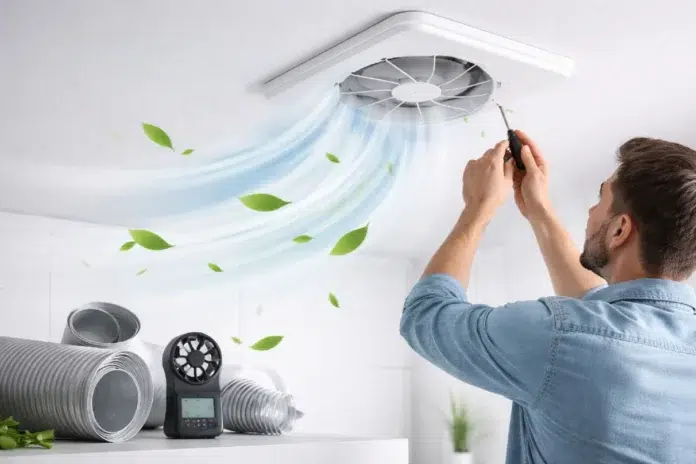
Buying the right Exhaust Fan sounds simple until you start comparing sizes, airflow ratings, noise levels, duct options, and energy use. That is where many homeowners get stuck. One model looks affordable, another claims better power, and a third promises whisper-quiet performance, but the best choice depends on where you plan to use it and what kind of air problems you are trying to solve.
A good Exhaust Fan does much more than move stale air out of a room. It helps control humidity, reduces lingering odors, improves comfort, and can lower the risk of moisture buildup that leads to mold and condensation. The U.S. Environmental Protection Agency notes that inadequate ventilation can increase indoor pollutant levels, while better ventilation helps dilute and remove contaminants from indoor spaces. The EPA also specifically recommends running kitchen and bathroom exhaust fans when cooking and showering.
That matters in real life more than many people realize. A steamy bathroom, a smoky kitchen, a laundry area with trapped moisture, or a garage that holds heat and fumes can all become uncomfortable fast. Choosing the right Exhaust Fan is really about matching the fan to the room, the moisture level, and the way the space is used every day.
This article breaks down what actually matters before you buy, so you can avoid wasting money on a fan that is too weak, too loud, or poorly matched to your home.
Why the Right Exhaust Fan Matters More Than Most People Think
Ventilation is one of those home features people tend to ignore until there is a problem. Fogged mirrors, damp walls, stubborn cooking smells, peeling paint, or mildew around ceilings are often early signs that airflow is not doing its job.
The EPA says ventilation helps remove or dilute indoor airborne pollutants and improve indoor air quality. It also warns that high humidity and inadequate ventilation can worsen indoor air problems.
That is why a properly selected Exhaust Fan is not just a comfort purchase. In bathrooms, it helps pull out moisture before it settles on walls and fixtures. In kitchens, it helps remove smoke, grease, heat, and odors near the source. In utility spaces, it can reduce trapped warmth and stale air. In tighter, more energy-efficient homes, this becomes even more important because moisture tends to stay indoors longer. EPA guidance notes that tighter homes may need kitchen or bath ventilating fans run at times to manage moisture.
There is also a health angle. Research cited by the CDC has estimated that 21 percent of current asthma in the United States may be attributable to dampness and mold in homes. That does not mean a fan solves every moisture problem, but good local ventilation is one of the practical steps that can help reduce the conditions mold thrives in.
Start With the Room, Not the Product
One of the biggest mistakes buyers make is shopping by brand or price before defining the room’s actual needs.
A bathroom usually needs moisture control first. A kitchen needs source capture near the cooktop and removal of heat, moisture, and pollutants. A garage or workshop may need help with heat buildup, odors, or general stuffiness. A laundry area often deals with humidity and trapped warm air.
That difference matters because the best Exhaust Fan for one room may be the wrong fit for another. A ceiling-mounted bathroom model is very different from a kitchen range hood, inline fan, wall-mount fan, or heavy-duty utility exhaust unit.
Before comparing products, answer these questions:
- What room will the fan serve?
- Is the main issue humidity, odor, heat, smoke, or general stale air?
- Will the fan run occasionally or every day?
- Is quiet operation important?
- Is there an existing duct path to the outside?
- Do you want manual control, a timer, or a humidity sensor?
Those answers narrow your options quickly and keep you from buying something that looks good online but performs poorly in your space.
CFM Is the First Number You Should Check
If you remember one buying tip, make it this one. Check the airflow rating before anything else.
Airflow is measured in CFM, or cubic feet per minute. It tells you how much air the fan can move. If the CFM is too low, the Exhaust Fan may run but still leave the room damp, stuffy, or smelly.
For bathrooms, the Home Ventilating Institute says a minimum of 50 CFM is recommended for bathrooms 50 square feet and smaller, and a common rule of thumb is about 1 CFM per square foot of bathroom area. EPA material also notes a recommendation of 50 CFM for intermittent bathroom exhaust or 25 CFM for a continuously operating fan.
Here is a simple sizing reference for a standard bathroom with an 8-foot ceiling:
| Bathroom Size | Suggested Fan Capacity |
|---|---|
| Up to 50 sq. ft. | 50 CFM minimum |
| 60 sq. ft. | Around 60 CFM |
| 70 sq. ft. | Around 70 CFM |
| 80 sq. ft. | Around 80 CFM |
| 100 sq. ft. | Around 100 CFM |
If the ceiling is higher than normal, the room has a separate shower area, or moisture tends to linger, it often makes sense to size up slightly. An undersized Exhaust Fan is one of the most common causes of poor performance.
For kitchens, airflow needs are different because the goal is to capture pollutants at the cooking surface. A proper range hood or kitchen exhaust system is usually the better choice than a generic wall or ceiling fan because source capture matters. Research from the U.S. Department of Energy’s building science work has emphasized that kitchen ventilation is most effective when it is close to where pollutants are released.
Do Not Ignore Noise Ratings
A powerful fan that sounds like a shop vacuum often ends up getting used less. That defeats the whole purpose.
Fan noise is typically measured in sones. Lower numbers mean quieter operation. If quiet matters, especially in bathrooms near bedrooms or in frequently used powder rooms, pay close attention to this spec.
ENERGY STAR certified ventilating fan listings show that some modern models can deliver strong airflow while staying very quiet, with certain certified products rated as low as 0.3 sones. Panasonic’s consumer guidance also notes that models under 1.0 sone are very quiet, while those under 0.5 sone are nearly silent.
In practical terms:
- Around 0.3 to 1.0 sones feels very quiet
- Around 1.5 to 2.0 sones is noticeable but often acceptable
- Higher ratings may be fine for garages, workshops, or less sensitive areas
If you know your household hates noisy fixtures, choose a quieter Exhaust Fan even if it costs a bit more. It is often money well spent because the fan is more likely to be used consistently.
Ducting Can Make or Break Performance
This is the part many shoppers overlook. Even a high-quality Exhaust Fan can disappoint if the duct installation is poor.
ENERGY STAR states that ducting has a strong effect on airflow, noise, and energy use. It recommends using the shortest, straightest duct routing possible and avoiding smaller ducts than the manufacturer recommends. It also notes that fans installed with existing ducts may not achieve their rated airflow.
That means you should check:
- Duct size compatibility
- Whether the fan is vented outdoors, not into an attic or crawlspace
- How long the duct run will be
- How many bends are in the line
- Whether backdraft dampers are included
- Whether insulation is needed around ducts in colder spaces
A cheap Exhaust Fan with bad duct routing can perform worse than a modestly sized, well-installed unit with proper venting. In bathrooms especially, exhausting moist air into an attic is a recipe for trouble. Moisture needs to leave the home, not just move to another enclosed area. EPA and CDC moisture guidance both stress that reducing indoor moisture and increasing ventilation are key steps in preventing condensation and mold-related issues.
Choose the Right Type of Exhaust Fan
Not every fan belongs in every room. This is where product type matters.
Bathroom Exhaust Fan
This is the most familiar option for homeowners. It is built to pull humid air out after showers and baths. Some models include lights, heaters, night lights, motion sensing, or humidity sensors.
These are best when you need local moisture control and quiet, regular operation.
Kitchen Exhaust Fan or Range Hood
For kitchens, a range hood is usually the smarter buy because it is designed to capture smoke, grease, heat, and cooking byproducts right above the stove. A general Exhaust Fan elsewhere in the room may help with overall stuffiness, but it does not usually match the capture effectiveness of a hood at the source.
Wall-Mount or Window Exhaust Fan
These can be useful in garages, workshops, laundry rooms, or utility areas where direct wall or window venting is practical. They are often chosen for simple air exchange and heat removal.
Inline Exhaust Fan
An inline model is mounted in the duct run rather than directly in the ceiling or wall grille. It can be a good option when you want stronger airflow or quieter operation because the motor sits farther from the occupied room.
The right choice depends on layout, noise expectations, and whether you are solving a moisture issue, a cooking issue, or a general ventilation issue.
Smart Features That Are Actually Worth Paying For
Some features sound impressive in marketing copy but do little in daily use. Others genuinely improve performance and convenience.
The most useful upgrades often include:
- Humidity sensors that automatically switch the fan on when moisture rises
- Timers that keep the fan running after you leave the room
- Variable speeds for balancing power and noise
- Motion sensors in bathrooms or powder rooms
- Integrated lighting if you want a cleaner ceiling layout
- ENERGY STAR certification for better verified efficiency and performance
Humidity sensing is especially helpful in homes where people forget to switch the fan on or turn it off too soon. For a bathroom that tends to stay damp, a sensor-equipped Exhaust Fan can be more than a convenience feature. It can improve day-to-day moisture control without requiring constant attention.
Energy Efficiency Is Not Just About the Electric Bill
It is easy to think of fan efficiency as a minor detail because these are not giant appliances. But a more efficient Exhaust Fan can still make a difference over time, especially if it runs daily or continuously.
ENERGY STAR’s ventilating fan criteria include airflow and efficacy requirements, and certified products are tested to verify performance under more realistic installation pressure conditions. That matters because buyers often assume a labeled airflow number always matches real-world operation, when in fact installation conditions can reduce delivered airflow.
Efficiency also matters indirectly. A better fan can move more air with less noise and lower energy use, which makes it easier to run regularly. When a fan is quiet, effective, and economical, people are less likely to avoid using it.
Common Buying Mistakes That Lead to Regret
Many disappointing fan purchases come down to a few avoidable mistakes.
Buying Only by Price
The cheapest Exhaust Fan may save money upfront but cost more in the long run if it is noisy, weak, or unreliable.
Choosing Too Little CFM
A small fan in a damp room is one of the biggest reasons people still deal with condensation after an upgrade.
Ignoring the Duct Setup
If your duct is too long, too narrow, or badly routed, performance suffers.
Forgetting About Noise
A loud fan often gets switched off too quickly or never used consistently.
Using the Wrong Product Type
A general-purpose fan is not always a good substitute for a proper bathroom ventilator or kitchen hood.
Venting to the Wrong Location
Moist air should go outdoors. Sending it into an attic or enclosed cavity can contribute to moisture damage and mold risk.
A Real-World Buying Example
Imagine two homeowners shopping for a bathroom Exhaust Fan.
The first sees a low-priced model online and buys it because it is cheap and available. It has a high claimed airflow number, but the noise rating is poor, the duct connection is smaller than the existing ductwork, and the fan is barely used because it is annoying to hear. Six months later, the bathroom still gets foggy and mildew returns around the ceiling corners.
The second homeowner measures the bathroom, checks the needed CFM, chooses a quieter ENERGY STAR certified model, and confirms the duct route is short and properly vented outdoors. They also select a timer switch so the fan runs long enough after showers.
The second setup may cost a bit more, but it usually delivers the result people actually want: less moisture, fewer odors, and better day-to-day comfort.
That is the difference between buying a product and solving a problem.
How to Compare Models Before You Buy
When you are narrowing down your options, compare each Exhaust Fan using this short checklist:
- Correct CFM for the room
- Noise level in sones
- ENERGY STAR certification, if available
- Duct size and installation compatibility
- Outdoor venting path
- Build quality and motor reputation
- Switch type, timer, or humidity sensor options
- Warranty support
- Ease of cleaning the grille and housing
If you are shopping online, do not rely on product images alone. Read the specification sheet. That is where the real differences show up.
When a Fan Alone Is Not Enough
A good Exhaust Fan helps, but it is not a cure-all.
If your room has persistent moisture from plumbing leaks, poor insulation, blocked vents, or heavy condensation caused by broader building issues, replacing the fan alone may not solve the entire problem. EPA guidance on mold and moisture emphasizes that moisture control is the real foundation of prevention. Ventilation is one part of that picture, along with fixing leaks, reducing humidity, and addressing condensation sources.
So if you buy the right fan and still see chronic dampness, look beyond the fan itself. The bigger issue may be in the room design, insulation, or hidden water intrusion.
Conclusion
The best Exhaust Fan is not the most expensive one or the one with the flashiest packaging. It is the one that fits the room, moves enough air, stays quiet enough to use regularly, and works with a proper duct setup that vents outdoors.
If you focus on CFM, noise, ducting, energy efficiency, and room-specific needs, you will make a far better decision than someone shopping on price alone. In most homes, better local ventilation means fewer moisture problems, fewer lingering odors, and a more comfortable indoor environment overall.
And that is really the goal. A well-chosen Exhaust Fan should quietly do its job in the background while helping your home feel cleaner, drier, and easier to live in. When paired with good installation and sensible moisture control habits, it becomes a simple upgrade that protects comfort as much as it protects your indoor air.
FAQs
What size Exhaust Fan do I need for a bathroom?
A common rule is about 1 CFM per square foot for a standard bathroom, with 50 CFM often treated as the minimum for bathrooms 50 square feet and smaller. Larger bathrooms or rooms with higher ceilings may need more.
Is a quieter Exhaust Fan usually better?
For most homes, yes. A quieter fan is more likely to be used consistently. That matters because even a strong fan will not help much if people avoid turning it on.
Should an Exhaust Fan vent into the attic?
No. In most cases, moisture-laden air should be vented outdoors, not into an attic or enclosed cavity, where it can contribute to condensation and mold problems.
Are humidity sensors worth it?
They often are, especially in bathrooms. A humidity-sensing Exhaust Fan can switch on automatically when moisture rises and help prevent the common problem of shutting the fan off too soon.
Is a kitchen Exhaust Fan the same as a range hood?
Not exactly. A range hood is a kitchen ventilation product designed to capture pollutants near the cooking surface. It is generally a better fit for cooking-related ventilation than a basic general-purpose fan.

