


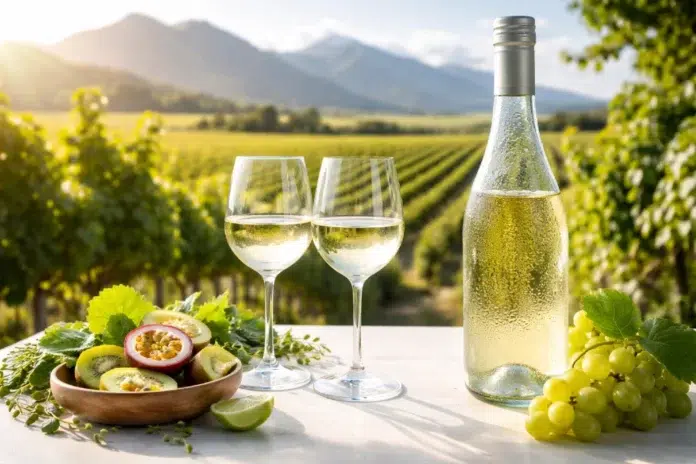
New Zealand Sauvignon Blanc has a way of making an immediate impression. You pour a glass, bring it closer, and the aromas seem to leap out before the wine even touches your lips. That vivid style is a big reason it became one of the most recognizable white wines in the world, and it is also why so many drinkers return to it when they want something bright, refreshing, and unmistakably expressive. New Zealand Winegrowers describes the style as intense and pungently aromatic, with notes such as red capsicum, gooseberry, passionfruit, tropical fruit, fresh-cut grass, tomato stalk, grapefruit, and lime.
What makes New Zealand Sauvignon Blanc so appealing is not just its freshness. It is the way fruit, acidity, and herbal detail all arrive at once without feeling heavy. In one sip, you can get citrus zip, tropical lift, green herbal snap, and a clean finish that keeps the wine lively from start to finish. That balance is closely tied to New Zealand’s cool, maritime conditions and to Marlborough in particular, the region most associated with the style.
The grape also matters enormously to New Zealand’s wine identity. According to New Zealand Winegrowers, Sauvignon Blanc makes up 72 percent of the country’s overall wine production and 86 percent of its wine exports, which shows how central it is to both domestic winemaking and global perception. When people think of New Zealand white wine, this is usually the bottle they picture first.
What New Zealand Sauvignon Blanc Usually Tastes Like
At its core, New Zealand Sauvignon Blanc is crisp, dry, and highly aromatic. The first impression is often fruit driven, but not in a soft or sugary way. Instead, the fruit feels lifted and energetic, with flavors that lean toward passionfruit, grapefruit, lime, gooseberry, guava, and sometimes green apple. Those fruit notes are usually framed by a streak of acidity that gives the wine its mouthwatering edge.
Then come the greener, sharper details that make the style so distinctive. Many bottles show hints of fresh herbs, tomato leaf, bell pepper, lemongrass, cut grass, or nettle. These savory green accents keep the wine from feeling simple. They add tension and shape, which is one reason the best examples feel exciting rather than merely fruity.
Texture matters too, even though people do not always talk about it enough. Most New Zealand Sauvignon Blanc wines are light to medium-bodied, with a brisk structure and a clean finish. Some feel almost crunchy because of their sharp acidity, while others carry a slightly rounder mid-palate, especially if the producer uses lees aging, wild fermentation, partial oak, or a little extra time before bottling. That is why two bottles labeled Sauvignon Blanc from New Zealand can still feel quite different in the glass.
The Signature Aroma of New Zealand Sauvignon Blanc
If flavor tells you what the wine tastes like, aroma tells you why it is so memorable. New Zealand Sauvignon Blanc is famous for a powerful nose, often more intense than Sauvignon Blanc from many other wine regions. Official New Zealand wine sources consistently point to a mix of tropical fruit, citrus, gooseberry, capsicum, and grassy notes as hallmarks of the style.
That aromatic personality is not random. Research on Sauvignon Blanc has repeatedly linked its recognizable profile to volatile thiols and methoxypyrazines. In simple terms, thiols are strongly associated with notes such as grapefruit, passionfruit, guava, and boxwood, while methoxypyrazines are linked to greener sensations like bell pepper and herbaceous freshness. Scientific reviews and recent studies on Sauvignon Blanc describe these compounds as key contributors to the variety’s aroma profile.
This is where New Zealand Sauvignon Blanc becomes especially interesting for real-world tasting. The wines are not just fruity or herbal. They often carry both styles at once. You might smell passionfruit first, then pick up lime zest, then catch something greener like tomato leaf or crushed herbs. That layered contrast is part of what makes the wine feel vivid and complete rather than one-dimensional.
Why Marlborough Changed the Conversation
Marlborough is the name most closely tied to New Zealand Sauvignon Blanc, and for good reason. New Zealand Winegrowers says Marlborough put the country on the international wine stage in the 1980s, and the region today contains almost 31,000 hectares of vines, around two-thirds of New Zealand’s total vineyard area. Its cool climate, high sunshine, low rainfall, and free-draining soils help create wines with concentration, freshness, and strong aromatic definition.
Within Marlborough, site differences shape taste more than many casual drinkers realize. New Zealand Winegrowers notes that Awatere Valley tends to produce more herbaceous and mineral styles, while the main Wairau Valley is often associated with riper, more tropical and pungent expressions. That means the same grape can move from flinty and green to lush and passionfruit-driven depending on where the fruit is grown.
This is one reason tasting New Zealand Sauvignon Blanc by region can be surprisingly rewarding. If you have only tried a supermarket Marlborough bottling, you have tasted the category’s most famous face, but not its full range. Single-vineyard wines, subregional blends, and more restrained producers can show saline notes, deeper citrus, softer herbal tones, or a more textural, less overtly explosive style. The rise of Appellation Marlborough Wine also reflects a push to protect the authenticity and regional identity of wines labeled as Marlborough.
Common Tasting Notes in New Zealand Sauvignon Blanc
When people ask what New Zealand Sauvignon Blanc tastes like, the best answer is that it often sits at the intersection of citrus, tropical fruit, and green freshness. These are some of the most common notes drinkers encounter:
- Passionfruit
- Grapefruit
- Lime
- Gooseberry
- Guava
- Green apple
- Fresh-cut grass
- Tomato leaf
- Bell pepper
- Herbs
- Wet stone or light minerality
These notes do not always show up equally. Some wines lead with tropical fruit, some with sharp citrus, and others with grassy or mineral character. Still, the overall style is usually energetic, dry, and aromatic rather than creamy, sweet, or heavily oaked.
How to Read the Wine in the Glass
A useful way to understand New Zealand Sauvignon Blanc is to taste it in stages. First, smell the wine right after pouring. You will often notice immediate aromatics, especially citrus and tropical fruit. Then swirl and smell again. This second pass is where herbal notes, gooseberry, capsicum, or subtle mineral details become easier to detect.
On the palate, focus on three things. The first is acidity, because this wine often feels bright and mouthwatering. The second is fruit expression, whether it leans more citrus, more tropical, or more orchard-like. The third is the finish. A good New Zealand Sauvignon Blanc should not just taste fresh at the start. It should stay clear, lively, and precise as it leaves the palate.
Beginners sometimes mistake acidity for sourness, but in well-made New Zealand Sauvignon Blanc, acidity is what gives the wine shape. It keeps the fruit from feeling flat and makes the overall style feel clean. That same freshness is also why the wine works so well with food.
New Zealand Sauvignon Blanc and Food Pairing
One of the biggest strengths of New Zealand Sauvignon Blanc is how versatile it is at the table. New Zealand Winegrowers notes that Sauvignon Blanc is an excellent food-pairing wine, with styles that can work alongside everything from Thai food and grilled chicken to salmon and pasta. The reason is simple. High acidity, bright fruit, and herbal lift make the wine flexible without making it bland.
It is especially good with goat cheese, shellfish, grilled prawns, white fish, fresh salads, asparagus, and dishes with lemon, herbs, or green vegetables. Spicy food can also work well, particularly when the wine leans tropical rather than aggressively grassy. The crisp finish acts almost like a palate reset between bites.
If you want a practical rule, pair New Zealand Sauvignon Blanc with foods that echo its freshness. Think citrus, herbs, seafood, and clean flavors rather than heavy cream sauces or deeply charred red meats. The wine shines most when the dish leaves room for its aromatics to keep speaking.
Why Some Bottles Taste Sharper or Softer Than Others
Not every New Zealand Sauvignon Blanc tastes exactly the same, even within Marlborough. Vineyard site, harvest timing, fermentation choices, yeast selection, acidity management, and aging decisions can all shift the final style. Industry and scientific sources note that Sauvignon Blanc’s aroma and palate profile can be significantly influenced by both viticultural and winemaking factors.
Earlier-picked fruit can preserve greener, more herbaceous character. Riper fruit can push the wine toward passionfruit, guava, and broader tropical tones. Producers can also change mouthfeel through lees contact, oak influence, or fermentation strategy, which is why some premium bottles feel more layered and textural than the bright, simple versions many people first encounter.
This is also why price differences sometimes make sense in the category. Entry-level New Zealand Sauvignon Blanc often focuses on upfront fruit and immediate drinkability. More ambitious examples may show more precision, more site expression, or more complexity on the mid-palate and finish. Both can be enjoyable, but they are not trying to achieve the same result.
How to Serve New Zealand Sauvignon Blanc for the Best Experience
Serving temperature can have a big impact on how New Zealand Sauvignon Blanc shows itself. Too cold, and the aromas become muted. Too warm, and the acidity can feel less refreshing while alcohol becomes more noticeable. A well-chilled serving temperature is usually best for preserving the wine’s freshness while still letting the aromatics open up.
Use a standard white wine glass with enough room for aroma to gather near the top. Then let the wine sit for a minute or two after pouring. Because the style is so aromatic, even a short pause can make a difference. You may notice the glass moving from simple citrus to a more layered combination of grapefruit, tropical fruit, herbs, and mineral detail.
What to Expect if You Are Buying Your First Bottle
If you are trying New Zealand Sauvignon Blanc for the first time, expect freshness first. Expect a dry profile, a strong aromatic nose, and a lively, crisp finish. Do not expect something buttery, sweet, or oak-heavy unless the producer is intentionally making a more textural or alternative style. The classic profile is all about brightness, aromatic lift, and clarity.
Look at the region on the label, because that can tell you a lot. Marlborough will be the most common and often the most intensely expressive. If the bottle highlights a subregion or mentions special handling such as wild fermentation or barrel influence, you may be getting a more nuanced version of New Zealand Sauvignon Blanc rather than the straightforward fruit-driven style.
Conclusion
New Zealand Sauvignon Blanc remains one of the world’s most recognizable white wine styles because it delivers exactly what many wine drinkers want from a fresh, dry white. It is aromatic without being vague, fruity without losing structure, and crisp without feeling thin. Whether the glass leans toward grapefruit and lime or passionfruit and fresh herbs, the best examples feel vivid, balanced, and highly drinkable.
The more you taste New Zealand Sauvignon Blanc, the easier it becomes to see its range. Marlborough still defines the category for most people, but even within that famous region there is room for herbaceous styles, tropical styles, mineral styles, and more textural bottlings. For anyone who enjoys expressive white wine, it is a category worth revisiting with a little more attention and a slower sip. If you want broader background on the grape itself, this short note on Sauvignon Blanc adds useful context.

