


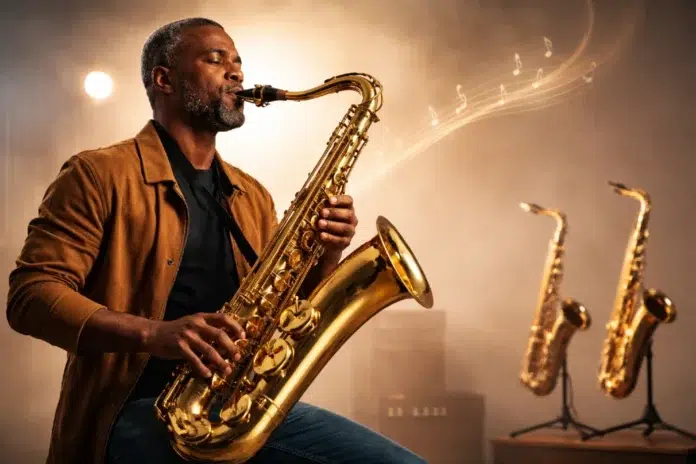
There is something instantly memorable about a baritone saxophone. You hear one note and the whole room seems to shift. The sound is deep, warm, slightly gritty when pushed, and unexpectedly expressive when played with control. It can anchor a big band, add muscle to a horn section, or step out front with a voice that feels both bold and elegant.
That is a big part of why musicians keep falling for the baritone saxophone. It is not just the largest sax most people regularly see on stage. It is also one of the most personality-filled instruments in modern music. Built in E flat and commonly used as the lowest-pitched saxophone in everyday ensemble settings, it occupies a special place between rhythm, harmony, and melody. The saxophone itself was patented by Adolphe Sax in 1846, and the baritone version has gone on to become a defining sound in jazz, concert bands, and contemporary ensemble work.
For some players, it is love at first note. For others, the attraction grows over time. Either way, once musicians understand what this instrument can do, they tend to respect it differently. The baritone saxophone is not simply a bigger alto or tenor. It has its own role, its own physical demands, and its own emotional impact.
What makes the baritone saxophone different
The first thing most people notice is the size. A baritone saxophone is physically larger than an alto or tenor, with the looping neck and body shape that make it recognizable even from a distance. It uses a single reed, is made of brass like other saxophones, and reads treble clef music as a transposing instrument in E flat. In practical terms, that means it sounds much lower than the notes written on the page. Most modern models also include a low A key, though low B flat versions still exist and remain popular with some players.
What really separates it, though, is not the appearance. It is the role the instrument plays in music.
An alto often sings. A tenor often speaks. A baritone saxophone can do both, but it also supports. It adds weight to voicings, gives horn sections their backbone, and fills space in a way that smaller saxophones cannot. When a player has strong tone production and good breath support, the instrument delivers a sound that feels broad rather than merely loud.
That is why it works so well in ensemble writing. It does not just sit underneath the music. It shapes the feel of the whole arrangement.
The sound that keeps players hooked
People talk about the baritone saxophone in terms like rich, dark, punchy, smoky, and full-bodied. All of those descriptions can be true, depending on the player, setup, and style. The instrument can sound polished and round in a concert band, dry and articulate in a jazz section, or raw and electric in funk and rock settings.
Its depth comes from basic acoustics as much as musical tradition. The saxophone’s conical bore and reed-driven vibration create a tone that is flexible and harmonically rich, which is one reason the family has such a vocal quality compared with many other wind instruments. Research and educational material from the University of New South Wales highlights how the saxophone’s design supports a complex, resonant sound profile, helping explain why the baritone feels so alive in both section work and solo playing.
Musicians also love the contrast the instrument offers. A baritone saxophone can sound huge in the low register, but it can also surprise listeners with agility. Good players make it bark, whisper, swell, or glide. That range of character is part of the magic.
In jazz, that sound can be earthy and conversational. In classical and concert settings, it can be stately and smooth. In pop and commercial music, it can deliver the kind of punch that makes a horn line feel finished.
Why the baritone saxophone matters in ensembles
If you have ever listened to a big band and felt the sax section sounded especially thick and grounded, there is a good chance the baritone player had a lot to do with it. The instrument often handles the bottom of the saxophone voicing, and that affects everything above it. When the bari locks in with the bass and drums, the entire arrangement feels more settled.
That supporting role is one reason experienced band directors and arrangers value strong baritone players so highly. A solid baritone saxophone player improves tuning, balance, phrasing, and section blend. The instrument is not glamorous in every chart, but it is essential in far more music than casual listeners realize.
It is also more versatile than people assume. The baritone saxophone shows up in concert bands, military bands, chamber groups, marching bands, jazz combos, big bands, and even rock-oriented horn sections. That wide use is not accidental. It covers sonic ground that other instruments do not quite handle the same way.
This is one reason players who start on bari often become musically mature very quickly. They learn to listen across the ensemble. They learn timing, blend, and support. They learn how to shape phrases that matter even when they are not holding the melody.
Style is a major part of the appeal
The baritone saxophone does not just sound distinctive. It looks distinctive too. On stage, it has presence. The silhouette is dramatic, the bell is substantial, and the player carrying one tends to draw attention even before the first note is played.
That visual identity matters more than people admit. Musicians often connect with instruments emotionally, and the baritone saxophone has real character. It feels serious without being stiff. It has a vintage cool factor in jazz settings and a modern edge in funk, fusion, and film-score style writing.
There is also a kind of confidence associated with bari players. They are often seen as the musicians who hold things together. They are less likely to chase attention and more likely to build the musical foundation. Ironically, that quiet confidence often becomes its own kind of spotlight.
In live performance, the baritone saxophone can do something rare. It can make a player look grounded and commanding at the same time. That mix of sound and stage presence is a big reason musicians love it.
Is it hard to play
Yes, and no.
The baritone saxophone is approachable in the sense that the fingering system follows the same basic saxophone logic that alto and tenor players already know. If a player has saxophone experience, the transition is not mysterious. But physically, the instrument demands more.
It is heavier than smaller saxophones, and many players use a harness or support system to distribute weight more comfortably. Some modern baritone saxophones even include a peg receiver or floor support option for seated playing. That is not a luxury feature. For many players, it is a practical necessity during long rehearsals or performances.
Breath support is another factor. The instrument needs steady, well-supported air, especially in the low register. Intonation can also be more challenging for developing players because the size and response of the horn leave less room for careless technique.
Still, hard does not mean inaccessible. In fact, many musicians find the challenge rewarding. The instrument gives back a lot when treated correctly. Once a player develops control, the sound feels incredibly satisfying.
Common reasons musicians choose baritone saxophone
Some players are drawn to the tone first. Others are assigned the instrument in school band and end up loving it. Either path is common.
Here are the biggest reasons the baritone saxophone keeps winning people over:
- It has a deep, powerful sound that stands out immediately.
- It plays a central role in jazz band, concert band, and commercial horn sections.
- It offers strong ensemble value and real musical responsibility.
- It has visual presence on stage.
- It can be both supportive and soloistic.
- It feels different from the more crowded alto and tenor lanes.
That last point matters. In many programs, alto and tenor sections are packed. A strong bari player often becomes indispensable much faster. That can open doors in ensembles, auditions, and performance opportunities.
The low notes are only part of the story
A lot of beginners think the baritone saxophone is all about rumbling low notes. Those notes are exciting, but the instrument’s appeal goes far beyond that. Good bari playing is about shape, color, articulation, and control.
The middle register can sound warm and noble. The upper register, when played well, has bite and clarity without losing the identity of the horn. That is why experienced musicians do not see bari as a novelty instrument. They see it as a complete musical voice.
This also explains why so many respected jazz players built serious artistic identities around it. The instrument may not always dominate music education marketing, but in the hands of a skilled player it can be unforgettable. Smithsonian coverage of veteran jazz baritone saxophonist Joe Temperley reflects that long artistic tradition and the instrument’s enduring place in serious jazz performance.
What to look for in a good baritone saxophone
Whether you are a student, educator, advancing player, or parent shopping for an instrument, a few features matter more than flashy marketing.
Key of E flat and range options
Modern baritone saxophones are typically pitched in E flat. Many current models go down to low A, which has become especially useful for ensemble repertoire. Some vintage and specialty players still prefer low B flat instruments, often for feel, weight, or tonal reasons.
Ergonomics
Because the instrument is large, key layout and hand comfort matter a lot. Better ergonomics reduce fatigue and improve technical confidence, especially for younger players or anyone doubling from another sax.
Support options
A peg receiver, harness compatibility, and a sturdy case are practical advantages, not minor extras. Bari players deal with transport and physical strain more than most saxophonists.
Response and setup
The best instrument for one player is not always the best for another. Mouthpiece choice, reed strength, and neck response can change the feel of a baritone saxophone dramatically. Yamaha’s professional product descriptions also emphasize player control, tonal core, and ergonomic layout, which are the kinds of features that affect real-world use more than decorative details.
How to get a better sound faster
Improving on baritone saxophone is not about forcing more air and hoping for bigger tone. That usually creates tension and unstable pitch. Better results come from focused basics.
Start with long tones. They are not glamorous, but they work. Long tones help build breath control, steadiness, and tone consistency across the range. Then work on articulation, because bari can sound muddy when tonguing is careless.
Listening matters just as much as practicing. Players who spend time with strong baritone saxophone recordings usually develop better concept of sound. When you know the tone you are chasing, your practice gets more efficient.
A few practical habits make a huge difference:
- Use a harness if neck strain becomes a problem.
- Do not jump to reeds that are too hard too soon.
- Practice low notes softly as well as loudly.
- Record yourself often, because bari sound feels different behind the horn than it does in the room.
- Keep the instrument adjusted, because leaks are especially punishing on larger saxophones.
That last point is easy to underestimate. A small setup issue can make a baritone saxophone feel much harder than it really is.
Care and maintenance are part of loving the instrument
A baritone saxophone rewards players who take care of it. Because it is larger and more expensive than many student horns, neglect becomes costly quickly.
After playing, moisture needs to be removed from the mouthpiece, neck, and body. Yamaha’s maintenance guidance specifically recommends removing the reed, cleaning the mouthpiece carefully, and swabbing out the instrument to reduce dirt and moisture buildup. Those are simple habits, but they protect pads, improve hygiene, and help preserve response over time.
Storage matters too. Bari cases are bulky, and it is tempting to rush packing after rehearsal. That is exactly when neck screws, mouthpieces, and keywork tend to get damaged. A careful routine saves money and frustration.
Players who keep their instrument clean, well-adjusted, and properly supported usually enjoy it more. That is not just about maintenance. It is about consistency. The instrument responds better, and the player trusts it more.
Why audiences respond so strongly to it
Even non-musicians react to the baritone saxophone. That is one of the most interesting things about it. People who cannot name the instrument still notice the sound. It has weight without sounding dull, and it has edge without sounding thin.
In ensemble passages, listeners may not consciously isolate the baritone saxophone, but they feel its absence when it is missing. In solo moments, the instrument often sounds more human than people expect. That surprise factor creates a strong emotional response.
There is also a cinematic quality to the bari sound. It can feel sophisticated, mysterious, playful, or commanding depending on the context. Few instruments shift mood so effectively while still sounding unmistakably like themselves.
Who should consider playing one
The baritone saxophone is a great fit for more people than many assume.
It suits students who want a meaningful ensemble role. It suits tenor or alto players who want to expand their musical range. It suits jazz musicians who love texture and depth. It suits school programs that need stronger lower-voice support. It even suits multi-instrumentalists who want a horn with unmistakable personality.
Not every musician will choose bari as a primary instrument, and that is fine. But many who spend time with it come away with more respect for the entire saxophone family. They hear harmony differently. They phrase differently. They understand groove differently.
That is the hidden gift of the instrument. It makes players more aware.
Final thoughts on why musicians love it
The baritone saxophone earns loyalty in a very honest way. It does not win people over because it is easy. It wins them over because it matters. It changes the sound of an ensemble. It gives players a rich, commanding voice. It combines visual style, sonic depth, and musical usefulness in a way few instruments can match.
For some musicians, the attraction starts with the sheer power of the low register. For others, it is the way the instrument blends strength and elegance. For many, it becomes a long-term favorite because it feels essential rather than decorative.
And that may be the best way to understand its appeal. A baritone saxophone is not just heard. It is felt. When played well, it adds depth, authority, and personality to music in a way that is hard to replace. That is exactly why so many musicians love it, and why the instrument continues to hold its place across jazz, concert music, marching ensembles, and modern commercial performance. In the last few decades, players and listeners alike have kept rediscovering just how expressive this instrument family can be.
If music needs gravity, character, and style, the baritone saxophone delivers all three.

