


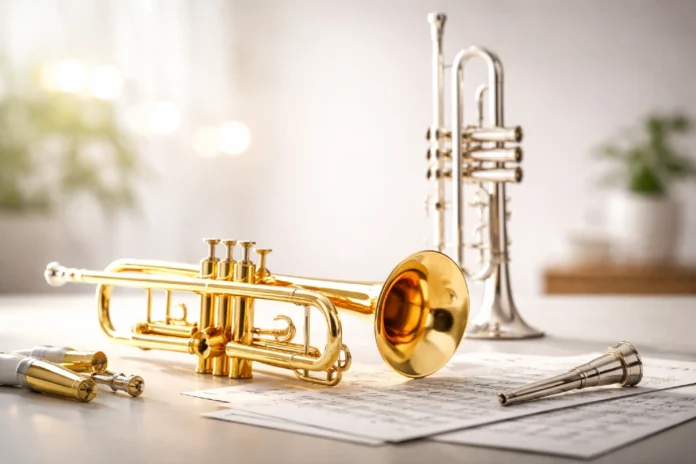
Walk into a school band room, a jazz club, a marching rehearsal, or an orchestra pit, and you will quickly hear why Instruments Trumpets still hold such a powerful place in music. They are bright, direct, expressive, and surprisingly versatile. A good trumpet can sound bold and celebratory one moment, then warm and lyrical the next. That range is part of the reason so many players start with trumpet and so many professionals stay loyal to it for life.
Choosing the right trumpet, though, is not as simple as picking the shiniest horn in the case. Beginners need comfort, durability, and steady intonation. More advanced players care about response, projection, slotting, resistance, flexibility, and the way an instrument feels after long sessions. The best choice depends on who is playing, where they are playing, and how quickly they are growing.
That is what makes this topic worth slowing down for. Some trumpets are built to survive daily practice, student travel, and the occasional accidental bump. Others are made for players who already know the sound they want and need an instrument that can keep up. Manufacturers such as Yamaha and Bach clearly separate student, intermediate, professional, and custom lines, which tells you something important right away: one trumpet does not fit every stage of a player’s journey.
Why Instruments Trumpets Remain a First Choice for So Many Musicians
The trumpet is one of the best-known brass instruments in the world, and its basic identity has stayed remarkably consistent. Encyclopaedia Britannica describes it as a brass wind instrument sounded by lip vibration against a cup mouthpiece. That simple design produces a focused, penetrating sound that works beautifully in ensembles where clarity matters.
Its popularity also comes from practicality. In school programs, trumpet parts are everywhere. In jazz, the instrument carries enormous tradition and personality. In concert band and orchestra settings, it can cut through dense textures without losing musical character. For a new student, that means plenty of repertoire, lots of teaching materials, and a clear pathway for improvement. For a seasoned player, it means endless room for refinement.
There is also a physical appeal to the trumpet that keeps players engaged. Compared with larger brass instruments, it is portable. Compared with some woodwinds, the basic maintenance routine is fairly straightforward. And once a player develops a steady embouchure and breath support, the instrument rewards that work with immediate, satisfying feedback.
What Beginners Really Need in Instruments Trumpets
A beginner does not need the most expensive horn. In fact, that can be the wrong move. A new player needs an Instrument Trumpets that helps build confidence instead of fighting every note.
The most important qualities at the beginner level are reliability, easy response, durable construction, and stable intonation. Student trumpets from major makers are designed with exactly that in mind. Yamaha’s student trumpet lineup and Bach’s BTR201 and BTR301 are marketed specifically for beginning players, with an emphasis on durability, dependable response, and practical specifications such as a .459-inch bore on the Bach student models. Conn-Selmer also positions the BTR201 as a durable beginning student instrument and highlights projection and control as core benefits.
For a beginner, the instrument should feel forgiving. Notes should speak without too much effort. Valves should move smoothly. Tuning should not feel like a constant battle. A horn that responds cleanly makes practice less frustrating, which matters more than flashy branding.
A lot of parents and first-time buyers assume they should “buy once and buy pro.” In reality, beginner technique is still forming. A student trumpet is often the smarter purchase because it is built to support fundamentals rather than expose every weakness. That matters during the first year, when tone production, breath control, posture, and articulation are still developing.
The Core Difference Between Student, Intermediate, and Professional Trumpets
This is where many buyers get confused, because all trumpets can look similar from a distance. The real differences show up in how they play.
Here is a quick comparison:
| Level | Best For | Main Strengths | Common Tradeoff |
|---|---|---|---|
| Student | New players, school band, first 1 to 3 years | Durability, easier response, lower cost | Less tonal complexity |
| Intermediate | Advancing students, returning adults | Better materials, improved feel, more refined sound | Higher cost than starter models |
| Professional | Serious performers, college players, working musicians | Nuance, projection, flexibility, stronger tonal character | Less forgiving, more expensive |
Yamaha’s catalog makes these tiers especially clear, listing dedicated student, intermediate, professional, and custom Bb trumpet lines. Conn-Selmer does the same through Bach and King student offerings, while emphasizing design details that support control and longevity at the beginner end.
Intermediate instruments are often the sweet spot for players who have outgrown a school rental but are not yet ready to invest in a top-tier professional horn. Yamaha’s intermediate pages describe these models as high-quality step-up instruments for advancing students and discerning adult players. That language matches what many teachers see in real life: once tone and endurance improve, a player begins to notice resistance, flexibility, and tonal color much more clearly.
Professional trumpets are different again. They are built for players who can already shape sound consistently and want greater control over nuance. On a pro horn, the sound can become broader, richer, brighter, darker, quicker, or more centered depending on the model and the player. That freedom is exciting, but it also means the horn gives back exactly what the player puts in.
Best Instruments Trumpets for Beginners
For beginners, the best trumpet is the one that makes daily practice easier to sustain. Not glamorous. Not intimidating. Just dependable.
A strong beginner choice usually includes these features:
- Smooth, reliable piston valves
- Solid construction that can handle regular use
- Comfortable resistance, not too tight and not too loose
- Intonation that stays manageable across common notes
- A balanced feel in the hands
- Easy access to service, parts, or teacher familiarity
Yamaha student models have earned a strong reputation because they are designed around consistency and ease of play, while Bach student models are valued for their dependable build and familiar school-band presence. King’s KTR201 is also positioned as a student-friendly horn with durability and vibrant sound as selling points.
If the player is very young, durability matters almost as much as tone. Cases get dropped. Trumpets get placed on chairs. Water keys get overused. A beginner instrument should survive normal learning mistakes. That is why many school directors still steer families toward known student lines instead of unknown bargain brands.
Another smart point is resale value. Established student models tend to hold value better than off-brand instruments sold mainly on price. That matters when a student upgrades later.
Best Instruments Trumpets for Skilled Musicians
Advanced players are listening for things beginners often cannot yet hear. They care about how the horn slots in the upper register, how open it feels at higher volume, how cleanly soft attacks speak, and whether the sound stays centered across different dynamic levels.
For skilled musicians, the best trumpet is usually not defined by one universal “best” model. It is defined by fit.
Some players want a broad orchestral sound with a steady core. Some want a commercial or lead setup that feels nimble and brilliant. Some want a trumpet that blends beautifully in chamber music. Yamaha’s professional and custom lines show how specialized this gets, with artist-developed custom models and distinct bore and bell combinations for different styles and preferences.
At this level, an instrument should reward refined technique. A skilled player can notice whether a horn feels resistant in a good way, meaning it offers support, or resistant in a bad way, meaning it feels stuffy. They can also tell whether a trumpet projects loudly or simply spreads sound without focus.
That is why experienced players should test instruments in real settings whenever possible. A trumpet that feels wonderful alone in a practice room may not blend well in ensemble playing. Another horn may seem modest at first but turns out to be incredibly reliable on stage. Skilled musicians usually choose with their ears first and the spec sheet second.
Mouthpiece Choice Changes the Whole Experience
Even the right trumpet can feel wrong with the wrong mouthpiece. Yamaha’s trumpet mouthpiece guidance makes this point clearly: mouthpiece choice affects comfort, playing style, and the way the instrument responds.
For beginners, a sensible mouthpiece helps them develop sound without making the instrument unnecessarily hard to control. For advanced players, mouthpieces become highly personal. Rim shape, cup depth, throat size, and backbore can all affect endurance, articulation, brightness, and flexibility.
This is why two players can test the same trumpet and report completely different impressions. Sometimes they are not actually responding to the horn alone. They are responding to the horn-and-mouthpiece combination.
A smart buying process does not ignore this. If a player is unhappy with response or tone, the answer may be a better mouthpiece match rather than a full instrument upgrade.
Maintenance Matters More Than Most Buyers Think
A surprisingly large number of “bad trumpet” complaints come down to maintenance. Sticky valves, sluggish slides, moisture buildup, and dirty tubing can make even a good instrument feel unreliable.
Yamaha’s care materials recommend routine moisture removal after playing, regular mouthpiece cleaning, valve oiling, and periodic internal cleaning using warm water and brass soap solutions. Their official valve-oiling instructions also stress proper handling rather than random guesswork.
For beginners, this is huge. A student may think they are doing something wrong when the real issue is dry valves or poor slide care. For skilled musicians, maintenance protects response, intonation, and long-term value. In other words, a trumpet is not only bought. It is kept.
A simple maintenance routine goes a long way:
- Empty moisture after each session
- Oil valves regularly
- Keep slides moving freely
- Clean the mouthpiece often
- Schedule deeper cleaning before buildup becomes obvious
Players who do this consistently usually get more years and better performance out of their instrument.
How to Know When It Is Time to Upgrade
Not every struggle means it is time to buy a new trumpet. Sometimes the issue is practice. Sometimes it is setup. Sometimes it is the player outgrowing the instrument.
A beginner may be ready to upgrade when tone becomes more consistent, endurance improves, school repertoire gets more demanding, and the current trumpet starts to feel limiting instead of supportive. An advancing student might notice that articulation is clean but the sound feels narrow. They may want better projection, more tonal depth, or more flexibility in upper-register passages.
For adult returners, the question is slightly different. If you played years ago and still have some technical foundation, you may not need a pure starter horn. An intermediate model can make more sense because it gives you room to grow without forcing another upgrade too quickly.
Skilled musicians usually upgrade for artistic reasons rather than basic function. They are not just asking, “Does this work?” They are asking, “Does this sound like me?”
A Real-World Way to Choose the Right Trumpet
The smartest way to choose is to match the horn to the player’s present reality, not their fantasy level.
Ask these questions:
- Is the player a true beginner, an advancing student, a returning adult, or an experienced performer?
- Will the trumpet be used mainly for school band, jazz, marching, orchestra, church, or general practice?
- Does the player need durability first, tonal complexity first, or versatility first?
- Is the budget better spent on the trumpet alone, or on a balanced package with case, maintenance supplies, and possibly a mouthpiece upgrade?
That last point matters because music study is a long game. Research and reviews on music training show benefits can be meaningful, but the biggest everyday advantage for most learners is simpler and more immediate: regular instrument practice builds discipline, listening, coordination, and consistency over time. Evidence on broader cognitive transfer is mixed, which is exactly why practical motivation and sustained engagement matter so much. A trumpet that invites practice is more valuable than one that only looks impressive.
Final Thoughts on Instruments Trumpets
The best Instruments Trumpets are not always the most expensive or the most talked about. The right choice is the one that meets the player where they are and helps them sound better, practice longer, and grow with confidence. For beginners, that usually means a reliable student model with easy response and durable construction. For skilled musicians, it means a trumpet with the tone, feel, and flexibility to support serious artistic work.
A good trumpet should make you want to pick it up again tomorrow. That is the real test. Whether you are choosing a first school instrument, stepping into a better intermediate horn, or searching for a stage-ready professional setup, the smartest purchase is the one that fits your hands, your ears, and your actual musical life.
And that is the lasting appeal of this valved brass tradition: the trumpet has remained central across ensembles, eras, and styles because it combines function, personality, and unmistakable voice in a way few instruments can match.
FAQ
Are student trumpets good enough for serious learning?
Yes. A well-made student trumpet is more than enough for building fundamentals, school performance, and the first several years of progress. Many teachers actually prefer a solid student model over an unpredictable cheap import because stable response and tuning matter more than fancy marketing.
Should a beginner buy new or used?
Either can work. New offers peace of mind and warranty support. Used can be a smart value if the trumpet has been checked for valve condition, dents, slide movement, and overall playability. With student instruments from established brands, used often makes sense because they are built to last.
What is the most common type of trumpet?
The Bb trumpet is the most common type in school bands, concert bands, jazz groups, and many general playing situations. Major manufacturers organize much of their lineup around Bb models, from student to custom tiers.
Does maintenance really affect sound and playability?
Absolutely. Dirty tubing, dry valves, and neglected slides can change response, tuning feel, and reliability. Regular care is one of the easiest ways to protect both performance and longevity.

