


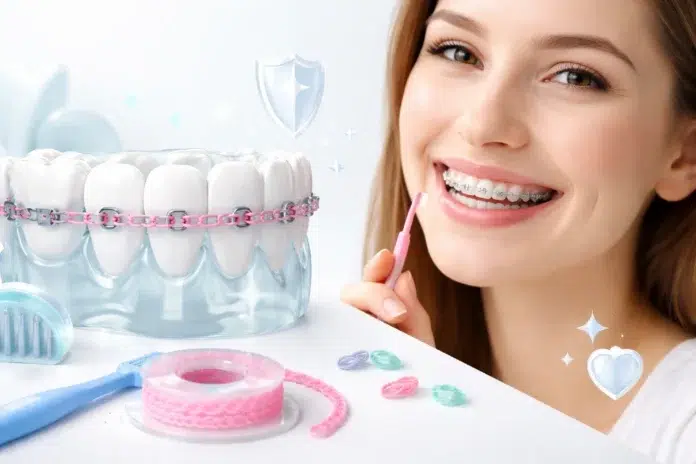
If you have braces and your orthodontist mentions Power Chains, it usually means your treatment is moving into a more focused stage. These tiny connected elastic rings may look simple, but they play an important role in closing gaps, improving alignment, and helping teeth move together more efficiently than single ligatures alone. Orthodontic treatment works through steady pressure over time, and power chains are one of the tools orthodontists use when that extra coordinated force is needed.
A lot of patients get nervous the first time they hear the term. That is understandable. Power chains can make braces feel tighter for a while, and they often show up at a stage when the treatment is getting more precise. The good news is that they are extremely common in orthodontics, and with the right care, most people adjust quickly and continue treatment without major problems.
This article breaks down what power chains are, why orthodontists use them, what stages of braces treatment they usually appear in, and how to care for them day to day. If you are wondering whether they hurt, how long they stay on, or what foods to avoid, you will find clear answers here.
What Are Power Chains?
Power Chains are linked elastic rings used with braces to connect multiple brackets across several teeth. Instead of placing one small elastic tie around each bracket, the orthodontist uses a continuous chain that stretches across a section of the teeth. This setup allows force to be distributed across several teeth at once, which is especially helpful when the goal is to close spaces or fine tune alignment.
They are often called elastomeric chains or elastic chains. While people sometimes confuse them with rubber bands used between the upper and lower teeth, they are not the same thing. Interarch elastics are usually removable and worn according to instructions, while power chains are attached directly to the braces by the orthodontist.
Power chains come in different styles, including closed, short, and long varieties. The exact style depends on how much spacing exists between teeth and how much tension the orthodontist wants to create in a specific area.
How Power Chains Work With Braces
Braces move teeth by applying controlled pressure through brackets and an archwire. Power chains add another layer of force by linking teeth together so they move more as a coordinated group. This makes them especially useful for bringing teeth closer together after extractions, tightening spaces, and helping the smile line look more even.
Think of standard braces as doing the broad structural work, while power chains help with targeted progress. They do not replace braces. They simply make certain movements more efficient once the orthodontist decides the timing is right. In many cases, they are used after the initial straightening phase, when the teeth are already responding well and the remaining work involves detailed spacing and bite adjustments.
Because elastomeric materials lose force over time, orthodontists usually replace power chains at adjustment visits. That drop in force is normal and one reason regular appointments matter so much.
Why Orthodontists Use Power Chains
There is a reason power chains are so common in braces treatment. They solve a very practical problem. Sometimes teeth need to move not just individually, but together and with more unified pressure.
Here are the main reasons orthodontists use them:
- Closing spaces between teeth
Power chains are widely used to close gaps, especially after extractions or when natural spacing remains after the main alignment phase. - Improving tooth alignment
When several teeth need to shift in a coordinated way, power chains can help maintain more consistent pressure across that section. - Helping refine the bite
In some treatment plans, they support the final stages of bringing teeth into better contact and improving overall fit. - Reducing residual spacing near the end of treatment
Even when teeth look mostly straight, small gaps can remain. Power chains help with that final polishing stage.
Benefits of Power Chains and Braces
The biggest benefit of Power Chains is efficiency. They allow your orthodontist to apply force across multiple teeth at once, which can improve space closure and bring more control to certain stages of movement.
Another major benefit is predictability. Because the chain links teeth together, it can help maintain coordinated movement in areas where single ligatures may not deliver the same effect. That is useful when treatment needs to move from general straightening to more precise correction.
Patients also like that power chains are simple from a compliance standpoint. Unlike removable elastics, they stay in place until the orthodontist changes them. You do not have to remember to attach them every morning or after meals.
In practical terms, the benefits often include:
| Benefit | What It Means for You |
|---|---|
| Faster gap closure in selected cases | Spaces may reduce more effectively when coordinated force is needed |
| Better control over grouped tooth movement | Teeth can move together rather than independently |
| Useful in late treatment refinement | Helps polish alignment and spacing |
| No daily placement required | The chain stays attached until your next visit |
That said, “faster” does not mean instant. Tooth movement is biological and varies from person to person. Treatment still depends on bone remodeling, gum health, appointment timing, and how well the rest of your braces plan is followed.
At What Stage of Braces Do Power Chains Usually Appear?
There is no single universal timeline, because every orthodontic case is different. Still, power chains often show up after the early leveling and alignment stage, once the braces have already begun straightening the teeth and the orthodontist is ready to focus more on spacing or finishing details.
A simple way to think about the stages is this:
Stage 1: Initial Alignment
At the beginning of treatment, braces and flexible archwires start correcting crowding, rotation, and basic positioning. The goal here is usually to get teeth responding to treatment and lining up in a more manageable way.
Stage 2: Space Management
Once the teeth are better aligned, the orthodontist may begin closing gaps or coordinating movement across a section of the mouth. This is a common stage for power chains, especially if there are spaces from extractions, missing teeth, or natural gaps.
Stage 3: Bite Refinement and Finishing
In later treatment, the focus often shifts to details. The orthodontist fine tunes how the teeth fit together, improves contact points, and works toward the final smile result. Power chains may still be used during this stage if minor spaces or alignment issues remain.
So if your orthodontist adds power chains, it often means your braces treatment is progressing and becoming more targeted, not that something has gone wrong.
Do Power Chains Hurt?
This is one of the most common questions, and the honest answer is yes, they can cause discomfort, especially right after they are placed or changed. But for most people, it is temporary soreness rather than severe pain.
The reason is simple. Power chains increase force across several teeth, and your mouth needs time to adjust. It is common to feel pressure or tenderness for a few days after an adjustment visit. Soft foods, cool water, and patience usually help.
The discomfort is often most noticeable when biting or chewing. Some patients say the teeth feel “tight” or “sensitive.” That does not automatically mean there is a problem. It usually means the appliance is actively working. Still, sharp pain, broken hardware, or sores that do not improve should be checked by your orthodontist. General braces can also irritate the cheeks and lips, especially during adjustment periods.
Practical ways to ease soreness
- Eat softer foods for a day or two
- Rinse with lukewarm salt water if your mouth feels irritated
- Use orthodontic wax if brackets or wires rub your cheeks
- Brush gently but thoroughly
- Follow your orthodontist’s instructions on pain relief if needed
How Long Do Power Chains Stay On?
Power chains do not usually stay at the same tension for a very long time. Elastomeric materials naturally lose force, which is why orthodontists often replace them during routine appointments.
How long you will wear them overall depends on your treatment plan. Some people have power chains for only a short phase. Others may have them across multiple visits, with the orthodontist changing their position or type as the teeth move. The exact timeline depends on the size of the spaces, how your teeth respond biologically, and whether bite correction is also involved.
If you compare your timeline with someone else’s, you will probably end up confused. Orthodontics is highly individualized. Two patients can have braces for the same number of months and still need very different tools at very different times.
Power Chains vs Regular Braces Elastics
A lot of people use the word “elastics” for everything in braces treatment, but it helps to separate the terms clearly.
| Type | Where It Goes | Who Handles It | Main Purpose |
|---|---|---|---|
| Individual ligatures | Around each bracket | Orthodontist | Hold the wire in place |
| Power chains | Across multiple brackets | Orthodontist | Close spaces and move teeth together |
| Interarch elastics | Between upper and lower teeth | Patient | Improve bite relationship |
Interarch elastics require patient consistency. Orthodontic associations stress that wearing elastics exactly as prescribed matters because inconsistent use can slow treatment or affect results.
Power chains, on the other hand, stay attached and work continuously until the next visit, which makes them less dependent on daily patient memory.
Care Tips for Power Chains and Braces
This is where treatment success really depends on your habits. Braces create extra places for plaque and food to collect, and power chains add even more surface area where debris can cling. Good oral hygiene is not optional during this stage. It is essential. Brushing with fluoride toothpaste twice daily and cleaning between teeth regularly are core recommendations from national dental authorities.
1. Brush carefully and consistently
Brush at least twice a day with fluoride toothpaste, and take extra time around brackets, wires, and the gumline. With braces, rushed brushing often leaves plaque behind in the exact spots where it causes trouble later.
Many orthodontists also recommend brushing after meals when possible because food can get trapped easily around the appliance. Even if you cannot brush right away, rinsing with water is better than leaving debris sitting there.
2. Clean between teeth every day
This is the part many patients skip, and it often catches up with them. Floss or another between the teeth cleaner helps remove plaque that brushing alone can miss. The ADA notes that toothbrushing plus floss or an interdental cleaner is more effective than brushing alone for reducing plaque and gingivitis.
For braces wearers, floss threaders, orthodontic flossers, interdental brushes, or a water flosser can make the job easier. What matters most is that you actually do it consistently.
3. Be smart about food
Sticky, chewy, and very hard foods can damage braces and stretch or distort the chain. Caramel, gum, hard candy, popcorn kernels, and ice are common troublemakers. Even if your braces do not break immediately, these foods can make cleaning harder and increase plaque buildup.
Safer choices during sore days include yogurt, mashed potatoes, pasta, rice, eggs, soup, smoothies, oatmeal, and soft fruits. If your teeth feel tender after a chain change, these foods are usually much easier to manage.
4. Watch for staining if you choose colored chains
Power chains come in different colors, and some people enjoy that part of treatment. But lighter shades can stain more easily from coffee, curry, tea, tomato sauce, and similar foods. The stain does not always mean the teeth are dirty. Sometimes it is just the elastic material picking up pigment.
If appearance matters to you, ask your orthodontist which colors are least likely to discolor between appointments.
5. Keep every adjustment appointment
Because power chains lose force over time, skipping appointments can reduce their effectiveness. Your orthodontist needs to monitor movement, replace stretched chains, and decide when to reposition or remove them.
6. Call the office if something breaks
Do not try to fix a broken chain on your own. If part of it snaps, lifts, or comes loose, contact your orthodontist. Minor issues can sometimes wait until the next visit, but only the office can tell you safely.
Common Problems Patients Notice With Power Chains
Some issues are normal. Others need attention. Knowing the difference can save stress.
Normal things you may notice
- Tightness for a few days after placement
- Slight tenderness while chewing
- A feeling of pressure across several teeth
- Mild color fading or staining of the chain
Signs you should contact your orthodontist
- A chain that has obviously snapped or detached
- Severe pain that does not improve
- Bleeding gums that persist despite gentle cleaning
- A wire poking the cheek
- Swelling, signs of infection, or ulcers that keep worsening
Braces can increase the risk of plaque retention, and poor hygiene during treatment is associated with white spot lesions, which are early enamel demineralization areas that can appear around brackets. That is one reason daily cleaning matters so much during the power chain phase.
Real World Example of How Power Chains Help
Imagine a patient whose front teeth are mostly straight after several months in braces, but small gaps remain on both sides after earlier crowding correction. At this point, individual ligatures may not provide the most efficient coordinated pull. The orthodontist places a power chain across the front section to bring those teeth together more evenly.
Over the next appointments, the gaps begin to shrink. The patient feels pressure at first, then adjusts. What makes the difference is not just the chain itself. It is also keeping appointments, cleaning well enough to avoid plaque problems, and following all the orthodontist’s instructions.
That is how braces treatment usually works in real life. The appliance matters, but patient habits matter just as much.
Frequently Asked Questions About Power Chains
Are power chains always used near the end of braces treatment?
Not always, but they are commonly introduced after the earliest alignment phase when space closure or detailed adjustments become a bigger priority.
Do power chains move teeth faster?
They can improve efficiency for certain movements, especially gap closure, but no appliance can bypass the body’s normal biological process of tooth movement. Results vary by case.
Can I eat normally with power chains?
Mostly yes, but it is better to avoid sticky, hard, or very chewy foods that can damage braces or make cleaning harder. Softer foods are often more comfortable after an adjustment.
Are power chains the same as rubber bands?
No. Power chains are attached to the braces by the orthodontist. Rubber bands worn between the top and bottom teeth are usually interarch elastics that patients place and replace themselves.
Can power chains stain?
Yes. Lighter colors can pick up pigments from certain foods and drinks. Darker shades often hide staining better.
Conclusion
Power Chains can look like a small change to your braces, but they often mark an important step in treatment. They help orthodontists close spaces, coordinate tooth movement, and refine your smile with more focused control. If your braces suddenly feel tighter after they are placed, that is usually part of the normal adjustment process.
The best way to make power chains work well is to pair them with strong daily habits. Brush thoroughly with fluoride toothpaste, clean between your teeth every day, avoid foods that can damage braces, and stay on schedule with your orthodontic visits. Those basics protect your teeth while the orthodontic mechanics do their job. National dental guidance on oral hygiene and orthodontic care consistently supports these everyday habits as the foundation of safer, more effective treatment.
If you are in the middle of braces treatment, remember that progress often comes in stages. Power chains are simply one of the tools that help move things from “almost there” to a more polished result. For broader background on orthodontic treatment, it helps to understand how different braces components work together during the full process.

