


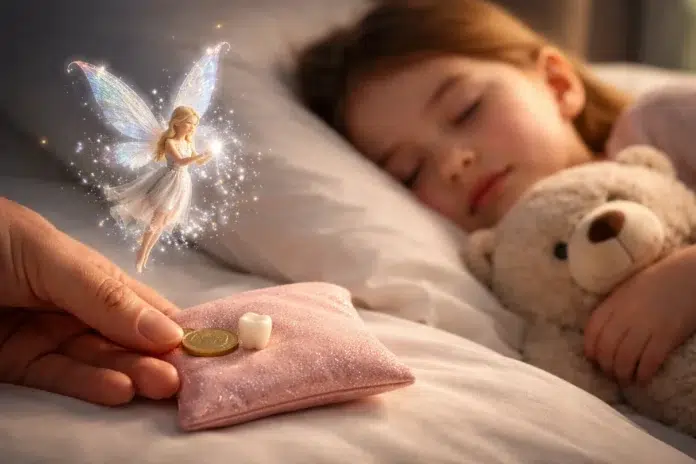
If you have ever heard a child whisper, “Is There Tooth Fairy Real?” you already know this is not just a silly bedtime question. To a young child, it feels important, personal, and sometimes even emotional. They are not only asking about a tiny magical visitor who swaps a lost tooth for a reward. They are also testing trust, imagination, and the line between pretend play and the real world.
The honest answer is simple. The Tooth Fairy is not a real person in the literal sense. She belongs to tradition, folklore, and family storytelling. But that does not mean the idea has no value. For many families, the Tooth Fairy becomes a gentle way to celebrate growing up, ease worries about losing baby teeth, and create a small memory that feels magical for years.
That is why the question “Is There Tooth Fairy Real” matters more than it first appears. It is really a question about childhood wonder, parenting choices, and how families turn ordinary milestones into meaningful rituals. In this article, we will look at where the story comes from, why children believe in it, what experts say about handling the question, and how parents can answer it without turning a sweet moment into a stressful one.
Why Children Ask Is There Tooth Fairy Real
Most children start losing baby teeth around age 6, though the timing can vary. By the teen years, they usually lose all 20 baby teeth. Pediatric dental sources also note that baby teeth often begin shedding with the front incisors around age 6, while molars tend to come later.
That timing matters because it overlaps with a stage of childhood when imagination is still strong, but critical thinking is growing fast. A child who asks, “Is There Tooth Fairy Real?” is often doing two things at once. They still want magic to be true, but they are beginning to notice clues, patterns, and inconsistencies.
Sometimes the question appears after a conversation at school. Maybe an older sibling spoiled the surprise. Maybe a friend said parents put the money under the pillow. Sometimes it comes out of nowhere, right after a loose tooth makes the whole tradition feel immediate and real.
Children also ask because losing teeth can feel strange. A wiggly tooth can be exciting, but it can also feel uncomfortable or scary. A familiar story gives that experience a softer landing. Instead of focusing only on the weirdness of a tooth falling out, the child gets to focus on anticipation, reward, and ritual.
So when people ask, “Is There Tooth Fairy Real?” the better question may be this: what is the child really asking right now? Are they asking for facts, reassurance, or permission to keep believing a little longer?
The Tooth Fairy Is Not Real, but the Tradition Is
The clearest answer is that the Tooth Fairy is fictional. She is a cultural character, much like other childhood figures built around family traditions and imaginative play. Britannica describes fairies as mythical beings of folklore and romance rather than real-world entities.
At the same time, the tradition itself is very real. Families actually place a tooth under a pillow. Parents really do leave money, notes, or tiny gifts. Children genuinely remember the experience. That makes the custom meaningful, even if the magical character behind it is not literal.
This is where many adults get stuck. They think they must choose between complete fantasy and blunt correction. In reality, family traditions often live in the middle. A child can learn that the Tooth Fairy is a story while still feeling warmth about what the tradition meant.
That distinction helps answer the question “Is There Tooth Fairy Real” in a way that respects both truth and emotion. No, the Tooth Fairy is not real in a scientific or physical sense. Yes, the tradition is real in the way that rituals, stories, and shared family moments are real.
Where the Tooth Fairy Story Came From
The modern Tooth Fairy is actually a fairly recent creation. Smithsonian Magazine notes that the Tooth Fairy is largely an American invention that blends older customs from different cultures into a newer childhood tradition.
Long before the modern fairy idea, many cultures had their own rituals for lost teeth. In some traditions, children threw teeth onto rooftops or buried them. In others, animals such as mice played a symbolic role in tooth folklore. Over time, these older customs blended with popular fairy imagery and became the now-familiar figure many children know today.
That background is useful because it shows the story was never meant to be a scientific claim. It was always a cultural practice, shaped by storytelling and passed from family to family. The reason it survives is not because people believe it as literal fact. It survives because it makes a childhood milestone feel special.
So if a child asks, “Is There Tooth Fairy Real?” one thoughtful answer is that she is part of a story families have shared for generations. That answer is truthful, but it still honors the imagination behind the tradition.
Why the Tooth Fairy Tradition Still Matters
Even though the Tooth Fairy is fictional, the custom can still serve a real purpose in family life. Losing baby teeth is a normal part of development, but it can feel big to a child. Turning that moment into a celebration helps shift the emotional tone from worry to excitement.
Dental and parenting resources also point out that Tooth Fairy traditions can encourage children to pay attention to oral hygiene. Colgate notes that the tradition can be used to reinforce brushing and flossing habits in a positive way.
That does not mean the tradition should become a pressure tool. It works best when it stays light and affectionate. A short note, a modest reward, or even a simple acknowledgment can turn a strange moment into a proud one.
Many parents also like the tradition because it creates a pause. Childhood moves fast. A lost tooth is a tiny marker of growing up. The Tooth Fairy ritual gives families a chance to notice that change instead of rushing past it.
That is why the question “Is There Tooth Fairy Real” stays relevant. Parents are not only deciding what facts to share. They are deciding what kind of memory they want to help create.
What Dental Experts Say About Baby Teeth and Timing
If your child is asking about the Tooth Fairy because a tooth is loose, it helps to understand what is actually happening. Pediatric dental guidance shows that first teeth usually erupt around 6 months, though timing varies, and children should have their first dental visit after the first tooth appears and no later than age 1.
Later, the baby teeth begin to loosen because the incoming permanent teeth cause the roots of baby teeth to be reabsorbed. That is why a loose tooth eventually falls out with very little holding it in place. HealthyChildren.org explains that the front incisors are usually shed first at about age 6.
This process is perfectly normal, but it can still worry kids. Some children love showing off a loose tooth. Others are bothered by the sensation and keep asking when it will come out. Knowing the basic biology helps parents respond calmly.
It is also worth remembering that baby teeth matter even though they are temporary. HealthyChildren.org reports that tooth decay is still very common in children, and 23% of kids get cavities before age 5. Oral health experts recommend early dental visits because baby teeth affect chewing, speech, and the space needed for permanent teeth.
So while “Is There Tooth Fairy Real” sounds like a playful question, it often opens the door to a practical parenting conversation about growing bodies and healthy habits.
How Parents Can Answer Without Ruining the Magic
This is where many families feel unsure. If a child asks directly, should you keep the story going? Should you tell the truth immediately? The best answer depends on the child’s age, tone, and level of certainty.
Some children are asking because they want reassurance, not because they want the full truth. Others already know the answer and are simply giving you a chance to be honest. Colgate’s parenting guidance suggests being gentle and framing the Tooth Fairy as a tradition families keep because it brings joy.
A helpful response might sound like this:
“When people talk about the Tooth Fairy, they’re talking about a fun family tradition. It’s one of those stories parents keep alive because losing teeth can feel exciting and a little strange, and this makes it special.”
That kind of answer works because it is calm, truthful, and kind. It does not mock the child for believing. It does not make them feel tricked. It simply moves the story from literal fact to family ritual.
Another option is to answer with a question first. Ask, “What do you think?” Children often reveal what they are ready to hear. If they still want to enjoy the idea, you can respond softly. If they are clearly ready for the truth, you can confirm it without making the moment heavy.
When people search “Is There Tooth Fairy Real,” this is often the advice they really need. The goal is not to win an argument about fantasy. The goal is to protect trust while respecting childhood wonder.
When a Child Feels Upset After Learning the Truth
Not every child shrugs and moves on. Some feel embarrassed. Some feel disappointed. A few may even feel angry that adults let them believe something that was not literally true.
If that happens, resist the urge to laugh it off. To an adult, it may seem small. To a child, it can feel like a very real betrayal. A better approach is to validate the emotion first.
You might say, “I understand why that feels strange. The reason we did it was never to fool you in a bad way. We wanted losing your teeth to feel fun and memorable.”
That response matters because it shifts the focus from deception to care. It explains the intention without dismissing the child’s feelings. In many cases, children recover quickly once they realize the tradition came from love, not mockery.
Sometimes older children enjoy being invited into the secret. They may like helping with a younger sibling’s Tooth Fairy night, writing a note, or choosing a small surprise. That can turn disappointment into a new sense of belonging.
Real-World Parenting Scenarios
Imagine a six-year-old with their first loose tooth. They ask, “Is There Tooth Fairy Real?” but say it with wide eyes and a smile. In that moment, they may not be asking for a hard fact. They may be inviting you into the excitement. A playful answer that keeps the mood warm may be enough.
Now imagine an eight-year-old who says the same words in a flat tone because classmates have been talking. That child may already know. They may need a truthful answer that still protects the emotional side of the tradition.
Then there is the practical child who asks, “If the Tooth Fairy is real, how does she get into the house?” Children in this stage are often testing logic. A parent can smile, acknowledge the question, and say that the Tooth Fairy is part of a fun story families tell when kids lose teeth.
These moments all use the same sentence, but the intent is different. That is why there is no one perfect script. Good parenting is often about reading the child in front of you, not reciting a standard line.
Is Believing in the Tooth Fairy Harmful?
In most cases, no. Normal imaginative play is a healthy part of childhood. Pretend stories, symbolic rituals, and magical thinking can all support creativity and emotional development when handled gently.
The bigger concern is not the story itself. It is how adults respond when questions arise. If parents become defensive, dismissive, or mocking, trust can suffer. If they answer with warmth and honesty, the transition usually goes well.
There is also a difference between light family traditions and fear-based myths. The Tooth Fairy tradition is generally framed as kind, rewarding, and celebratory. That makes it very different from stories used to scare children into obedience.
In that sense, asking “Is There Tooth Fairy Real” can be healthy. It shows the child is thinking critically. It gives the parent a chance to model honesty. And it can become a gentle lesson that not every meaningful thing has to be literally true.
A Better Way to Think About the Question
Adults often hear the question and reduce it to yes or no. But childhood does not always work that way. For children, stories can hold emotional truth even when they are not factual.
The Tooth Fairy may not be real as a physical being, but the feelings tied to the tradition are real. The excitement is real. The loose tooth is real. The family memory is real. The sense of growing up is real.
That is why this topic keeps showing up in parenting conversations and search results. People are not just looking for a fact check. They are looking for a balanced answer that respects both childhood and honesty.
Near the end of that journey, some families even use the moment to talk about how stories shape culture. The Tooth Fairy belongs to a wider world of folk traditions that help people mark change, celebrate milestones, and pass meaning from one generation to the next.
Conclusion
So, is there a Tooth Fairy real? In the literal sense, no. The Tooth Fairy is a fictional character rooted in folklore, imagination, and family tradition. But the custom itself remains meaningful because it helps children experience a normal stage of growing up with joy instead of anxiety.
If your child asks, “Is There Tooth Fairy Real,” the most helpful response is usually gentle, honest, and age-appropriate. You do not need to be harsh, and you do not need to overcomplicate it. A simple explanation that the Tooth Fairy is a fun tradition families share can protect trust while still honoring the magic of childhood.
In the end, what children remember most is rarely the money under the pillow. They remember the feeling. They remember that losing a tooth became a story, a ritual, and a moment their family made special.

