


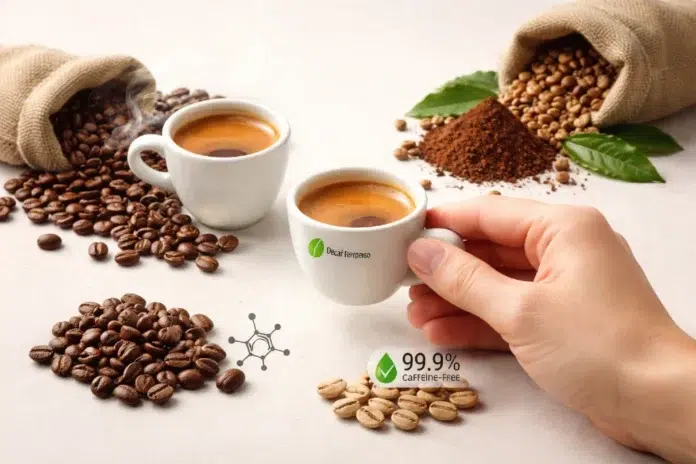
If you love the flavor and ritual of espresso but do not always want the full caffeine hit, decaf espresso can feel like the best of both worlds. It keeps the concentrated coffee character people expect from a shot, but with most of the caffeine removed before brewing. That makes it a practical option for late afternoons, evening lattes, sensitive stomachs, or anyone trying to cut back without quitting coffee altogether. The decaffeination process typically removes at least 97% of the caffeine, and a typical cup of decaf coffee contains far less caffeine than regular coffee.
What makes this topic interesting is that decaf espresso is no longer viewed as a weak backup plan for coffee drinkers. Better sourcing, better roasting, and better decaffeination methods have improved flavor noticeably, and health research suggests that many of coffee’s positive associations may come from compounds beyond caffeine alone, including polyphenols and other bioactive substances.
So how does decaf espresso really compare with a regular shot in taste, benefits, and everyday usefulness? The short answer is that it is not identical, but it is often much closer than people expect. For many readers, the better question is not whether decaf espresso is “as strong” as regular espresso, but whether it fits their routine, tolerance, sleep, and coffee preferences better.
What Is Decaf Espresso?
Decaf espresso is espresso made from coffee beans that have had most of their caffeine removed before roasting and brewing. It is still brewed the same basic way as regular espresso, using pressurized hot water forced through finely ground coffee. The main difference is in the beans, not the machine or the brewing concept.
According to coffee industry guidance, decaffeination generally removes 97% or more of the caffeine from green coffee beans before they are roasted. That means decaf espresso is not completely caffeine-free, but it is much lower in caffeine than a standard shot.
That distinction matters because a lot of people assume “decaf” means zero caffeine. It does not. If you are extremely caffeine-sensitive, pregnant, or limiting caffeine for a medical reason, it is worth remembering that some caffeine still remains. For most casual drinkers, though, the amount is low enough to make a noticeable difference in how they feel.
How Much Caffeine Is in Decaf Espresso vs Regular Espresso?
This is where decaf espresso becomes easier to understand in practical terms.
A standard espresso shot contains roughly 63 mg of caffeine, though actual levels vary by bean type, roast, dose, and shot size. Meanwhile, decaf coffee is typically left with only a small fraction of caffeine after processing, and decaf espresso is often in the single-digit milligram range per shot, though exact amounts can vary by brand and preparation.
Here is a simple comparison:
| Drink | Typical Serving | Approximate Caffeine |
|---|---|---|
| Regular espresso | 1 oz shot | about 63 mg |
| Double regular espresso | 2 oz | about 126 mg |
| Decaf coffee | 8 oz cup | about 2 to 15 mg |
| Decaf espresso | 1 oz shot | usually very low, often single digits |
The exact number for decaf espresso will vary more than many people realize. Bean variety, decaffeination method, roast style, grind, extraction time, and café preparation all affect the final cup. Still, the overall pattern is clear. Decaf espresso delivers dramatically less caffeine than regular espresso.
That makes it especially appealing for people who want a cappuccino after dinner, a second latte in the afternoon, or the flavor of espresso without feeling wired.
Why People Choose Decaf Espresso
Not everyone switches to decaf espresso for the same reason. Some do it for sleep. Some do it for anxiety. Others simply want to enjoy more coffee without overshooting their caffeine intake.
For most healthy adults, the FDA says up to 400 mg of caffeine a day is an amount not generally associated with negative effects. But that does not mean everyone feels good at that level. Tolerance differs a lot from person to person, and some people notice jitters, heart racing, reflux, headaches, or poor sleep at much lower amounts.
Common reasons people choose decaf espresso include:
- They enjoy espresso flavor but want less stimulation
- They are trying to sleep better
- They are sensitive to caffeine or prone to jitters
- They want to reduce total caffeine without giving up coffee drinks
- They prefer a late-day latte, cappuccino, or Americano
- They are balancing medical advice or pregnancy-related caffeine limits
In real life, this is where decaf espresso shines. It does not ask you to abandon the café experience. It simply changes the intensity of the caffeine side of that experience.
Does Decaf Espresso Taste Different?
Yes, but the gap is often smaller than people expect.
A regular espresso shot usually tastes more intense, sharper, and sometimes more aromatic. That is partly because caffeine itself contributes a bit of bitterness, and partly because some decaffeination methods can slightly soften or alter the bean’s original flavor profile. Even so, modern decaf espresso can still taste rich, chocolatey, nutty, caramel-like, or fruity depending on origin and roast.
The main flavor differences people notice are these:
- Slightly lower bitterness
- A somewhat softer finish
- A little less punch in straight shots
- Sometimes a gentler aroma or lighter body
That said, quality matters more than the word “decaf” itself. A poorly roasted regular espresso can taste flat or harsh. A well-sourced decaf espresso, roasted carefully and dialed in properly, can taste excellent, especially in milk drinks.
This is why many coffee drinkers who say they “hate decaf” are often reacting to old, stale, or badly prepared decaf. Better beans have changed the conversation.
How Decaffeination Affects Flavor
Coffee beans are usually decaffeinated when they are still green, before roasting. The process removes caffeine using methods that rely on chemistry and extraction, then the beans are dried and roasted. Industry sources note that these methods are considered safe, and modern processing is designed to remove most caffeine while preserving as much flavor as possible.
In practical terms, decaffeination can subtly affect taste because it changes the bean before roasting. Some beans lose a little brightness. Some gain a smoother profile. Some become easier to drink as espresso because the bitterness feels less aggressive.
For the average reader, the most useful takeaway is this: decaf espresso is usually not trying to be a perfect clone of regular espresso. It is trying to offer a satisfying espresso experience with much less caffeine. Those are not exactly the same goal, and that helps explain the taste difference.
Is Decaf Espresso Healthier Than Regular Espresso?
That depends on what you mean by healthier.
If your main issue is caffeine sensitivity, then decaf espresso may be the healthier fit for you. Less caffeine can mean fewer jitters, less restlessness, and a lower chance of disturbing sleep. Research on caffeine and sleep shows that caffeine can interfere with sleep quality, and one controlled study found meaningful sleep disruption even when caffeine was taken six hours before bedtime.
If your concern is general coffee-related health benefits, the picture is more nuanced. Harvard nutrition experts note that both caffeinated and decaffeinated coffee contain polyphenols and that many protective associations observed with coffee are also seen with decaf. Mayo Clinic also notes that coffee’s health effects are not purely about caffeine and that moderate coffee intake has been linked with several potential benefits in research.
So no, decaf espresso is not automatically “better” in every case. But it can be a smarter option for people who want the non-caffeine side of coffee with fewer stimulant-related downsides.
Potential Benefits of Decaf Espresso
The biggest benefit is obvious. You get espresso flavor with much less caffeine.
But the benefits go beyond that simple point.
Better for Late-Day Coffee Drinking
Many people can drink a morning espresso and feel fine, then regret an afternoon or evening shot. Decaf espresso solves that problem neatly. Because the caffeine load is much lower, it is often easier to enjoy after lunch or with dessert without feeling overstimulated at night. Sleep guidance from major sleep organizations also supports limiting caffeine well before bedtime, especially for people who already struggle with sleep.
Easier on Caffeine Sensitivity
Some people are naturally more sensitive to caffeine. Even a single regular shot can make them feel shaky, anxious, or overly alert. For those drinkers, decaf espresso lets them stay in the coffee habit without getting the side effects that make the experience unpleasant. The FDA and Mayo Clinic both emphasize that safe intake levels vary by individual sensitivity, not just averages.
May Preserve Many Coffee-Related Benefits
Coffee is more than caffeine. It contains antioxidants and other compounds that researchers believe may play a role in its health associations. Harvard and Mayo Clinic sources both point to evidence that decaf can share some of coffee’s potential upsides, especially because those effects are not entirely dependent on caffeine.
Helpful for Reducing Total Daily Caffeine
This may be the most practical benefit of all. A lot of people do not want to eliminate caffeine. They just want to use it more intentionally. Swapping one or two regular shots for decaf espresso can lower daily intake significantly while keeping the ritual intact.
Is Decaf Espresso Easier on the Stomach?
Sometimes, but not always.
People often assume that decaf espresso is automatically gentler on the stomach. In some cases that is true, especially when caffeine is part of the problem. Cleveland Clinic notes that caffeine can contribute to reflux and that coffee’s natural acids can also be an issue. This means decaf may help some people, but it does not remove every possible digestive trigger.
So if regular espresso causes discomfort, decaf espresso might reduce symptoms, but it is not a guaranteed fix. The acidity of the coffee, the roast, the serving size, whether you drink it on an empty stomach, and whether milk is added can all affect how it feels.
For many readers, the better way to think about it is this: decaf espresso may be gentler if caffeine is the main problem. If acidity is the main problem, switching to decaf alone may not fully solve it.
Who Should Consider Decaf Espresso?
Decaf espresso is especially useful for certain types of coffee drinkers.
It makes sense for people who love espresso-based drinks but do not want so much stimulation. It also works well for those trying to sleep better, those limiting caffeine for medical or personal reasons, and those who want to enjoy coffee more than once a day without stacking shot after shot.
It may be a particularly strong fit for:
- Afternoon and evening coffee drinkers
- People with caffeine sensitivity
- Anyone trying to reduce jitters or palpitations
- Coffee lovers who enjoy lattes and cappuccinos more than straight shots
- People gradually cutting back on caffeine rather than quitting cold turkey
In a home setup, decaf espresso is also surprisingly useful for half-caf blends. Many coffee drinkers mix regular and decaf beans to create a middle ground that feels balanced.
Best Ways to Make Decaf Espresso Taste Better
If your only experience with decaf espresso has been disappointing café shots, do not assume the format is the issue. Often the real problem is stale beans, poor grinder settings, or under-extraction.
A few practical improvements can make a big difference:
- Buy freshly roasted decaf from a reputable roaster
- Choose beans labeled for espresso or medium to medium-dark roasting
- Dial in grind size carefully because decaf can extract a little differently
- Use filtered water
- Drink it in milk-based drinks if you want a softer, sweeter profile
- Try a cortado or flat white if a straight shot feels too thin
A lot of home brewers also find that decaf espresso performs best when treated seriously, not as a backup bean left in the pantry for months. Freshness matters.
Decaf Espresso vs Regular Espresso in Everyday Life
On paper, the biggest difference is caffeine. In daily life, the difference is more emotional and practical.
Regular espresso is for speed, stimulation, and punch. It is the classic morning shot, the pre-meeting lift, the coffee that announces itself clearly.
Decaf espresso is more flexible. It fits after dinner. It works when you want the comfort of coffee without the edge. It supports the social and sensory side of espresso without demanding that your nervous system come along for the ride.
That is why the comparison is not really about which one is “better” in an absolute sense. It is about context. A regular shot may be perfect at 8 a.m. Decaf espresso may be the smarter call at 7 p.m.
Final Thoughts
Decaf espresso is no longer just a compromise for people who cannot handle regular coffee. Done well, it is a legitimate espresso option with real flavor, useful flexibility, and a much lower caffeine load. It may not match every regular shot note for note, but it gives many people what they actually want most: the taste, aroma, and comfort of espresso without the same stimulant intensity.
If your goal is better sleep, less caffeine, or a more relaxed coffee routine, decaf espresso deserves a place in the conversation. It can help you keep the ritual while changing the effect, and for a lot of coffee drinkers, that is exactly the upgrade they need. The flavor still begins with quality coffee beans, careful roasting, and a good brew, whether the shot is regular or decaf.

