


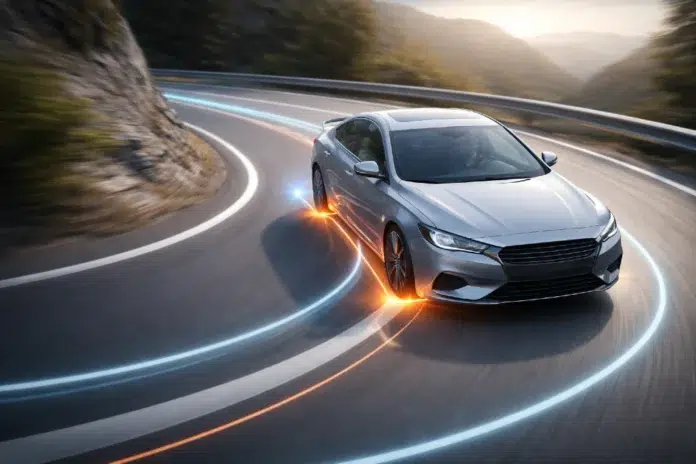
If you have ever driven an SUV or a taller vehicle through a fast bend, you already know the feeling. The body leans, the steering feels a little less settled, and everyone inside notices the shift in weight. That is exactly the kind of situation Active Cornering Enhancement is built to improve.
At its core, Active Cornering Enhancement is a suspension-related technology that helps reduce body roll when a vehicle turns. Instead of letting the vehicle lean heavily from side to side, the system works in real time to keep it flatter, more balanced, and more composed. Land Rover describes its ACE system as a technology designed to reduce vehicle body roll while preserving a softer ride in normal driving, and the brand has highlighted it as an industry-first feature introduced on Discovery in 1998.
That matters more than many drivers realize. Better roll control can make a vehicle feel more stable in curves, more predictable during lane changes, and less tiring to drive on winding roads. It does not turn every vehicle into a sports car, but it can make a heavy SUV or utility vehicle feel far more confident and controlled than its size would suggest. In the wider safety picture, vehicle stability systems have also shown measurable crash-reduction benefits. NHTSA has estimated that electronic stability control reduces single-vehicle crashes by 34 percent for passenger cars and 59 percent for SUVs, while IIHS says ESC cuts fatal single-vehicle crash risk by about half and fatal single-vehicle rollover risk by 75 percent for SUVs.
What Is Active Cornering Enhancement?
Active Cornering Enhancement is a system that helps a vehicle stay flatter and more settled when cornering. In simple terms, it controls or counters body roll, which is the natural leaning motion you feel when a vehicle changes direction.
In many vehicles, body roll is controlled by suspension tuning and anti-roll bars alone. Those passive parts do the job, but they are always a compromise. If the suspension is tuned stiffly to control lean, the ride may feel harsher on rough roads. If it is tuned softly for comfort, the vehicle may lean more in corners. ACE is designed to reduce that compromise by actively adjusting roll control instead of relying only on fixed hardware settings. Land Rover’s own documentation says the system is intended to eliminate body roll at low cornering speeds and reduce it at higher cornering speeds while maintaining softer straight-line ride comfort.
That is why this technology stands out. It is not just about making a car feel sportier. It is about helping a vehicle respond more naturally to steering inputs without giving up everyday comfort.
Why Vehicles Lean in the First Place
To understand Active Cornering Enhancement, it helps to understand the problem it is solving.
When a vehicle turns, weight transfers from one side to the other. The faster the turn or the taller the vehicle, the more noticeable that transfer becomes. The body wants to lean outward because of lateral force. In a low sports car, that motion may feel tightly controlled. In a taller SUV, it can feel more dramatic.
That lean is not just a comfort issue. Too much body roll can change how the tires load up, affect steering feel, and make a vehicle seem slower to react. It can also make passengers feel less secure, especially on curvy roads, highway ramps, and quick avoidance maneuvers.
Traditional suspension engineers have always balanced comfort against control. Active Cornering Enhancement exists because drivers want both. They want a vehicle that feels calm on the highway, comfortable over broken pavement, and stable when the road starts to twist.
How Active Cornering Enhancement Works
The exact setup varies by manufacturer and model, but the basic idea behind Active Cornering Enhancement is straightforward. The vehicle uses sensors, a control unit, and mechanical or hydraulic components to respond to cornering forces in real time.
A typical system monitors inputs such as:
- Steering angle
- Vehicle speed
- Lateral acceleration
- Yaw movement
- Suspension motion
When the vehicle enters a turn, the system detects the beginning of body roll and reacts almost immediately. In Land Rover’s ACE application, the technology uses electronically controlled anti-roll hardware to reduce roll and keep the vehicle more level in corners. Land Rover specifically notes that ACE uses electronically controlled anti-roll bars to reduce body roll.
In practical terms, that means the system can apply extra resistance against leaning when the vehicle corners, then relax that resistance when it is not needed. The result is a flatter attitude in turns without forcing the suspension to stay stiff all the time.
This active behavior is what separates Active Cornering Enhancement from a passive suspension setup. A passive system is always what it is. An active or semi-active system changes its behavior based on what the vehicle is doing right now.
Active Cornering Enhancement vs Traditional Anti-Roll Bars
A lot of drivers hear Active Cornering Enhancement and assume it is just another name for a sway bar. It is related, but it is not the same thing.
A traditional anti-roll bar is a passive component. It connects suspension movement from one side of the vehicle to the other and resists lean during cornering. It works well, but its stiffness is fixed. That means engineers choose one compromise setting for comfort, handling, and load behavior.
Active Cornering Enhancement goes a step further. Instead of using only a fixed resistance level, it can vary how much roll control the vehicle gets depending on speed, steering, road surface, and cornering force. That ability to respond dynamically is the whole point.
Here is the difference in plain language:
| Feature | Traditional Anti-Roll Bar | Active Cornering Enhancement |
|---|---|---|
| Operation | Passive | Active or electronically controlled |
| Response | Fixed behavior | Adjusts in real time |
| Ride comfort | Can be firmer if tuned for handling | Better balance of comfort and control |
| Cornering support | Consistent but limited | Can increase support when needed |
| Adaptability | Low | High |
For everyday drivers, the benefit is simple. A vehicle with Active Cornering Enhancement can feel more composed in curves without beating you up on normal roads.
What Active Cornering Enhancement Feels Like on the Road
The biggest proof of Active Cornering Enhancement is not on a spec sheet. It is behind the wheel.
A vehicle equipped with this kind of technology usually feels calmer during the first part of a turn. Instead of tipping into the corner and then settling, it feels more planted from the start. The steering often feels cleaner because the body is not shifting as much before the tires take a set.
On a highway cloverleaf, for example, the difference can be obvious. In a vehicle without active roll control, you may feel the body lean and the cabin shift sideways. In one with Active Cornering Enhancement, the body stays flatter, and the whole maneuver feels smoother and more controlled.
Passengers feel it too. Less side-to-side motion means less head toss, less dramatic leaning, and a more comfortable experience, especially in larger vehicles. Land Rover’s own handbook also notes that the ACE system adjusts according to speed and surface roughness to improve passenger comfort on uneven surfaces and rough tracks.
That is important because good chassis technology should not only impress the driver. It should make the whole vehicle feel better balanced for everyone inside.
Why Active Cornering Enhancement Matters in SUVs and Larger Vehicles
It is especially valuable in SUVs, crossovers, and utility vehicles because these vehicles sit higher and often carry more weight above the road.
A higher center of gravity naturally increases body roll. That does not mean SUVs are unsafe by default, but it does mean they benefit more from technologies that improve roll control and overall stability. This is one reason stability-related systems have had such a strong real-world effect in taller vehicles. NHTSA and IIHS findings on ESC show particularly large benefits for SUVs, including strong reductions in single-vehicle crash and rollover risk.
That broader safety context helps explain why buyers care about technologies like Active Cornering Enhancement. Even though ACE itself is not identical to ESC, both belong to a bigger move in automotive engineering toward helping vehicles stay composed when conditions get challenging.
If you drive a tall family SUV, tow occasionally, or spend time on winding roads, roll-control technology is more than a luxury feature. It can change how secure and settled the vehicle feels in real life.
Real-World Benefits of Active Cornering Enhancement
The clearest benefit of Active Cornering Enhancement is improved stability on curves, but that is only part of the story.
It also improves driver confidence. When a vehicle responds predictably, you make smoother steering inputs and feel less need to correct mid-corner. That matters on wet roads, mountain routes, freeway ramps, and sudden lane changes.
Here are the most practical benefits drivers usually notice:
- Reduced body roll in turns
- Better balance between ride comfort and handling
- More confident steering feel
- Improved passenger comfort on curvy roads
- Greater composure in larger or taller vehicles
- A more premium, controlled driving character
Another benefit is consistency. Many vehicles feel fine when driven gently but get unsettled when speeds rise or the road surface changes. Active Cornering Enhancement helps reduce that gap. The vehicle does not just feel good in ideal conditions. It stays more composed when the road asks a little more from it.
Is Active Cornering Enhancement a Safety Feature?
This is where the answer needs a little nuance.
Active Cornering Enhancement improves stability, reduces body lean, and can help a vehicle feel more planted in curves. That absolutely contributes to control and confidence. But it should not be treated as a substitute for safe driving, proper tires, or major crash-avoidance technologies like ESC.
The best way to think about ACE is that it supports safer vehicle behavior by improving chassis composure. It helps the vehicle stay flatter and more predictable, especially in turning situations. That can reduce drama and improve driver confidence, but the vehicle still depends on traction, speed, road conditions, and driver judgment.
The strongest crash-reduction data in public safety research is attached to electronic stability control rather than ACE itself. NHTSA and IIHS both show that ESC has major real-world safety benefits, especially in preventing severe single-vehicle crashes and rollovers.
So yes, ACE supports stability. But it works best as one layer in a broader safety package, not as a magic shield.
Common Problems and What Drivers Should Watch For
Like any advanced vehicle system,It is not something to ignore when it develops a fault.
Land Rover owner literature includes ACE warning information and notes that a red warning can signal a fault serious enough to risk damage to vehicle components, advising drivers to stop as soon as it is safe and seek qualified assistance.
If a vehicle’s Active Cornering Enhancement system is not working correctly, symptoms may include:
- Warning lights on the dash
- More noticeable body roll than usual
- A vehicle that feels less settled in turns
- Hydraulic or suspension-related issues, depending on the system design
- Reduced ride quality or unusual handling behavior
The important point is this: if your vehicle is equipped with Active Cornering Enhancement, handling changes should not be dismissed as “just normal aging.” Advanced suspension systems have real components, sensors, and control logic behind them. If the vehicle suddenly feels different, there may be a reason.
Does Active Cornering Enhancement Need Maintenance?
In some systems, yes.
Land Rover maintenance material specifically references checking Active Cornering Enhancement fluid level in applicable vehicles, which shows that certain ACE setups involve hydraulic components and routine maintenance awareness.
That does not mean every version of Active Cornering Enhancement across the industry will have the exact same maintenance demands, but it does mean owners should not assume these systems are entirely invisible or maintenance-free. If your vehicle has active roll-control hardware, regular inspections matter.
A few practical habits help:
- Pay attention to warning lights
- Follow the factory service schedule
- Have suspension leaks or handling changes checked early
- Use the correct fluid or parts if your system requires them
- Do not ignore unusual lean, clunks, or steering feel changes
This is one of those technologies that works brilliantly when healthy and can become expensive when neglected.
Is Active Cornering Enhancement Worth It?
For many drivers, yes.
If you mostly drive straight highways in a low sedan, you may never think much about body roll. But if you drive a taller SUV, carry passengers often, or value a more controlled driving feel, It can make a real difference. It improves the way the vehicle behaves in exactly the moments when mass and height become most noticeable.
It is especially worthwhile for people who want comfort and handling at the same time. That is the real appeal. A stiff suspension can control roll, but it may feel tiring. A soft suspension can feel plush, but it may lean too much. It aims for the middle ground that modern drivers actually want.
And from a product standpoint, that is why these systems matter. They help large, practical vehicles feel more refined, more stable, and more confidence-inspiring without asking the driver to accept old-school compromises.
Final Thoughts on Active Cornering Enhancement
The best way to describe Active Cornering Enhancement is simple. It is the kind of technology you may not notice by name, but you definitely notice by feel.
When it is working well, the vehicle corners with less lean, responds with more poise, and feels more secure on the kinds of roads that expose weak chassis tuning. That is why ACE matters. It improves stability on curves, helps control body motion, and gives drivers a more settled, confidence-building experience behind the wheel.
For anyone trying to understand why some SUVs feel planted while others feel top-heavy, this is part of the answer. Good roll control changes the personality of a vehicle. And when that roll control is active rather than passive, the result is usually a smarter balance of comfort, grip, and composure.
In the end, ACE is not hype. It is a meaningful piece of driving technology that makes cornering feel cleaner, calmer, and more controlled in the real world. If you have ever wondered why advanced suspension systems matter, start with this: they make a heavy vehicle feel far more sure-footed when the road begins to curve.
In many vehicles, that improvement starts with a smarter version of the humble anti-roll bar, backed by sensors, control logic, and suspension engineering that work together quietly in the background.

