


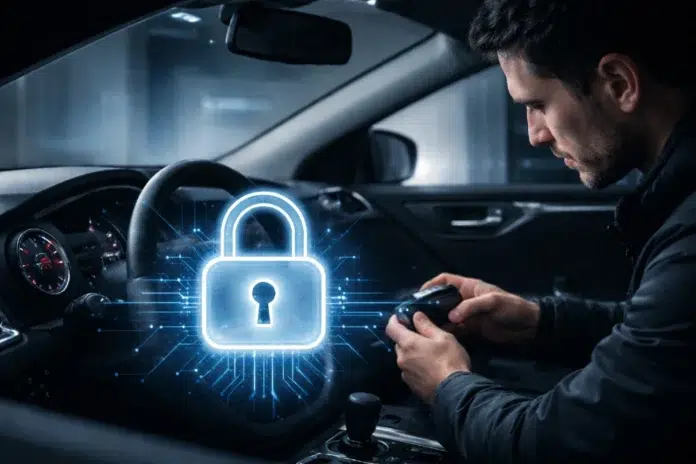
Car theft does not always look like a smashed window and dangling wires anymore. In many cases, it is quieter, faster, and far more technical than people expect. Modern thieves often target keyless cars, cloned keys, and weak points in vehicle electronics, which is why products like the Ghost Immobiliser have become such a big talking point among car owners, installers, and insurers. Official crime data for England and Wales still shows vehicle-related theft at a significant level, even after a recent decline, and police advice continues to focus on stronger layers of protection for keyless vehicles.
At its core, a Ghost Immobiliser is an aftermarket security system designed to stop a vehicle from being driven away unless the correct disarm sequence is entered. Unlike a traditional alarm, it is not about making noise. It is about quietly blocking unauthorized use. Autowatch describes its Ghost-II system as a covert CAN-bus immobiliser that uses the vehicle’s own buttons for a unique disarm sequence, without adding obvious key fobs or visible clues.
That difference matters more than ever. The National Highway Traffic Safety Administration notes that immobilizing-type devices are specifically intended to prevent thieves from bypassing a vehicle’s ignition system and hot-wiring it, while police guidance in the UK still advises owners of keyless cars to add layers such as signal-blocking pouches and stronger anti-theft protection.
What a Ghost Immobiliser actually does
A Ghost Immobiliser is built to stop the engine from being authorized to run until the correct input sequence is made by the driver. In practical terms, that means even if someone gets inside the car and has a cloned key, a relayed signal, or even the original key in some theft scenarios, the vehicle still should not drive normally without the right sequence. Autowatch says the system is designed to protect against key cloning, relay theft, hot-wiring, ECU spoofing, and OBD attacks, while remaining hidden on the vehicle network.
The product works through the vehicle’s internal data network, commonly known as the CAN bus. Bosch explains that CAN FD, an updated form of the Controller Area Network protocol, was developed to improve communication speed and data capacity inside vehicles, while CAN in Automation notes that CAN has been embedded in passenger vehicles for decades. In plain language, this network is how many of your car’s electronic control units communicate with each other.
That technical foundation is part of why the system attracts attention. It is not just another siren or steering lock. It is designed to sit quietly in the background and interfere with the theft process at the point where the vehicle would otherwise be ready to move.
Why this type of protection matters now
Theft methods have changed. Police guidance on keyless theft explains that relay theft happens when criminals use equipment to fool the car into thinking the real key is nearby, allowing the vehicle to unlock and start. Official ONS material has also highlighted the role of remote locking signal manipulation in theft of vehicles, showing how modern methods are tied to electronic access rather than only forced entry.
That is one reason many owners feel uneasy even when they have a newer, expensive vehicle with factory security. Factory systems are better than they used to be, but theft tactics have evolved alongside them. A criminal does not always need to break anything. Sometimes the goal is simply to outsmart the car’s normal authorization process.
This is where a hidden immobiliser changes the equation. It adds another checkpoint that is separate from the normal key recognition flow. If a thief expects the vehicle to behave like a standard push-button car, that extra step can be enough to stop the theft completely or convince them to move on.
Key features that make a Ghost Immobiliser different
The most talked-about feature is the personalized disarm sequence. Instead of carrying a separate remote, the driver enters a sequence using existing buttons in the vehicle. According to Autowatch, there are no extra key fobs, radio signals, or LED indicators that reveal the system’s presence.
That matters because visible or predictable security devices can be studied. A hidden system is harder to map from the outside. The less obvious the protection is, the less information a thief has to work with.
Another major feature is covert installation. The system is designed to be discreet and integrated into the vehicle rather than mounted like a visible aftermarket add-on. Many owners like that because it avoids changing the cabin look or advertising that extra security has been fitted.
There is also a service or valet mode. Autowatch states that Ghost-II includes a Service/Valet mode so the vehicle can be handed to workshops, dealerships, or valets without giving away the main disarm sequence. That is a practical feature, not a gimmick. Plenty of car owners worry less about street theft than they do about handing keys to multiple people over time.
Compatibility is another strong point, although it is never universal in the absolute sense. Autowatch advises users to check compatibility before installation. That is important because vehicle electronics vary widely by make, model, and year.
A few headline features people usually care about most include:
- Hidden installation with no obvious visual clues
- Custom disarm sequence using factory buttons
- Protection against key cloning and relay-style theft claims by the manufacturer
- Service or valet mode for temporary handovers
- TASSA verification on the current Ghost-II product line according to Autowatch
The benefits in everyday ownership
The first benefit is peace of mind, and that sounds simple until you have owned a targeted vehicle. If you drive a high-demand model, live in an area with repeat theft, or keep your car on a driveway, security stress becomes part of everyday life. A strong immobiliser does not remove all risk, but it can make ownership feel less exposed.
The second benefit is layered security. Police advice does not suggest relying on one trick alone. It recommends multiple habits and protections, especially for keyless vehicles. That is the right mindset. A Ghost Immobiliser works best as one layer within a broader plan that might also include sensible key storage, a Faraday pouch, secure parking, factory tracking, or a visible physical deterrent.
The third benefit is low day-to-day friction. A lot of car security products are technically effective but annoying to live with. If a device creates daily hassle, people stop using it properly. The appeal here is that once the user gets used to the sequence, the process becomes routine.
The fourth benefit is that it targets modern theft pathways rather than older ones only. NHTSA’s overview of immobilizing devices makes the larger point that preventing the vehicle from being authorized to run is still one of the most important anti-theft principles. That is exactly why this category remains relevant.
Real-world protection is about buying time and causing failure
People often ask a simple question: does it actually work in the real world?
The honest answer is that no security product can promise a zero-risk outcome in every scenario. Any article that says otherwise is overselling. Real-world vehicle protection is not about magic. It is about making theft slower, harder, riskier, and more likely to fail.
That is where the product has a clear logic. A thief may gain access to the cabin. They may even appear to have solved the key problem. But if they still cannot authorize the vehicle to move, the theft process breaks down at the point that matters most.
In practical terms, that can do three things.
First, it can stop the theft outright.
Second, it can force the thief to spend longer with the vehicle, which increases risk.
Third, it can push them toward easier targets.
That last point is rarely discussed enough. Criminal behavior is often opportunistic. If one car appears difficult and another appears easy, the easier option becomes more attractive.
Where owners get the most value
Not every owner needs the same level of aftermarket security. The value tends to be strongest for a few types of drivers.
Owners of keyless vehicles are an obvious group. Police prevention advice specifically calls out the risks around keyless entry and signal abuse, which makes extra immobilization more relevant for those cars.
People with performance cars, luxury models, SUVs, and popular fleet vehicles also tend to think more seriously about it. These are often the vehicles that thieves watch because they are easy to sell whole, export, strip, or clone.
There is also a quieter group that benefits a lot: owners who keep vehicles for the long term and care deeply about condition and resale history. Even if a stolen car is recovered, many people do not want the disruption, insurance hassle, damage, and uncertainty that follow.
Common concerns before installation
One concern is whether the system is too complicated. For most people, the learning curve is short. Once the sequence becomes muscle memory, the system usually feels less awkward than owners expect.
Another concern is whether it affects the look of the cabin. The appeal here is that it usually does not. The system uses existing controls rather than adding a visible aftermarket device to the dashboard.
A third concern is credibility. This is where it helps that the current Ghost-II system is presented by Autowatch as TASSA verified and insurance recognized. That does not mean every insurer will treat every installation the same way, but it does mean the product is not floating around without any formal market recognition.
There is also the question of cost. Prices vary by installer and vehicle, so it is better not to treat one advertised figure as universal. What matters more is thinking in terms of value. If you drive a car that would be expensive to replace, difficult to insure after a theft, or painful to live without, stronger protection can make practical sense very quickly.
Installation quality matters as much as the product
This is one area many readers underestimate. Security hardware is only as good as the way it is installed and configured. A badly fitted system can undermine the whole point of buying it.
A proper installation should be discreet, professional, and specific to the vehicle. The setup should include a sensible sequence, clear handover instructions, emergency recovery information, and a test of normal daily use. If the installer rushes the process or explains nothing, that is a problem.
Compatibility also matters. The official product pages make it clear that drivers should check whether their vehicle is supported before proceeding. That advice should be taken seriously.
How it compares with other anti-theft options
A standard alarm mainly tries to attract attention. That can still help, but many thieves know alarms are often ignored.
A steering wheel lock is visible and useful as a deterrent. It tells the thief there will be extra effort involved. That can absolutely be worth having.
A tracker helps after the theft, not necessarily before it. NHTSA makes the same distinction in broader terms when separating immobilizing devices from recovery systems. Recovery matters, but prevention matters first.
A Ghost Immobiliser sits in the prevention category. That is its strongest argument. It aims to stop the car from being driven away in the first place.
For many owners, the smartest setup is not choosing only one method. It is combining hidden prevention, visible deterrence, and good key discipline.
Practical tips to get the best protection
If you install one, do not treat it as permission to get careless elsewhere. Police advice on vehicle theft prevention still applies.
Keep keys and spare keys well away from entry points in the home. Use a signal-blocking pouch for keyless fobs and check that it still works over time. Reprogram keys when buying used vehicles if there is any doubt about how many keys exist.
Also, do not share your sequence casually. Choose something memorable for you but not obvious to anyone who rides in the car regularly. That sounds basic, but many security failures begin with simple familiarity.
If you often hand the vehicle to others, learn how service mode works properly. It exists for a reason. Using it correctly can save frustration and avoid unnecessary exposure of your main setup.
Is a Ghost Immobiliser worth it?
For some owners, yes, absolutely.
If your vehicle is low value, rarely used, and parked in a highly secure private garage, the urgency may be lower. But for owners of newer, keyless, desirable, or street-parked vehicles, the case becomes much stronger.
What makes the product appealing is not hype. It is the logic behind it. Modern thieves increasingly target the electronic path into a car. A hidden immobiliser adds a further electronic barrier after that first path has already been abused.
That does not make it a miracle fix. It makes it a smart defensive layer. And in modern car security, layers are often the difference between a close call and a very expensive loss.
In the end, the strongest reason many drivers choose this kind of protection is simple. They do not want to rely only on the security system the thief already expects. They want something less obvious, more personalized, and harder to work around. That is exactly where this product has built its reputation.
If you are weighing the decision, think less about marketing language and more about your real-world risk. Where do you park? How attractive is your car to thieves? Do you have keyless entry? Have thefts happened locally? How disruptive would losing the car be, even for a few weeks?
Those answers usually make the decision clearer.
And while broader vehicle security conversations often focus on alarms and trackers, hidden immobilisation has become one of the most practical answers for people who want prevention before recovery.
Conclusion
The Ghost Immobiliser stands out because it is designed around modern theft behavior rather than old assumptions about car crime. It is discreet, it adds a personalized authorization step, and it targets the moment a thief wants the vehicle to move. For owners of keyless or high-risk vehicles, that can make a meaningful difference in everyday protection. Used as part of a layered security approach, it offers a practical and credible way to reduce theft risk without turning daily driving into a chore.
FAQs
Can a Ghost Immobiliser stop key cloning theft?
It is designed specifically to reduce the usefulness of cloned keys and similar theft methods by requiring an extra disarm sequence before the vehicle can be driven. That is one of the main claims made by Autowatch for the Ghost-II system.
Does it replace an alarm or tracker?
Not really. It serves a different purpose. An alarm draws attention, and a tracker helps recovery. This type of immobiliser is focused on preventing unauthorized driving in the first place.
Is it suitable for every vehicle?
No. Compatibility depends on make, model, and year, so checking supported vehicles before booking installation is essential.
Does it matter who installs it?
Yes. Installation quality is a major part of real-world effectiveness, usability, and trust.

