


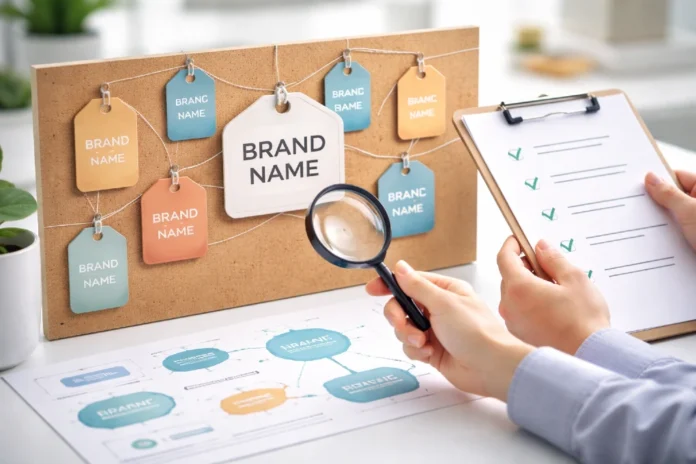
If your business name appears one way on your website, another way on social media, and a third way in directories or product feeds, you are creating friction you do not need. Brand Name Normalization Rules help solve that problem by setting a clear, repeatable standard for how your brand name is written everywhere it appears. That consistency matters for search visibility, customer trust, local discovery, and cleaner data management. Google’s business profile guidance explicitly calls for name consistency across locations, and Google’s search documentation shows how structured data and clear entity information help search systems understand content more accurately.
At a practical level, Brand Name Normalization Rules are not just a style preference. They are operational rules that keep naming aligned across your website, ad accounts, directories, marketplaces, CRM, analytics dashboards, invoices, PR mentions, and internal content. When your brand is named consistently, people can find you more easily, search engines have less ambiguity to resolve, and your team wastes less time fixing avoidable inconsistencies. That is why businesses that care about growth, local SEO, and brand governance increasingly treat Brand Name Normalization Rules as part of their core digital infrastructure.
What Are Brand Name Normalization Rules?
Brand Name Normalization Rules are the written standards that define the exact approved version of a brand name and how it should appear in different contexts. They cover spelling, capitalization, spacing, punctuation, abbreviations, suffixes, legal entity references, location modifiers, and platform specific variations.
For example, a company may be legally registered as “Acme Holdings LLC,” but its public facing brand name may simply be “Acme.” Without Brand Name Normalization Rules, teams may publish “ACME,” “Acme LLC,” “Acme Inc,” “Acme Official,” or “Acme Store” depending on who creates the content. That may seem minor, but at scale it creates confusion for users and inconsistent signals for search systems.
A strong normalization framework tells everyone which version is correct, which variations are acceptable, and which ones should never be used. In other words, Brand Name Normalization Rules give your brand a single source of naming truth.
Why Brand Name Normalization Rules Matter for Search Visibility
Search visibility depends partly on clarity. Search engines try to understand whether different mentions across the web refer to the same business, product, or entity. When your brand name appears in a stable, predictable format, it becomes easier for systems to connect those references and easier for users to recognize the result as yours. Google’s documentation on local business structured data explains that structured data helps Google understand page content, while Google Business Profile guidance stresses consistent business naming across locations.
That matters even more in local search, where your business name appears alongside address and phone information. Industry guidance on local SEO repeatedly emphasizes the importance of matching business details across listings because consistency supports trust and discoverability.
Here is where Brand Name Normalization Rules help in real life:
- They reduce conflicting versions of your business name across listings and citations.
- They improve recognition in search results because the same name keeps appearing.
- They help internal teams publish content faster without guessing the approved form.
- They make analytics, reporting, and content audits more accurate.
- They support brand consistency across SEO, paid media, marketplaces, and PR.
Search engines do not reward inconsistency. They work around it when they can. Your job is to make that job easier.
Brand Consistency Is Not Just a Branding Issue
Many teams think naming consistency belongs only to brand or design departments. In reality, Brand Name Normalization Rules affect SEO, legal compliance, customer experience, local listings, marketing automation, ecommerce operations, and even support documentation.
Imagine a user searching for your brand after seeing a mention on YouTube. If your site title says one version, your Google Business Profile says another, and your social handles add extra words that are not used anywhere else, the customer pauses. That pause can cost you a click, a lead, or a sale.
Now flip the scenario. The same user sees your normalized brand name on your site, in your title tags, on your profile listings, and across industry directories. Recognition feels immediate. Trust feels easier. That is the quiet power of Brand Name Normalization Rules.
Common Naming Problems Businesses Create Without Realizing It
Most businesses do not set out to create messy brand signals. The problems usually show up slowly as the company grows.
One common issue is unnecessary variation. A team member adds “official” to a social profile, another adds a location to a listing, and a third uses the legal business name in a press release. Over time, the web fills with versions that look related but not identical.
Another issue is inconsistent capitalization. Brands that use unusual case styles often lose consistency when editors, vendors, or directory systems rewrite the name. That is why Brand Name Normalization Rules should define both the preferred style and acceptable fallback versions for systems that do not support special formatting.
A third problem is platform driven modification. Marketplaces, CRMs, and directory sites often impose character limits or naming rules. Good Brand Name Normalization Rules account for that by defining approved alternates rather than allowing improvised versions.
Core Elements Every Brand Name Normalization Policy Should Include
If you want Brand Name Normalization Rules to work, they need to be specific enough to guide decisions under pressure. Vague rules lead to guesswork.
A useful policy usually includes:
| Element | What it should define | Example |
|---|---|---|
| Canonical brand name | The single approved primary version | Acme |
| Legal name usage | When to use the registered entity name | Acme Holdings LLC on contracts only |
| Capitalization | Exact case rules | Acme, not ACME unless logo treatment |
| Spacing and punctuation | Approved spacing, apostrophes, periods, symbols | HomePro, not Home Pro |
| Location modifiers | Whether city or region can be appended | Acme Dallas only for local landing pages |
| Abbreviations | Allowed short forms | AI Labs allowed, A.I. Labs not allowed |
| Marketplace variants | Approved alternatives when character limits apply | Acme Tools instead of Acme Tools Official |
| Prohibited versions | Explicit do not use list | Acme Inc, Acme Store, The Acme |
This is where Brand Name Normalization Rules become practical. They stop being theory and become a repeatable workflow.
How Brand Name Normalization Rules Support Local SEO
Local SEO is one of the clearest use cases for Brand Name Normalization Rules. Google says business names should be consistent across locations within the same country, with limited exceptions. Google also notes that business information shown in local results can come from multiple sources, which means conflicting data can create problems.
That is why your business name should match across your website, Google Business Profile, local directories, map listings, and review platforms. If your location pages use one naming pattern but your listings use another, you make it harder for both users and platforms to connect the dots.
For multi location businesses, Brand Name Normalization Rules should clarify whether each location uses the same core name or whether a location descriptor is added. The goal is not to stuff keywords into the business name. The goal is to create a clean, policy based naming structure that is accurate and repeatable.
How Brand Name Normalization Rules Improve Content and Metadata
Your brand name appears in more places than most teams realize. It shows up in title tags, meta descriptions, schema markup, author bios, image file names, internal links, press releases, product pages, app listings, and profile pages.
That is why Brand Name Normalization Rules should extend beyond visible text and into metadata. Google’s search documentation emphasizes that structured data helps search engines understand the content on a page. If your visible naming and your structured naming align, your site sends clearer signals.
This is especially important for companies with product families, sub brands, or legacy naming systems. Without clear rules, metadata becomes a mix of old and new versions. That weakens reporting quality and increases the chance that search engines or users will encounter outdated naming.
A Real World Example of Brand Confusion
Picture a regional home services company called “BlueNest.” Its legal name is BlueNest Services LLC. On Instagram, the profile says “BlueNest Home.” On directory listings, some vendors use “Blue Nest.” On invoices, the company uses “BlueNest Services.” On the website, the logo says simply “BlueNest.”
Now imagine a customer who sees a review for “Blue Nest,” finds a map listing for “BlueNest Home,” and then lands on a website that says “BlueNest.” The customer may still convert, but the path is messier than it needs to be.
With Brand Name Normalization Rules, the company could define “BlueNest” as the canonical public facing name, reserve “BlueNest Services LLC” for legal documents, prohibit “Blue Nest,” and approve one format for location based pages. That simple policy would clean up discovery, branding, and operations across the board.
How to Create Brand Name Normalization Rules That Actually Work
Start with your canonical name. Decide the exact public facing version of the brand name that should appear most often. Then identify every place your brand currently appears online and compare those instances against the approved version.
Next, document your exceptions. Some systems require a legal entity name. Some directories may not allow special characters. Some marketplaces may limit length. Good Brand Name Normalization Rules do not pretend every platform behaves the same. They define approved alternatives in advance.
Then build a centralized reference. This can be a brand operations document, a marketing playbook, or a naming governance file. What matters is that every team can access it.
Finally, audit regularly. Brand consistency is not a one time project. New campaigns, new vendors, acquisitions, and local expansions can reintroduce naming drift.
Practical Tips for Maintaining Brand Name Normalization Rules Across Teams
The biggest failure point is not the rule itself. It is distribution. If only brand managers know the rules, inconsistency returns quickly.
Use these practices to keep Brand Name Normalization Rules active:
- Add the canonical brand name and prohibited variations to your editorial style guide.
- Include approved naming in onboarding for agencies, freelancers, and local teams.
- Review listings and citations quarterly.
- Standardize brand naming in schema, CMS templates, and profile fields.
- Flag deviations during SEO audits and content QA.
- Create a short internal checklist for anyone publishing new pages or listings.
These steps sound simple, but they prevent the kind of low level naming drift that slowly damages discoverability.
Brand Name Normalization Rules in Multi Brand and Enterprise Environments
Larger organizations face a harder version of this problem. Parent brands, product lines, regional divisions, and legacy acquisitions often each have their own naming history. In those environments, Brand Name Normalization Rules should define hierarchy as well as naming.
That means clarifying when a sub brand stands alone, when it must be paired with the parent brand, and when legacy names should be retired. It also means deciding whether users should search for one umbrella brand or several individual entities.
From an operational perspective, this is not just cleaner branding. It helps search teams avoid duplicate page naming, content overlap, and misaligned structured data. It also helps PR, support, and sales teams present the same identity across channels.
Mistakes to Avoid
One mistake is treating normalization like keyword optimization. Your business name should be accurate, not overloaded with marketing language. Google’s business profile policies are clear that naming should reflect the real world business name consistently, not a stuffed variation designed to manipulate visibility.
Another mistake is failing to distinguish between legal names and public facing brand names. Both can be valid, but they should be used intentionally.
A third mistake is ignoring legacy mentions. Old PDFs, partner pages, and directory listings can continue spreading outdated versions of your brand long after a rebrand. If you are serious about Brand Name Normalization Rules, those historical assets need attention too.
Why This Matters More in a Search Landscape Shaped by Entities and Data
Modern search is not only about pages. It is also about entities, attributes, context, and machine readable signals. The clearer your business identity is, the easier it is for platforms to interpret and present it accurately. Structured data, business profile information, and consistent naming all contribute to that clarity.
That does not mean Brand Name Normalization Rules guarantee rankings on their own. It means they reduce unnecessary ambiguity. They strengthen the basic consistency layer that supports SEO, local search, analytics, and brand trust.
In other words, they help your business look like one business everywhere it appears.
Conclusion
The smartest thing about Brand Name Normalization Rules is that they solve a small problem before it becomes an expensive one. They keep your brand recognizable, your search signals cleaner, your local listings more trustworthy, and your internal workflows more efficient. In a crowded digital environment, clarity is an advantage.
If your team wants better search visibility and stronger brand consistency, start with the name itself. Define it once, document it properly, apply it everywhere, and audit it often. That is how Brand Name Normalization Rules move from a branding detail to a practical growth asset. And as search systems continue relying on cleaner data and stronger entity understanding, consistent naming will only become more valuable in search indexing.

