


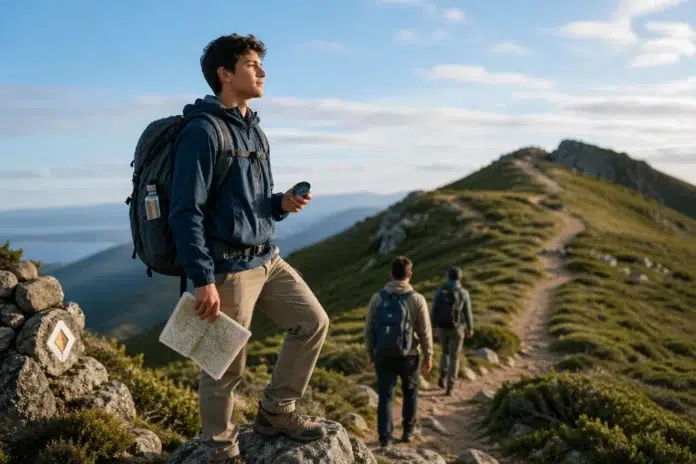
A Youth Expedition Project is more than a trip, camp, trek, or outdoor activity. At its best, it is a carefully planned learning experience where young people step outside their normal routine, face real challenges, work with others, and return with stronger confidence, sharper life skills, and a better sense of who they are becoming.
Many students learn facts in classrooms, but they often discover courage in real situations. That is where a Youth Expedition Project becomes valuable. It gives teenagers and young adults the chance to learn by doing, not just by listening.
Whether the project involves hiking, community service, environmental work, cultural travel, leadership training, or outdoor education, the goal is usually the same: help young people grow in a way that feels real, practical, and memorable.
What Is a Youth Expedition Project?
A Youth Expedition Project is a structured youth development program built around exploration, teamwork, responsibility, and hands-on learning. It may take place in nature, a new city, a rural community, a school setting, or even through a local social-impact mission.
The word “expedition” often makes people think of mountains, forests, rivers, or long journeys. That can be part of it. But the deeper meaning is about movement from comfort to growth.
A strong Youth Expedition Project usually includes:
- A clear learning purpose
- Trained mentors or facilitators
- Group challenges
- Team-based problem-solving
- Reflection sessions
- Safety planning
- Personal responsibility
- Real-world experiences
The project may last one day, one week, or several months. Some are school-led. Others are run by youth organizations, outdoor education groups, community programs, nonprofits, or leadership academies.
The most effective projects do not simply keep young people busy. They help them understand themselves better.
Why the Youth Expedition Project Matters Today
Young people today are growing up in a fast, noisy, and highly digital world. Many are surrounded by information, but not always by meaningful experiences. They may know how to scroll, search, and post, but still struggle with confidence, patience, teamwork, decision-making, or emotional resilience.
A Youth Expedition Project gives them something different.
It places them in situations where they cannot just click away from difficulty. They may need to carry their own bag, help a tired teammate, follow directions, solve a route problem, speak in front of a group, prepare food, manage time, or stay calm when plans change.
These small moments matter.
Research and youth-development evidence often connect outdoor and experiential education with gains in social skills, leadership, self-esteem, and self-efficacy, although outcomes can vary depending on program quality and design. County Health Rankings notes that outdoor experiential education has some evidence for improving social skills, leadership skills, self-esteem, and self-efficacy.
That is the strength of a Youth Expedition Project. It does not teach confidence as a theory. It gives young people a situation where confidence has to be practiced.
Learning That Feels Real
One reason a Youth Expedition Project works so well is that it turns learning into something young people can touch, feel, and remember.
A classroom lesson about teamwork may be useful. But teamwork becomes much more powerful when a group has to set up a camp before sunset, complete a community task, navigate a trail, or organize supplies for a service project.
In that moment, cooperation is not a slogan. It is necessary.
This kind of experiential learning helps young people connect knowledge with action. They are not just told to be responsible. They experience what happens when responsibility is shared, ignored, or handled well.
For example, a group of students may be asked to plan a short hiking route. One person checks the map. Another monitors time. Someone else carries water. Another notices when a teammate is falling behind. By the end, the group understands leadership, planning, empathy, and accountability in a way that a lecture cannot fully deliver.
That is why a Youth Expedition Project can be so memorable. It creates lessons that stay in the body, not just the notebook.
How a Youth Expedition Project Builds Leadership
Leadership is often misunderstood. Many young people think leadership means being loud, popular, or always in charge. A well-designed Youth Expedition Project shows them something deeper.
Leadership can mean listening.
Leadership can mean noticing who needs help.
Leadership can mean staying calm when the plan changes.
Leadership can mean making a decision when everyone else feels unsure.
During a Youth Expedition Project, leadership naturally moves from one person to another. One student may lead during navigation. Another may lead during group discussion. Someone else may become important during a problem-solving task because they notice details others missed.
This helps young people see that leadership is not one personality type. It is a set of behaviors.
A 2022 study on outdoor education and leadership learning found that participants in a six-month outdoor education course showed progress in perceived leadership skills, with feedback playing an important role in development.
This matters because young people need more than praise. They need honest reflection. They need to hear what they did well and what they can improve. A strong Youth Expedition Project creates room for both.
Confidence Grows Through Challenge
Confidence does not grow from comfort alone. It grows when someone faces difficulty and realizes, “I can handle more than I thought.”
That is one of the biggest benefits of a Youth Expedition Project.
Young people may start the journey nervous. They may doubt their strength, communication skills, or ability to adapt. But as the project continues, they begin collecting small wins.
They complete a long walk.
They speak during a group circle.
They help solve a problem.
They support someone else.
They finish a task they wanted to quit.
These moments become evidence. Not empty motivation. Real evidence.
Over time, that evidence turns into confidence.
Outdoor adventure education research from the University of Notre Dame Australia has also highlighted the role of outdoor adventure education in supporting confidence, connection, wellbeing, and resilience, especially for young people who may not thrive in conventional learning settings.
A Youth Expedition Project gives young people the kind of confidence that feels earned. That is why it can have a lasting emotional impact.
Teamwork Becomes a Daily Practice
Most young people are told to work as a team. But in everyday life, teamwork can feel optional. During a Youth Expedition Project, teamwork becomes part of almost everything.
Students may need to:
- Share limited resources
- Make group decisions
- Manage different personalities
- Respect quieter voices
- Solve disagreements
- Encourage tired teammates
- Complete tasks under pressure
This kind of teamwork is not always easy. That is the point.
A good project does not pretend that group work is always smooth. It teaches young people how to stay respectful when things are uncomfortable. They learn that teamwork is not about everyone agreeing all the time. It is about moving forward without losing respect for each other.
For many students, this is one of the most useful lessons they take home.
The Role of Mentors and Facilitators
A Youth Expedition Project should never be treated as a random adventure. The quality of mentors, teachers, guides, and facilitators makes a huge difference.
Good mentors do not simply give instructions. They observe. They ask questions. They help young people reflect on what is happening.
Instead of saying, “You failed at communication,” a good facilitator might ask, “What changed in the group when only two people were making decisions?”
That question opens a door.
Young people begin to think. They notice patterns. They connect actions with outcomes.
Strong mentors also create emotional safety. This is important because growth often brings discomfort. A student may feel embarrassed, frustrated, homesick, tired, or unsure. The mentor’s role is to support without removing every challenge.
The balance matters. Too much pressure can overwhelm young people. Too little challenge can weaken the learning. A thoughtful Youth Expedition Project finds the middle ground.
Types of Youth Expedition Project Programs
A Youth Expedition Project can take many forms depending on the age group, location, budget, and learning goal.
Outdoor Adventure Expedition
This may include hiking, camping, canoeing, climbing, cycling, or navigation. The focus is usually teamwork, resilience, survival skills, fitness, leadership, and environmental awareness.
Community Service Expedition
Students travel to a local or regional community to support meaningful work. This may include clean-up drives, food distribution, school support, tree planting, awareness campaigns, or public health projects.
Educational Travel Expedition
This type of Youth Expedition Project may focus on history, culture, geography, science, or social studies. Students learn by visiting real places instead of only reading about them.
Environmental Expedition
Young people may study ecosystems, document local biodiversity, restore habitats, reduce waste, or support conservation projects. This can build both scientific curiosity and civic responsibility.
Leadership and Life Skills Expedition
Some programs are designed mainly around confidence, communication, decision-making, emotional resilience, and career readiness. These may happen outdoors or in community settings.
Each model can be valuable when the purpose is clear and the activities are connected to reflection.
Real-World Scenario: A Student Who Finds Their Voice
Imagine a 15-year-old student named Maya. She is bright, but quiet. In class, she rarely raises her hand. She avoids group leadership because she worries about making mistakes.
During a Youth Expedition Project, her group is asked to plan a community garden layout for a local school. At first, Maya stays silent. But when the group begins arguing about space, she quietly sketches a better layout in her notebook.
A mentor notices and asks her to share it.
She hesitates. Then she explains her idea.
The group listens. Her plan works.
That moment may look small from the outside. But for Maya, it changes something. She realizes her ideas have value. She does not need to be the loudest person to contribute.
That is the quiet power of a Youth Expedition Project. It creates moments where young people discover parts of themselves they have not used before.
Why Reflection Is So Important
The activity itself is only half of the learning. Reflection completes it.
Without reflection, a project may become just a trip. With reflection, it becomes growth.
After an activity, facilitators may ask questions like:
- What was difficult today?
- When did the group work well?
- What would you do differently next time?
- Who helped you, and how?
- What did you learn about yourself?
- How can this lesson help you at school or home?
These questions help young people connect the experience to real life.
For example, a student who stayed calm during a trail challenge may realize they can also stay calm during exams. A student who helped resolve a group conflict may realize they can handle friendship problems better. A student who struggled with patience may become more aware of how they react under stress.
A Youth Expedition Project becomes powerful when students do not just ask, “What did we do?” but also, “What did it teach us?”
Benefits of a Youth Expedition Project
A well-planned Youth Expedition Project can support many areas of youth development.
Personal Growth
Young people learn to manage discomfort, take responsibility, and believe in their ability to improve.
Social Skills
They practice communication, cooperation, listening, empathy, and conflict resolution.
Leadership Skills
They learn how to guide, support, decide, encourage, and take initiative.
Physical Wellbeing
Many expedition projects include movement, fresh air, outdoor tasks, and active routines.
Mental Resilience
Young people learn to handle setbacks, uncertainty, tiredness, and changing plans.
Environmental Awareness
Outdoor and nature-based projects can help students understand ecosystems, sustainability, and human responsibility.
Career Readiness
Skills like teamwork, problem-solving, adaptability, and communication are useful far beyond school.
Research connected to nature-based education has also identified nature as a potential protective factor that can support resilience and wellbeing among youth.
That does not mean every project automatically changes every student. Program design matters. But when done well, the benefits can be wide and meaningful.
Safety and Planning Should Come First
A Youth Expedition Project must be inspiring, but it must also be safe. Parents, schools, and organizers should take planning seriously.
Important safety areas include:
- Age-appropriate activities
- Trained adult supervision
- Clear emergency plans
- Weather checks
- First-aid readiness
- Transport safety
- Food and water planning
- Student health information
- Proper equipment
- Clear behavior rules
Safety does not remove adventure. It protects the learning.
Young people can still experience challenge, uncertainty, and responsibility within a well-managed structure. In fact, good planning often makes deeper learning possible because students feel supported enough to take healthy risks.
What Parents Should Look For
Parents may feel excited but also nervous about sending their child into a Youth Expedition Project. That is natural. The best way to feel confident is to ask practical questions.
Parents should look for:
- A clear purpose behind the project
- Experienced staff or guides
- Transparent safety procedures
- Age-appropriate activities
- Good communication before and during the project
- Reflection and learning activities
- Inclusion for different ability levels
- A respectful group culture
Parents should also ask how the project handles homesickness, anxiety, medical needs, discipline, and emergencies.
A good organization will not avoid these questions. It will answer them clearly.
What Schools Can Gain From Expedition Projects
Schools often focus heavily on grades, exams, and classroom performance. Those things matter, but they are not the whole picture of education.
A Youth Expedition Project can help schools develop skills that are harder to measure but deeply important.
Students may return with better confidence, stronger peer relationships, improved communication, and a more mature attitude toward responsibility. Teachers may also see students differently after watching them lead, help, adapt, or persevere outside the classroom.
Outdoor and experiential learning can also make academic subjects feel more alive. Science becomes real near rivers, forests, soil, and weather. History becomes real when students visit heritage places. Citizenship becomes real through service projects. Geography becomes real through maps, routes, and landscapes.
This is why a Youth Expedition Project can support both personal development and academic learning.
Making the Project Inclusive
A meaningful Youth Expedition Project should not be designed only for the most athletic, confident, or outgoing students. Inclusion matters.
Not every young person enjoys the same kind of challenge. Some may have physical limitations. Some may struggle with anxiety. Some may come from families that cannot afford expensive programs. Some may need cultural, emotional, or language support.
An inclusive project considers these realities.
That may mean offering different activity levels, providing financial support, preparing students gradually, allowing quiet leadership roles, or choosing activities that do not shame anyone for being new or nervous.
The goal is not to make every student the same. The goal is to help every student grow from where they are.
Common Mistakes to Avoid
A Youth Expedition Project can lose its value when it is poorly planned or treated like a simple outing.
Common mistakes include:
- Focusing only on adventure without learning goals
- Ignoring emotional safety
- Making activities too difficult for the age group
- Not preparing students before the project
- Skipping reflection after activities
- Allowing dominant students to control every task
- Treating quiet students as if they are not participating
- Forgetting accessibility and inclusion
- Measuring success only by completion
The best projects are not always the hardest ones. They are the ones that help young people understand themselves, respect others, and carry lessons back into daily life.
How to Design a Strong Youth Expedition Project
A successful Youth Expedition Project starts with purpose.
Before planning activities, organizers should ask: What should young people learn from this experience?
The answer may include leadership, confidence, teamwork, environmental awareness, service, independence, or resilience. Once the goal is clear, the activities can be designed around it.
A simple structure might look like this:
- Preparation
Students learn the purpose, rules, safety basics, and expectations. - Challenge
They take part in meaningful activities that require effort and cooperation. - Support
Mentors guide the process without solving every problem for them. - Reflection
Students discuss what happened, what they learned, and how it applies to life. - Follow-up
Schools or families help students use those lessons after the project ends.
This follow-up is often forgotten, but it matters. The real success of a Youth Expedition Project is not only what happens during the journey. It is what changes afterward.
Youth Expedition Project and Mental Strength
Mental strength does not mean pretending everything is easy. It means learning how to continue with patience, honesty, and support when something is difficult.
A Youth Expedition Project can help young people practice this in a healthy way.
They may face rain, tiredness, group pressure, uncertainty, or mistakes. They may need to apologize, try again, ask for help, or encourage someone else. These are emotional skills, not just outdoor skills.
In modern life, many young people feel pressure to appear perfect. Expedition learning gives them a healthier message: struggle is not failure. Struggle can be part of growth.
That lesson can be life-changing.
The Connection Between Adventure and Responsibility
Adventure without responsibility can become careless. Responsibility without adventure can feel dull. A Youth Expedition Project brings the two together.
Young people get excitement, movement, discovery, and challenge. But they also learn preparation, respect, patience, and care.
They learn that freedom works best when it is paired with responsibility.
For example, students may enjoy exploring a trail, but they must also respect the environment. They may enjoy group independence, but they must also follow safety rules. They may enjoy making decisions, but they must also accept the outcome of those decisions.
This balance is one reason expedition learning feels so mature. It treats young people as capable, while still guiding them carefully.
Is a Youth Expedition Project Only for Outdoorsy Students?
No. A Youth Expedition Project is not only for students who already love hiking, camping, or travel.
In fact, some of the biggest growth happens in students who are unsure at first.
A student who has never spent much time outdoors may discover calm in nature. A shy student may discover leadership. A restless student may discover focus. A student who struggles in traditional classrooms may finally feel successful in a hands-on environment.
The project should not be about proving who is strongest. It should be about helping each young person take a meaningful step forward.
Conclusion: Why a Youth Expedition Project Can Shape a Young Person’s Future
A Youth Expedition Project can give young people something they often need but do not always get in everyday life: real challenge, real responsibility, real teamwork, and real reflection.
It helps them learn that confidence is built through action. Leadership is built through service. Resilience is built through difficulty. And learning is not limited to desks, screens, or textbooks.
When planned with care, a Youth Expedition Project can become one of those experiences a young person remembers for years. Not because it was easy, but because it showed them what they were capable of doing.
In a world where young people are often told what to think, a project like this helps them discover how to act, adapt, lead, and grow. That is why expedition-based learning, including outdoor education, continues to matter for schools, families, and youth organizations that want learning to feel alive.
A strong Youth Expedition Project does not simply take students somewhere new. It helps them return as someone stronger, wiser, and more confident.
FAQs
What is the main purpose of a Youth Expedition Project?
The main purpose of a Youth Expedition Project is to help young people develop confidence, leadership, teamwork, resilience, and real-world problem-solving skills through structured experiences.
Who can join a Youth Expedition Project?
Most projects are designed for teenagers, students, or young adults. The exact age range depends on the organization, activity level, safety requirements, and learning goals.
Is a Youth Expedition Project only about outdoor adventure?
No. A Youth Expedition Project may include outdoor adventure, but it can also involve community service, educational travel, environmental projects, leadership training, or cultural learning.
How does a Youth Expedition Project build confidence?
It builds confidence by giving young people manageable challenges, supportive guidance, and real chances to succeed through effort, teamwork, and reflection.
What skills can students learn from a Youth Expedition Project?
Students can learn communication, decision-making, problem-solving, leadership, patience, responsibility, empathy, resilience, and practical life skills.

