


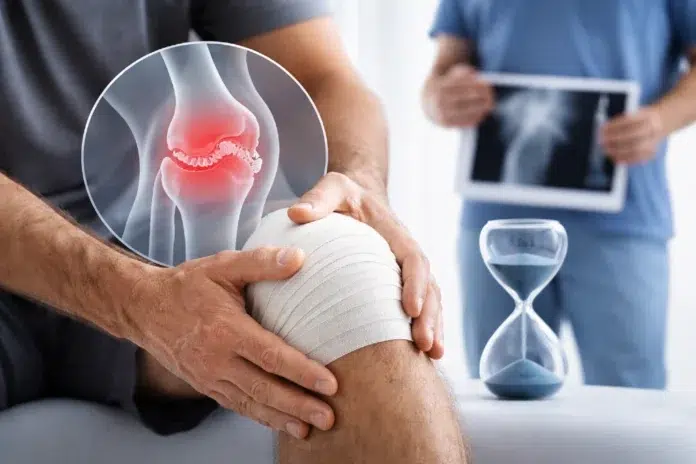
A torn meniscus can turn a simple walk, squat, or step off a curb into something you suddenly have to think about. If you are wondering about Meniscus Tear Recovery Time, the honest answer is that it depends on three big things: your age, how serious the tear is, and whether your treatment is conservative or surgical. Some people feel much better in a few weeks. Others need several months, especially after a meniscus repair.
The meniscus is a C shaped piece of cartilage in the knee that helps cushion the joint. It acts like a shock absorber between the thighbone and shinbone. When it tears, you may notice pain, swelling, stiffness, catching, locking, or a feeling that your knee is not moving normally. In some cases, rest and physical therapy are enough. In others, surgery becomes part of the recovery path.
That is why Meniscus Tear Recovery Time is not one fixed number. A small tear in a younger adult may heal faster than a complex degenerative tear in someone over 50. A person who has a partial meniscectomy may get back to daily activities much sooner than someone who has a meniscus repair, but the long term joint considerations are different.
If you want the short version before diving deeper, most mild cases managed without surgery improve over several weeks, many people recovering from partial meniscectomy feel significantly better within about 3 to 6 weeks, and meniscus repair often takes about 3 to 6 months, sometimes longer for a full return to sport.
What Does Meniscus Tear Recovery Time Usually Look Like?
In day to day practice, Meniscus Tear Recovery Time often falls into three broad patterns. The first is a mild or moderate tear treated without surgery. The second is a tear that is trimmed through partial meniscectomy. The third is a tear that is repaired because the surgeon believes the cartilage can be preserved and healed. These paths do not feel the same, and they do not run on the same timeline.
A mild tear may settle with reduced activity, ice, compression, pain relief, and physiotherapy. The NHS notes that some meniscus tears can get better on their own, though healing can take time. Degenerative tears, which are more common in middle age and older adults, often improve over about six weeks and are much better by three months, even though symptoms can sometimes linger.
A partial meniscectomy tends to have a faster short term recovery because the damaged tissue is trimmed rather than stitched and protected while it heals. AAOS states that recovery is approximately 3 to 6 weeks. Cleveland Clinic also notes that meniscectomy generally heals faster than meniscus repair.
A meniscus repair is slower because the tissue has to biologically heal. That is why doctors often protect the knee more carefully after surgery with bracing, crutches, and a structured rehab plan. AAOS places rehabilitation time for meniscus repair at about 3 to 6 months, while sports medicine guidance from Mayo Clinic notes that some athletes may take 6 to 8 months to return at a high level.
Meniscus Tear Recovery Time by Severity
Severity changes everything. A tiny stable tear is very different from a large flap tear, bucket handle tear, or root tear. The more unstable the cartilage is, the more likely your knee is to lock, catch, or stay irritated, and the more likely it is that recovery will take longer or require surgery.
Mild Tears
Mild tears usually involve less swelling, better range of motion, and fewer mechanical symptoms. These are the cases where people may start to feel better within a few weeks if they avoid twisting and deep loaded knee flexion. Recovery is often measured in weeks rather than months, especially if walking is comfortable and the knee is not locking.
Moderate Tears
Moderate tears can be frustrating because they may not fully disable you, but they do keep coming back when you try to return to normal activity too soon. Swelling after activity, pain with stairs, pain when twisting, and trouble squatting are common. In these cases, Meniscus Tear Recovery Time may stretch into six to twelve weeks or longer with non surgical care, depending on how well the knee responds to rehab. This timeframe is an inference based on the conservative recovery windows described by NHS and hospital guidance for non operative and arthroscopic recovery.
Severe or Complex Tears
Severe tears often involve locking, giving way, major swelling, or a knee that simply does not move properly. Bucket handle tears can sideline people for weeks or months. Root tears are also more serious because they can drastically affect how the knee handles load, and Mayo Clinic notes that healing potential without surgery is poor for certain root injuries. These tears often mean a longer recovery and a higher chance of surgery.
Meniscus Tear Recovery Time by Age
Age matters, but not always in the way people think. It is not just about the number on your birthday. It is also about tissue quality, how the injury happened, whether arthritis is present, and how active you want to be afterward.
Teens and Young Adults
Younger people often tear the meniscus during sports, pivoting, or sudden twisting. Their tissue is usually healthier, and that can make them better candidates for meniscus repair. That said, a repair still takes longer to heal than a trim procedure. So younger age may improve healing potential, but it does not magically shorten a repair rehab into a few weeks.
For a young athlete, Meniscus Tear Recovery Time may look like this: a few weeks for a minor non surgical case, roughly 3 to 6 weeks after partial meniscectomy, and 3 to 6 months or more after meniscus repair depending on sport demands. Cutting sports such as football, basketball, and soccer usually require more caution than basic walking or gym cycling.
Adults in Their 30s and 40s
This group sits in the middle. Some tears are still clearly traumatic and repairable. Others begin to show signs of wear and tear. Recovery can still be excellent, but the details matter more. If you are active, healthy, and your knee has little arthritis, your timeline can look similar to a younger patient. If the tear is degenerative, recovery may be slower and more symptom based than calendar based.
Adults Over 50
In older adults, meniscus tears are often degenerative rather than the result of one dramatic sports injury. That means the cartilage quality may be lower, and there may be early joint wear in the background. These cases often respond to physiotherapy, activity modification, and symptom management, but they can also take longer to settle fully. The Plymouth Hospitals NHS guidance notes that degenerative tears are common between ages 40 and 60 and are often much better by three months, though symptoms may last longer.
This is why Meniscus Tear Recovery Time in older adults can feel less predictable. You may be able to return to walking and daily life fairly soon, yet still notice pain with kneeling, squatting, gardening, or long periods of standing. Recovery is often more about returning to comfortable function than returning to explosive sports.
Meniscus Tear Recovery Time by Treatment Type
Treatment choice is one of the biggest drivers of recovery time.
Recovery Without Surgery
Many torn meniscus cases are managed without an operation. This usually includes rest from aggravating activity, icing, compression, elevating the leg, short term medication if appropriate, and physical therapy. Mayo Clinic and NHS both describe conservative treatment as a common first step for many patients.
For non surgical care, Meniscus Tear Recovery Time often ranges from several weeks to around three months, depending on pain, swelling, movement, and the type of tear. People with smaller stable tears usually recover faster than those with degenerative tears or persistent mechanical symptoms.
Recovery After Partial Meniscectomy
A partial meniscectomy removes the torn fragment that keeps irritating the knee. This is why people often feel early relief and progress more quickly with walking and basic daily tasks. AAOS says a partial meniscectomy usually takes about 3 to 6 weeks to recover from.
Still, faster does not always mean better for every patient over the long term. Cleveland Clinic notes that removing part or all of the meniscus can increase the risk of arthritis later because there is less cushioning left in the knee. This is one reason many surgeons try to repair the meniscus when the tear pattern and tissue quality make that possible.
Recovery After Meniscus Repair
A repair keeps the cartilage in place and allows it to heal, which is often better for preserving knee function in the long run. The trade off is time. The knee usually has to be protected longer, and rehabilitation is more gradual. AAOS places rehab around 3 to 6 months, and Mayo Clinic sports medicine notes that return to sport can take 6 to 8 months in some athletic cases.
If your doctor recommends repair, Meniscus Tear Recovery Time should be viewed as a long term investment. You are usually choosing slower rehab now in exchange for better preservation of the meniscus later.
A Practical Week by Week View of Recovery
Real recovery does not happen in perfect straight lines, but this general overview helps most readers understand what to expect.
| Recovery phase | What often happens | Common focus |
|---|---|---|
| First 1 to 2 weeks | Pain, swelling, stiffness, limp | Protect knee, reduce swelling, regain basic motion |
| Weeks 3 to 6 | Walking improves, daily tasks get easier | Strength, balance, normal gait, controlled activity |
| Weeks 6 to 12 | Better function, less swelling after activity | Progressive rehab, cycling, bodyweight strength |
| Months 3 to 6 | Stronger knee, better tolerance for sport specific work | Higher level rehab, running progression if cleared |
| 6 months and beyond | Return to pivoting sport in selected repair cases | Full performance, confidence, reconditioning |
This timeline fits best as a general pattern, not a promise. Non surgical cases and meniscectomy cases may move through the early stages faster. Meniscus repair often moves more cautiously, especially with bending limits and weight bearing restrictions early on.
What Can Slow Down Meniscus Tear Recovery Time?
Several things can make recovery drag on longer than expected. One is trying to test the knee too early. A second is ignoring swelling and repeatedly doing activities that cause flare ups. A third is poor rehab consistency. Even a well treated knee can stay irritated if you keep stressing it before strength and control return.
Other factors include older age, degenerative cartilage changes, excess body weight, weak hip and thigh muscles, and tears that cause locking or instability. Root tears and bucket handle tears tend to be more disruptive. Significant arthritis in the same knee can also blur the picture because not all pain is coming from the meniscus alone.
Signs Your Recovery Is Going Well
Most people want to know whether they are healing normally. A few reassuring signs are easy to spot in real life.
- Swelling is gradually decreasing rather than increasing
- Walking becomes smoother week by week
- The knee bends and straightens more comfortably
- Pain after exercise settles faster than it did before
- You feel more stable on stairs and uneven ground
Those are the kinds of changes that suggest your Meniscus Tear Recovery Time is moving in the right direction. They matter more than comparing yourself with someone else online who had a completely different type of tear.
When Recovery Is Not Going Normally
You should not ignore a knee that keeps locking, gives way repeatedly, swells heavily, or refuses to straighten. These are the situations where further evaluation matters. Ongoing symptoms do not always mean disaster, but they may signal a larger tear, a repair problem, or another issue inside the knee.
Persistent calf pain, chest pain, fever, wound drainage after surgery, or severe worsening pain also deserve medical attention. Those are not routine recovery issues. They need proper review by a healthcare professional. This warning is a safety based recommendation consistent with standard postoperative care principles and should be followed according to your surgeon’s instructions.
Real World Expectations for Work, Exercise, and Sports
Returning to normal life happens in stages. Desk work may be possible relatively early, depending on pain and swelling. Jobs that involve kneeling, climbing, lifting, or long hours on your feet usually take longer. An AAOS plain language summary notes that time away from work can average about 37 days after partial meniscectomy and about 55 days after meniscus repair, though individual jobs vary widely.
Exercise also comes back in layers. Walking usually returns first. Stationary cycling and controlled strengthening often follow. Running, jumping, and pivoting sports take the most time because they place more force and rotation through the knee. That is why athletes recovering from repair may still be in rehab months after surgery even if they feel much better in everyday life.
How to Support a Faster, Safer Recovery
You cannot force cartilage to heal, but you can avoid slowing it down. The basics still matter.
- Follow weight bearing and brace instructions exactly if you had surgery
- Keep swelling under control with ice, rest, and pacing
- Do your rehab exercises consistently, not aggressively
- Build quad, hamstring, glute, and balance strength
- Avoid twisting and deep knee loading before you are ready
- Increase activity based on function, not impatience
In practical terms, the people who recover best are often not the ones who do the most. They are the ones who do the right amount at the right time. That is the sweet spot for improving Meniscus Tear Recovery Time without creating setbacks.
Conclusion
Meniscus Tear Recovery Time depends on the story behind the injury. Age matters because younger tissue may be more repairable and older tears are often more degenerative. Severity matters because a tiny stable tear behaves very differently from a bucket handle or root tear. Treatment matters because non surgical care, partial meniscectomy, and meniscus repair each follow their own timeline.
For many people, recovery takes weeks. For others, especially after a repair, it takes months. The best approach is not chasing the fastest timeline. It is choosing the treatment plan that fits the tear, your knee, and your long term activity goals. In the last stages of rehab, it also helps to understand the basics of knee joint anatomy so the rehab process makes more sense in everyday movement.
A good recovery is not just about getting rid of pain for a few days. It is about restoring confidence in the knee, building strength around the joint, and returning to daily life or sport without constant setbacks. When that happens, Meniscus Tear Recovery Time stops being a frustrating search term and becomes a plan you can actually work through with confidence.

