


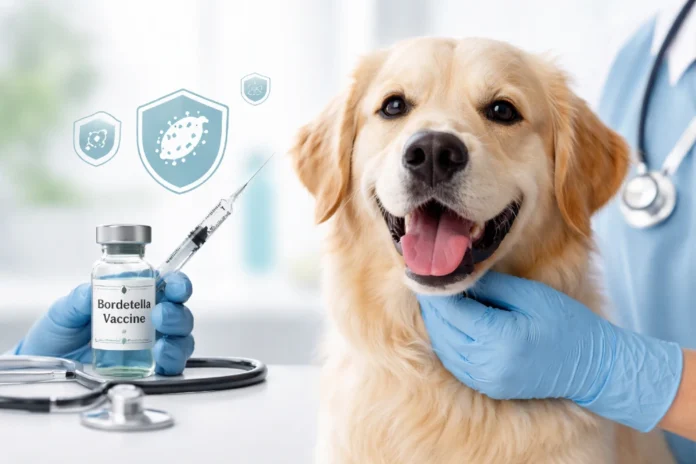
If you have ever booked a boarding stay, signed up for daycare, or taken your dog to a busy grooming salon, you have probably heard about the Bordetella Vaccine for Dogs. For many pet owners, it sounds like just another optional shot. In reality, it is a practical lifestyle vaccine that can make a big difference for dogs that spend time around other dogs, especially in places where coughing germs spread fast. Veterinary groups classify Bordetella vaccination as noncore, which means not every dog needs it, but risk based vaccination is strongly recommended for dogs with regular social exposure.
What makes this vaccine important is that Bordetella bronchiseptica is one of the best known contributors to canine infectious respiratory disease complex, often called kennel cough. That does not mean the vaccine prevents every cough, every case, or every respiratory infection. Kennel cough can involve multiple viruses and bacteria, so vaccination lowers risk and may reduce severity, but it is not a magic shield. That realistic expectation matters because it helps dog owners make better decisions instead of assuming one vaccine solves everything.
For some dogs, yearly vaccination is enough. For others, especially dogs that board often or rotate through high contact environments, some veterinarians recommend boosters every six months depending on exposure and facility rules. The best schedule is not the same for every household, which is why this topic deserves a closer, more practical look.
What Is Bordetella and Why Does It Matter?
Bordetella bronchiseptica is a contagious bacterium linked to respiratory illness in dogs. It spreads most easily when dogs share airspace, water bowls, close quarters, or stressful crowded environments. Boarding kennels, doggy daycare, grooming facilities, training classes, shelters, and dog parks all increase exposure opportunities, which is why the illness is so common in social dogs.
People often use the term kennel cough as if it were one disease caused by one germ, but that is not really how it works. Kennel cough is better understood as a respiratory syndrome. Bordetella can be involved, but so can canine parainfluenza and other respiratory pathogens. That is one reason vaccinated dogs can still come down with a cough. The vaccine lowers the chance of illness from Bordetella and may reduce shedding and symptom severity, yet it does not eliminate every possible cause of canine cough.
This distinction is useful for real life. A dog owner may feel frustrated when a vaccinated pet still develops a mild hacking cough after boarding. That does not automatically mean the vaccine failed. It may mean the dog encountered a different pathogen, or the vaccine helped prevent a more serious case than would have happened otherwise.
How the Bordetella Vaccine for Dogs Works
The Bordetella Vaccine for Dogs helps the immune system recognize and respond to Bordetella before a natural infection gains momentum. Depending on the product, it may be given intranasally, orally into the cheek pouch, or by injection under the skin. Those different forms matter because they do not behave exactly the same way. Mucosal vaccines, such as intranasal and oral options, are designed to stimulate immunity closer to the upper airway, which is where this infection usually starts.
The AAHA vaccination guidance notes that intranasal vaccination is indicated for dogs at risk of exposure, and its broader narrative explains that intranasal products can stimulate a rapid local immune response in the upper respiratory tract. The same guidance also notes that injectable Bordetella products may have a slower onset of immunity and less local upper airway immune stimulation compared with intranasal vaccines in high risk shelter settings.
That does not mean injectable vaccination is wrong. It means route selection should fit the dog and the situation. Some owners prefer injectable products because their dog hates nasal administration. In certain households with immunocompromised people, Cornell notes that owners may wish to discuss route choice with their veterinarian, including the injectable option. The right decision is often less about internet opinions and more about health history, environment, timing, and tolerance.
Which Dogs Usually Need Bordetella Protection?
Not every dog has the same exposure profile. A senior dog who rarely leaves the house has a different risk level from a young Labrador who boards twice a month, attends obedience classes, and spends weekends at the dog park. Veterinary guidance consistently treats Bordetella as a lifestyle vaccine, which means it is recommended when the dog’s routine raises exposure risk.
Dogs that commonly benefit from the Bordetella Vaccine for Dogs include:
- Dogs that board overnight
- Dogs that attend daycare
- Dogs that visit grooming salons regularly
- Dogs in training classes or shows
- Dogs that frequent dog parks
- Shelter dogs or rescue dogs in communal housing
- Puppies or medically vulnerable dogs likely to encounter groups of dogs
A lot of facilities require proof of current Bordetella vaccination before entry. That requirement is not arbitrary. Respiratory infections can move quickly in shared spaces, especially where ventilation is imperfect and stress levels are high. Even if your own dog seems healthy, exposure to coughing dogs in these environments can still happen before symptoms are obvious.
When Puppies and Adult Dogs Get the Vaccine
One of the most common questions owners ask is when to start. Cornell states that vaccination can begin as early as 6 to 8 weeks of age, while Merck notes one intranasal inoculation can be given to puppies older than 3 weeks for products used in at risk settings. Product labels vary, which is why your veterinarian may recommend a start age based on the specific vaccine stocked in the clinic.
For older puppies and adults, intranasal and oral products are often given as a single starting dose, while injectable Bordetella products may require an initial series of two doses spaced 2 to 4 weeks apart. That difference becomes important if you are preparing for a boarding date and realize you are behind schedule. An owner who waits until the last minute may find that the preferred product, or the chosen facility’s policy, does not line up with the timing.
A practical example helps here. Imagine a family planning a weeklong trip and trying to board their dog five days from now. If the kennel requires current Bordetella protection and your clinic uses an injectable product needing a two dose start, you may already be too late for ideal timing. That is why advance planning matters more than many owners realize.
Booster Frequency: Annual vs Every Six Months
For general guidance, AAHA lists annual revaccination for Bordetella vaccines after the initial recommended dose or series. Cornell similarly states that boosters are given annually, or more frequently in high risk situations, with some veterinarians recommending every six months.
So why do some dogs get boosted twice a year? The answer is mostly about risk management and facility policy. A dog that is boarded occasionally may do well on an annual schedule. A dog that rotates through daycare every week, spends time in grooming salons, and attends group training may face enough exposure that a veterinarian recommends more frequent boosting, especially if local kennels or daycare centers require Bordetella within the previous six months.
This is one of those topics where owners sometimes get confused because they hear different things from different places. Your veterinarian is usually thinking about medical risk. The boarding facility is often thinking about outbreak prevention inside its building. Both perspectives matter. The smartest move is to ask your vet what your dog needs medically and then confirm the exact paperwork rule with the facility before the trip is close.
How Effective Is the Bordetella Vaccine for Dogs?
The Bordetella Vaccine for Dogs is best understood as a risk reducing tool, not a guarantee. Cornell notes that many vaccinated dogs will not develop clinical signs after exposure, while others may still get sick but have milder illness and reduced shedding. That is meaningful because milder disease can mean less coughing, less disruption, fewer complications, and less spread to other dogs.
This matters most for puppies, seniors, and dogs with existing respiratory or immune concerns. While many healthy adult dogs recover from kennel cough with rest and supportive care, vulnerable dogs can have a rougher course and may develop more serious lower respiratory disease, including pneumonia. Reducing exposure risk and keeping vaccination current are both part of sensible prevention.
Still, owners should keep expectations realistic. A current vaccine does not replace good ventilation, sanitation, isolation of coughing dogs, and careful screening in group settings. In busy dog environments, layered prevention works better than relying on a single shot.
Risks and Side Effects Dog Owners Should Know
Most vaccine reactions are mild and short lived. General post vaccination effects in dogs can include soreness at the injection site, mild swelling, lower energy, reduced appetite, and a low fever. For intranasal vaccines, temporary sneezing, nasal discharge, coughing, or mild upper respiratory signs can occur for a few days after administration.
Serious adverse reactions are uncommon, but they do happen. Signs that deserve prompt veterinary attention include facial swelling, repeated vomiting, diarrhea, trouble breathing, collapse, or symptoms that worsen instead of improving. AAHA notes that vaccine reactions in dogs are uncommon to rare overall, and suspected adverse events should be reported to the manufacturer or USDA.
Owners sometimes worry that the vaccine itself causes kennel cough. A more accurate way to say it is that certain mucosal vaccines can produce brief mild respiratory signs after administration, which is not the same thing as a full natural infection. If your dog seems mildly sneezy for a day or two after an intranasal dose, that can fall within expected short term effects. But if your dog develops significant lethargy, fever, labored breathing, or a worsening cough, contact your veterinarian rather than assuming it is normal.
Intranasal, Oral, or Injectable: Which Form Is Best?
There is no one answer for every dog, but there are useful patterns. Intranasal vaccination is often preferred when rapid upper airway immunity is desirable, especially for at risk dogs. Oral mucosal products are another needle free option. Injectable products may be selected when nasal or oral administration is not practical or when owner and veterinarian prefer that route, though the initial schedule can differ.
The simplest way to think about it is this:
- Intranasal: often favored for local respiratory protection and commonly used in at risk dogs
- Oral: convenient needle free option for some dogs
- Injectable: useful in certain situations, but may require a two dose initial series and can differ in onset and local immune stimulation
That does not make one universally superior. It makes conversation with your vet important. A dog that panics with anything near the nose may do better with an injection. Another dog with a last minute boarding deadline may benefit from a mucosal product if medically appropriate and available. Real world decisions are often practical, not theoretical.
Timing Tips Before Boarding, Grooming, or Daycare
One of the most common mistakes dog owners make is vaccinating too close to the event. Some intranasal product information indicates protection may begin within about 72 hours, but many boarding facilities still want the vaccine given earlier and may require proof that it was done within their own accepted window. In practice, many clinics and kennels advise planning at least one to two weeks ahead so there is enough time for immunity, paperwork, and any mild post vaccine effects to settle.
That timing buffer is especially important for first time vaccination, uncertain vaccine history, or facilities with stricter rules. It also gives you time to confirm whether the kennel wants Bordetella alone, Bordetella plus parainfluenza coverage, or a booster within the previous six or twelve months. Getting clear on the policy early can save a lot of stress.
Common Questions Pet Owners Ask
Can a vaccinated dog still get kennel cough?
Yes. Because kennel cough can involve multiple organisms, vaccination does not prevent every respiratory illness. What it often does is lower the risk of Bordetella related disease and reduce severity or shedding.
Is Bordetella a core vaccine?
No. It is considered a noncore or lifestyle vaccine, which means it is recommended based on exposure risk rather than for every dog automatically.
Does every dog need it?
No. A low exposure dog that rarely interacts with other dogs may not need it routinely. Dogs that board, groom, attend daycare, or live socially usually benefit the most.
How long are dogs contagious if they get Bordetella?
Cornell notes that dogs can remain contagious for weeks after symptoms improve, potentially up to eight weeks or longer in some cases. That is one reason outbreaks can spread so easily in shared dog spaces.
Final Thoughts on Bordetella Vaccine for Dogs
The best way to think about the Bordetella Vaccine for Dogs is as a smart preventive tool for dogs whose lifestyle puts them in contact with other dogs. It is not mandatory for every household, and it does not prevent every cough, but it plays a valuable role in reducing risk where exposure is high. For boarding dogs, daycare regulars, groomer visitors, and social pets, staying current on this vaccine is often a practical part of responsible care.
Booster frequency should match your dog’s actual life, not just a one size fits all calendar. An annual booster may be enough for many dogs, while higher risk dogs may need a shorter interval based on veterinary advice and facility requirements. Near the end of any prevention plan, remember that vaccines work best alongside commonsense measures like avoiding obviously sick dogs, choosing well run facilities, and discussing your pet’s health history with your veterinarian. For a broader background on kennel cough, it also helps to understand the larger respiratory syndrome this vaccine is trying to reduce.

