


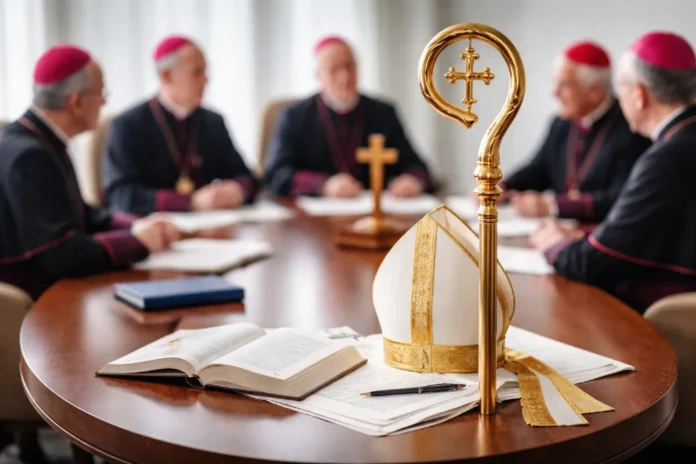
The Bishops Advisory Panel may sound like a quiet, behind the scenes body, but its role can be far more important than many readers realize. In church life, advisory structures often help bishops weigh pastoral realities, doctrinal responsibilities, legal requirements, financial limits, and the concerns of ordinary believers before major choices are made. That does not mean an advisory panel replaces episcopal authority. It means the bishop is better equipped to exercise that authority wisely, transparently, and with broader awareness. In practice, a Bishops Advisory Panel can shape the conversation around appointments, pastoral planning, education policy, safeguarding priorities, public statements, and responses to difficult local issues. In many traditions, the exact name and formal structure may differ, but the basic purpose remains the same: informed counsel that helps church leadership make better decisions.
Church governance has always balanced authority with consultation. Catholic canon law, for example, gives bishops real governing responsibility, while also providing for consultative bodies such as pastoral councils, finance councils, presbyteral councils, and diocesan synods. These structures do not remove the bishop’s leadership. Instead, they create channels through which expertise, pastoral experience, and the lived reality of the faithful can be heard before important decisions are finalized. That balance helps explain why a Bishops Advisory Panel matters in any serious discussion about how churches actually reach decisions that affect communities, clergy, institutions, and mission.
What Is a Bishops Advisory Panel?
A Bishops Advisory Panel is best understood as a consultative group that assists bishops by reviewing information, offering informed recommendations, and helping assess the likely spiritual, pastoral, legal, organizational, or financial impact of a proposed course of action. In some churches this may be a formally named panel. In others, the same function is carried out through councils, committees, or advisory bodies with different titles. What unites them is their purpose: to help a bishop move from private judgment to well informed discernment.
That distinction matters. A bishop is not simply a manager, and church decisions are not supposed to be made like routine corporate choices. At the same time, church leadership still has to deal with real world questions. How should limited resources be used? How should schools, charities, and diocesan ministries respond to social change? When should a public statement be issued? Which pastoral initiatives deserve priority? A Bishops Advisory Panel helps translate broad responsibility into thoughtful action.
Why Consultation Matters in Church Governance
One of the clearest lessons from church law and pastoral practice is that consultation is not meant to be an empty ritual. The point is not to create the appearance of listening. The point is to improve the quality of decision making. Catholic commentary on canon law notes that authentic consultation gives those consulted real input and influence, and that it depends on good information, two way communication, and a sound process rather than mere symbolism.
That is especially important because church decisions often involve more than theology alone. A bishop may need to consider pastoral need, canon law, education policy, safeguarding standards, financial sustainability, public trust, and the spiritual health of the faithful all at once. No single individual, however capable, will always possess deep expertise in every one of those areas. A Bishops Advisory Panel brings multiple forms of experience into the room so that leadership is not isolated from reality.
This is also why consultative structures are so common. Canon law states that a diocesan pastoral council investigates, considers, and proposes practical conclusions on matters pertaining to pastoral works in the diocese. It also specifies that such a council reflects the people of God through clerics, religious, and especially laity. That mix is significant because it keeps church decisions connected to the communities they affect.
How a Bishops Advisory Panel Influences Key Church Decisions
A Bishops Advisory Panel rarely issues the final decree, but influence does not always look like final signature power. Influence often appears earlier in the process, when priorities are set, facts are clarified, risks are identified, and options are narrowed. By the time a bishop reaches a formal decision, the advisory stage may already have shaped the outcome in meaningful ways.
Here are some of the most common areas where a Bishops Advisory Panel can have real impact:
- Pastoral planning through reviewing diocesan needs, local demographics, and ministry gaps before new initiatives begin.
- Financial oversight and stewardship by helping bishops weigh budgets, property issues, and the long term effect of major commitments.
- Church discipline and governance by offering expertise on canon law and practical implementation.
- Education and formation when schools, seminaries, and catechetical programs need policy review or strategic direction.
- Public witness and crisis response when bishops need careful advice before addressing controversy, conflict, or community concern. This is an inference from the consultative and governance roles described in canon law and episcopal guidance.
In practical terms, the panel’s influence comes from three things. First, it broadens the evidence base. Second, it tests whether a proposed decision is pastorally workable. Third, it helps the bishop anticipate consequences before acting. None of that weakens leadership. In fact, it can strengthen it by making decisions more credible, more informed, and easier to communicate to clergy and laity alike.
Authority and Advice Are Not the Same Thing
A common misunderstanding is that an advisory body either controls the bishop or is too weak to matter. In reality, church governance often operates in a more nuanced way. Canon law explicitly says that members of a diocesan synod have only a consultative vote and that the diocesan bishop alone is the legislator. It says the same in substance for the diocesan pastoral council, which possesses only a consultative vote and is convoked and presided over by the bishop.
That may sound as though the advisory role is limited, but consultative does not mean irrelevant. The law expects the bishop to hear certain bodies in important matters, and episcopal guidance stresses participation, communication, and the involvement of clergy and faithful in areas where broad input is useful. A well functioning Bishops Advisory Panel can therefore influence outcomes without holding final authority. It influences by improving discernment, sharpening prudential judgment, and giving a bishop a clearer reading of what is spiritually sound and pastorally wise.
Who Usually Sits on a Bishops Advisory Panel?
The makeup of a Bishops Advisory Panel matters because poor composition leads to weak advice. Canon law and pastoral guidance repeatedly point toward a mix of clergy, religious, and lay faithful, chosen in a way that reflects the wider church community and includes people known for faith, prudence, integrity, and relevant expertise. Finance councils must include members truly expert in financial affairs and civil law. Pastoral councils should reflect different areas, professions, and apostolic experience within the diocese.
That means a strong advisory panel often includes people who bring different lenses to the same issue:
| Member profile | Main contribution to decision making |
|---|---|
| Senior clergy | Pastoral experience, sacramental life, parish realities |
| Canon law experts | Legal and procedural clarity within church law |
| Lay professionals | Education, governance, communications, safeguarding, finance |
| Religious members | Mission perspective, institutional memory, community service experience |
| Finance specialists | Budgets, risk, sustainability, stewardship |
This diversity is not cosmetic. It reduces blind spots. A proposal that looks strong from a theological angle may need improvement on implementation. A financially efficient option may be pastorally tone deaf. A legally sound policy may still need better communication. The Bishops Advisory Panel exists precisely to bring those tensions into view before a decision becomes public.
Real Areas Where a Bishops Advisory Panel Can Matter Most
Parish restructuring and diocesan planning
When dioceses face priest shortages, changing populations, or financial pressure, bishops sometimes have to merge, suppress, or significantly alter parishes. Canon law states that the bishop should not notably erect, suppress, or alter parishes without hearing the presbyteral council. That kind of requirement shows how consultative input becomes part of serious diocesan change. A Bishops Advisory Panel in this context can help leaders weigh population shifts, pastoral access, transportation realities, local identity, and the risk of community alienation.
Financial decisions
Financial governance is one of the clearest examples of structured consultation. Canon law requires a diocesan finance council and gives it budgetary and review functions. Episcopal guidance also says bishops should involve clergy in important financial decisions and, in some cases, consult the pastoral council as well. A Bishops Advisory Panel can therefore become essential when dealing with school closures, diocesan property, major repairs, charitable funding, or long term financial planning.
Public teaching and conference documents
At the conference level, advisory processes can shape how bishops’ documents move forward. The USCCB document approval process states that agenda items are reviewed by members of the bishops’ National Advisory Council, who make formal and often specific recommendations to the Administrative Committee before further action is taken. That is a concrete example of how advice can influence what gets revised, issued, delayed, or sent onward for plenary debate.
Pastoral priorities and mission strategy
Research from the Center for Applied Research in the Apostolate found that diocesan pastoral councils work best when bishops consult them on issues central to church life where broad input is essential, such as Catholic education, evangelization, and lay ministry development. That finding aligns with the broader idea behind a Bishops Advisory Panel. It is most useful not when rubber stamping routine items, but when helping leadership think through complex pastoral priorities with long term consequences.
What Makes a Bishops Advisory Panel Effective?
An effective Bishops Advisory Panel does more than hold meetings. It operates with clarity, trust, and a disciplined process. The best panels know what question they are trying to answer, what information is needed, who should be consulted, and what practical outcomes the bishop is considering. Without that clarity, even talented members can become symbolic participants rather than meaningful contributors. This is an inference drawn from canonical guidance on consultation, participation, and the role of councils in governance.
The strongest panels tend to share several qualities:
- Clear mandate so members know whether they are reviewing policy, advising on pastoral strategy, or assessing risk.
- Representative composition so the bishop hears more than one social or clerical perspective.
- Good information flow so consultation is based on facts rather than rumor.
- Moral and practical credibility so members are trusted to speak honestly.
- Follow through so advice is not gathered and then ignored without explanation.
A weak Bishops Advisory Panel, by contrast, often suffers from vague purpose, uneven expertise, or fear of honest disagreement. When members feel they are only there to endorse what has already been decided, the consultative process becomes hollow. That weakens trust not only inside the panel but across the wider church community.
Common Criticisms and Honest Limitations
It would be unrealistic to present a Bishops Advisory Panel as a perfect solution to church conflict. Advisory structures can fail. They can become too insular, too cautious, too heavily clerical, or too detached from ordinary parish life. In some settings, the panel may have expertise but not enough diversity. In others, it may represent broad groups but lack technical competence. Consultation can also slow urgent decisions if the process is badly managed. These are reasonable inferences from the way consultative structures are described and the importance placed on member quality, prudence, and expertise.
Still, the answer is usually not less consultation, but better consultation. Where a bishop retains authority and the panel brings honest, informed, and pastorally grounded advice, decisions are often stronger. They may not satisfy every group, but they are more likely to be coherent, defensible, and rooted in real church life rather than abstract administration.
Why the Topic Matters to Readers Today
Interest in the Bishops Advisory Panel is growing because readers want to understand how church decisions are actually made. Many people see final announcements but never see the consultation, preparation, or internal discernment that came before them. Yet that earlier stage often determines whether a decision feels rushed, balanced, pastoral, or disconnected. In a time when trust, transparency, and accountability matter deeply, the advisory stage has become part of the broader public conversation about church leadership. This is an inference supported by the strong institutional emphasis on consultation, governance, and participation.
The topic also matters because churches are dealing with increasingly complex choices. Education, safeguarding, finances, parish life, digital communication, ecumenical relationships, and social pressures now intersect more than ever. A bishop making decisions in that environment needs good advice, but also advice that is spiritually serious and pastorally realistic. That is exactly where a Bishops Advisory Panel can make a quiet but lasting difference.
Conclusion
The Bishops Advisory Panel is not just a background committee with ceremonial value. At its best, it is one of the most important consultative instruments in church governance, helping bishops listen well, test assumptions, gather expertise, and make decisions that are both pastorally sensitive and institutionally sound. While final authority remains with the bishop, the quality of advice received often shapes the wisdom of the final choice. That is why the Bishops Advisory Panel deserves attention from anyone interested in how key church decisions are formed, challenged, and carried into practice. For readers who want deeper context on canon law, the broader legal and ecclesial framework helps explain why consultation remains central to responsible church leadership.

