


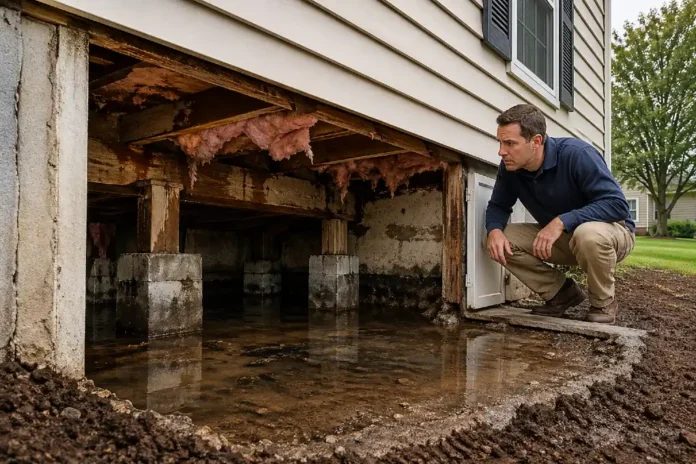
Finding Water in Crawl Space areas is one of those home problems that is easy to ignore at first. It may look like a small puddle after heavy rain, a little damp soil, or a musty smell coming through the floors. But moisture under your home can quietly turn into mold, wood rot, pest activity, insulation damage, poor indoor air quality, and even foundation concerns.
A crawl space is not just an empty gap under the house. It protects plumbing, wiring, floor framing, insulation, and sometimes HVAC ducts. When that space stays wet, your home can start reacting from the bottom up.
The problem is that many homeowners do not check their crawl space until something feels wrong inside the house. Maybe the floors smell musty. Maybe the energy bills rise. Maybe allergies get worse indoors. By then, the moisture may have already spread into wood, insulation, and air movement pathways.
What Does Water in Crawl Space Really Mean?
Water in Crawl Space areas usually means moisture is entering or staying beneath the house instead of draining away properly. It can come from rainwater, groundwater, plumbing leaks, poor grading, clogged gutters, or humid outdoor air.
A small amount of dampness may not seem serious, but standing water is different. If water remains under the home for days, the crawl space becomes a moisture trap. That trapped moisture can rise into floor joists, subflooring, ducts, and insulation.
The Environmental Protection Agency recommends controlling moisture in homes because mold growth depends heavily on water and damp conditions. The EPA also notes that covering dirt crawl spaces with plastic can help reduce moisture coming from the ground.
That is why Water in Crawl Space problems should never be treated as only a cosmetic issue. The crawl space affects the structure, comfort, and air quality of the entire home.
Common Causes of Water in Crawl Space
Before fixing the problem, you need to understand where the water is coming from. Many crawl space moisture issues are caused by a mix of drainage, soil, weather, and maintenance problems.
Poor Yard Grading
If the soil around your home slopes toward the foundation, rainwater naturally moves toward the crawl space. Over time, water can collect near foundation walls and seep through vents, cracks, blocks, or gaps.
A proper yard slope helps move rainwater away from the house. When grading is flat or reversed, the crawl space often becomes the lowest and easiest place for water to settle.
Clogged or Missing Gutters
Gutters are simple, but they play a major role in keeping Water in Crawl Space areas under control. When gutters clog with leaves, roof water spills directly beside the foundation.
Downspouts that end too close to the house can create the same problem. Water should be carried several feet away from the foundation so it does not soak the soil beside the crawl space.
Foundation Cracks or Openings
Small cracks in foundation walls may not look urgent, but they can allow water to enter during heavy rain. Gaps around utility lines, crawl space doors, and vents can also become entry points.
Water does not need a large opening. It can move through tiny cracks, porous masonry, and poorly sealed joints.
Plumbing Leaks
Sometimes Water in Crawl Space areas has nothing to do with rain. A leaking pipe, dripping drain line, broken water supply, or slow HVAC condensate leak can keep the crawl space wet even during dry weather.
Plumbing leaks are especially risky because they may continue unnoticed for weeks. If the crawl space is rarely inspected, a small leak can become a major repair.
Groundwater and High Water Table
In some areas, groundwater naturally rises after storms or during wet seasons. If the water table is high, moisture can push up through the crawl space floor or seep through foundation walls.
Homes built on clay soil or low-lying lots often deal with this type of moisture. In these cases, drainage systems and sump pumps may be needed.
Open Vents and Humid Air
Old building habits often relied on crawl space vents to “air out” moisture. In some climates, however, warm humid air enters through vents and condenses on cooler surfaces under the home.
This can leave wood, ducts, insulation, and pipes damp even when there is no visible puddle. That is why crawl space moisture control must consider both liquid water and humidity.
Why Water in Crawl Space Can Damage Your Home
Water in Crawl Space problems can damage a home slowly. The first signs may be hidden, but the effects can become expensive if ignored.
Mold and Mildew Growth
Mold needs moisture, organic material, and the right temperature. A wet crawl space often provides all three. Wood framing, paper-faced insulation, cardboard storage boxes, and dust can all support mold growth.
The CDC states that damp and moldy environments may cause health effects for some people, including stuffy nose, wheezing, red or itchy eyes, and skin irritation. People with asthma or mold allergies may be more sensitive.
That does not mean every damp crawl space will make everyone sick. But it does mean moisture and mold should be taken seriously, especially if odors or visible growth are present.
Wood Rot and Structural Weakness
Floor joists, beams, sill plates, and subflooring can absorb moisture over time. When wood stays damp, it becomes vulnerable to fungal decay and rot.
Rot does not happen overnight. It usually starts quietly. A homeowner may first notice soft spots in floors, sagging areas, uneven flooring, or a musty smell. By the time these signs appear inside the living area, the crawl space damage may already be advanced.
Water in Crawl Space conditions can also weaken fasteners, metal connectors, and support elements through corrosion. That adds another layer of structural concern.
Damaged Insulation
Crawl space insulation is often installed between floor joists. When moisture gets in, insulation can sag, fall, or lose effectiveness.
Wet insulation does not protect the home well. It can hold moisture against wood, attract pests, and create odors. Once insulation becomes soaked or moldy, replacement is often better than trying to dry and reuse it.
This is one reason homeowners with crawl space moisture sometimes notice cold floors, uneven room temperatures, or higher energy bills.
Musty Indoor Odors
A musty smell inside the home often begins in the crawl space. Air naturally moves through cracks, gaps, and openings in floors, walls, and mechanical systems.
If the crawl space is damp, those odors can rise into bedrooms, closets, hallways, and living areas. This is sometimes called the stack effect, where air from lower parts of the home moves upward.
When Water in Crawl Space areas creates musty air, candles and air fresheners do not solve the problem. The source of moisture must be corrected.
Pest Problems
Damp crawl spaces attract insects, rodents, termites, and other pests. Moist soil, rotting wood, and dark protected areas create an ideal environment.
Termites and carpenter ants are especially concerning because they can damage wood. Rodents may chew insulation, wiring, and duct material. Once pests settle in, they can spread beyond the crawl space into walls and living areas.
Poor Indoor Air Quality
Many people forget that air under the home can affect the air inside the home. If the crawl space contains mold spores, dust, pest waste, or damp odors, some of that air may move upward.
The National Institute for Occupational Safety and Health notes that people in damp buildings report health issues including respiratory symptoms and infections.
For homeowners, this makes crawl space moisture more than a maintenance concern. It can become a comfort and wellness issue for the people living above it.
Signs You May Have Water in Crawl Space
You do not always need to crawl under the home to notice a problem. Some warning signs appear inside or around the house.
Common signs include:
- Musty smells indoors
- Standing water or muddy soil under the house
- White powdery marks on foundation walls
- Sagging or wet insulation
- Mold on wood framing
- Soft or uneven floors
- Higher indoor humidity
- Pest activity
- Rust on metal pipes or HVAC parts
- Condensation on ducts or floor joists
- Increased allergy-like symptoms indoors
If you notice more than one of these signs, Water in Crawl Space issues may already be affecting your home.
Water in Crawl Space After Rain
Many homeowners first discover the issue after a strong storm. If water appears only after rain, the cause is often outside the home.
Start by checking gutters, downspouts, grading, and drainage paths. Watch where water flows during rain. If it pools near the foundation, it can eventually enter the crawl space.
Also look at the crawl space access door. A loose, low, or poorly sealed door can allow stormwater to flow inside. Foundation vents near ground level can also let rainwater enter, especially when landscaping or mulch is too high.
A real-world example is a homeowner who finds puddles under the house after every storm but sees no plumbing leaks. In that case, the problem is likely drainage, not pipes. Extending downspouts, regrading soil, and adding proper drainage may reduce or stop the water entry.
Water in Crawl Space From Plumbing Leaks
If the crawl space stays wet even during dry weather, plumbing should be inspected. A slow leak can keep wood and insulation damp without creating a dramatic flood.
Look for dripping pipes, water stains, wet soil under supply lines, leaking drain joints, or condensation around cold pipes. If the water appears clean and localized under a pipe, plumbing may be the source.
This type of Water in Crawl Space problem should be handled quickly because it can continue every day. Even a small drip can damage insulation, framing, and subflooring over time.
How Much Water Is Too Much?
Any standing water in a crawl space deserves attention. A damp spot after a rare storm may dry quickly, but repeated moisture is a warning sign.
Here is a simple way to think about it:
| Crawl Space Condition | What It May Mean | Level of Concern |
|---|---|---|
| Slight damp soil after rain | Drainage or humidity issue | Moderate |
| Standing puddles | Water intrusion or poor drainage | High |
| Wet insulation | Moisture has reached building materials | High |
| Mold or musty odor | Moisture has been present long enough for growth | High |
| Soft wood or sagging floors | Possible structural damage | Urgent |
If Water in Crawl Space areas stays for more than a short time, the risk increases. The longer moisture remains, the more likely it is to affect wood, air quality, and repairs.
What to Do When You Find Water in Crawl Space
When you discover Water in Crawl Space areas, do not panic, but do not ignore it either. The right steps depend on how much water is present and where it came from.
1. Stay Safe First
Do not enter a crawl space if there may be electrical hazards, sewage contamination, strong mold growth, snakes, rodents, or structural instability. Water and electricity are a dangerous mix.
If there is a strong sewage smell, black water, or heavy flooding, call a professional. Protective equipment may be needed.
2. Find the Source
Before drying anything, figure out why the water is there. Check:
- Downspouts and gutters
- Foundation cracks
- Crawl space vents and doors
- Plumbing lines
- HVAC condensate drains
- Yard grading
- Sump pump function
- Nearby irrigation systems
Fixing the source is the most important step. Drying the crawl space without stopping the water only gives temporary relief.
3. Remove Standing Water
Standing water should be removed with a pump, wet vacuum, or professional water removal equipment. FEMA advises stopping the water source as part of mold and moisture cleanup because moisture control is central to preventing mold growth.
If the water is deep, contaminated, or connected to flooding, professional cleanup is usually safer.
4. Dry the Crawl Space Properly
After water removal, the area needs airflow and dehumidification. Fans alone may not be enough in humid climates. A crawl space dehumidifier may be needed to bring moisture levels down.
Wet insulation, damaged vapor barriers, and soaked debris should be removed. Leaving wet material behind can continue feeding odors and mold growth.
5. Repair Damage
Once the space is dry, inspect wood, insulation, ducts, vapor barriers, and supports. Replace damaged insulation. Treat or remove mold according to proper safety practices. Repair cracks or leaks.
If there is structural damage, a qualified contractor or structural specialist should evaluate it before cosmetic repairs begin.
Long-Term Solutions for Water in Crawl Space
A lasting fix usually combines drainage, moisture control, sealing, and regular inspection.
Improve Exterior Drainage
The first line of defense is outside the home. Keep gutters clean, extend downspouts, and make sure soil slopes away from the foundation.
Downspout extensions are often inexpensive but effective. They help move roof water away from the crawl space instead of dumping it beside the foundation.
Install a Vapor Barrier
A vapor barrier is a thick plastic or reinforced liner placed over the crawl space floor. It reduces moisture rising from the soil.
The EPA specifically recommends putting a plastic cover over dirt crawl spaces to help stop moisture from coming up from the ground.
For better results, seams should be overlapped and sealed. The liner may also be attached to walls or piers, depending on the crawl space design.
Consider Crawl Space Encapsulation
Encapsulation is a more complete moisture-control method. It typically includes a sealed liner over the ground and walls, sealed vents, air sealing, and sometimes a dehumidifier.
This can be helpful for homes with chronic humidity, musty odors, or repeated moisture problems. It is not always necessary for every house, but it can be a strong option when basic fixes do not solve the issue.
Add a Sump Pump or Drainage System
If groundwater is the main cause, exterior grading alone may not be enough. A sump pump or interior drainage system can collect and move water away.
This is common in homes with high water tables, low lots, or repeated storm-related crawl space flooding.
Seal Openings and Gaps
Air leaks, foundation gaps, and loose access doors can allow moisture, pests, and outdoor air into the crawl space. Sealing these openings helps improve moisture control and energy performance.
However, sealing should be done as part of a complete plan. Trapping moisture inside without drainage or drying can make problems worse.
Mistakes Homeowners Often Make
Many crawl space problems get worse because the first fix is too small or too late.
A few common mistakes include:
- Ignoring small puddles after rain
- Using only fans without removing the water source
- Leaving wet insulation in place
- Covering mold without cleaning or moisture control
- Letting downspouts drain beside the foundation
- Storing cardboard boxes in a damp crawl space
- Assuming musty smells are normal in older homes
The biggest mistake is treating Water in Crawl Space as a one-time cleanup instead of a moisture management problem. A dry crawl space is maintained through drainage, sealing, ventilation strategy, and inspection.
Can Water in Crawl Space Affect Home Value?
Yes, it can. Buyers and home inspectors often pay close attention to crawl spaces because moisture problems can signal hidden damage.
A wet crawl space may raise concerns about mold, termites, structural repairs, insulation replacement, and foundation drainage. Even if the living area looks clean, a damp underside can make buyers nervous.
Fixing Water in Crawl Space problems before selling can help protect your home’s value. Documentation also matters. Keep records of repairs, drainage improvements, waterproofing, encapsulation, or professional inspections.
When Should You Call a Professional?
Some crawl space moisture problems are simple, but others need expert help.
Call a professional if:
- Water keeps coming back after rain
- There is visible mold over a large area
- Wood feels soft or damaged
- Floors are sagging
- There is sewage or contaminated water
- You smell strong musty odors indoors
- You suspect foundation cracks or settlement
- Electrical wiring is near standing water
- You cannot safely access the crawl space
A qualified crawl space contractor, waterproofing specialist, plumber, mold remediation professional, or structural expert may be needed depending on the source of the problem.
How to Prevent Water in Crawl Space Problems
Prevention is usually cheaper than repair. A few simple habits can make a big difference.
Clean gutters at least a few times a year, especially after fall leaves or strong storms. Make sure downspouts discharge away from the foundation. Keep mulch, soil, and landscaping from blocking vents or touching siding.
Check the crawl space after heavy rain. Look for puddles, wet insulation, musty smells, and new stains. If your home has a sump pump, test it before storm season.
Do not store paper, cardboard, fabric, or untreated wood directly on the crawl space floor. These materials absorb moisture and may attract mold or pests.
For homes in humid regions, monitor crawl space humidity. A hygrometer is inexpensive and can help you spot a problem before it becomes visible.
Frequently Asked Questions About Water in Crawl Space
Is Water in Crawl Space normal after rain?
No, standing Water in Crawl Space areas should not be considered normal. A small amount of temporary dampness may happen in some older homes, but repeated puddles mean water is entering or not draining properly.
Can I sell a house with water in the crawl space?
You can sell a house with crawl space moisture, but it may affect inspection results, buyer confidence, and negotiations. It is usually better to fix the source before listing the home.
Will a dehumidifier fix water in the crawl space?
A dehumidifier can help control humidity, but it will not solve standing water from drainage problems, leaks, or groundwater. The water source must be corrected first.
Does crawl space water always mean mold?
Not always. Mold depends on moisture, material, temperature, and time. However, a repeatedly wet crawl space creates conditions where mold is much more likely to grow.
What is the fastest way to dry a crawl space?
Remove standing water, fix the source, remove wet materials, improve airflow, and use proper dehumidification. For heavy water or contamination, professional drying is safer.
Conclusion
Water in Crawl Space problems can start small, but they rarely stay harmless if moisture keeps returning. The crawl space supports important parts of your home, including wood framing, insulation, ducts, pipes, and air movement pathways. When that area becomes damp, the effects can move upward into comfort, air quality, energy efficiency, and structural safety.
The best approach is simple: find the source, remove the water, dry the space, repair the damage, and prevent moisture from coming back. Whether the cause is poor drainage, plumbing leaks, groundwater, or humidity, acting early can save thousands of dollars in future repairs.
A crawl space is easy to forget because it sits out of sight. But protecting this hidden area protects the entire home. If you notice Water in Crawl Space areas, musty odors, wet insulation, or soft flooring, take it seriously before the damage spreads.
For homeowners who want a basic definition, a crawl space is the narrow unfinished area between the ground and the first floor of a building. Keeping that space dry is one of the smartest steps you can take for long-term home protection.

