


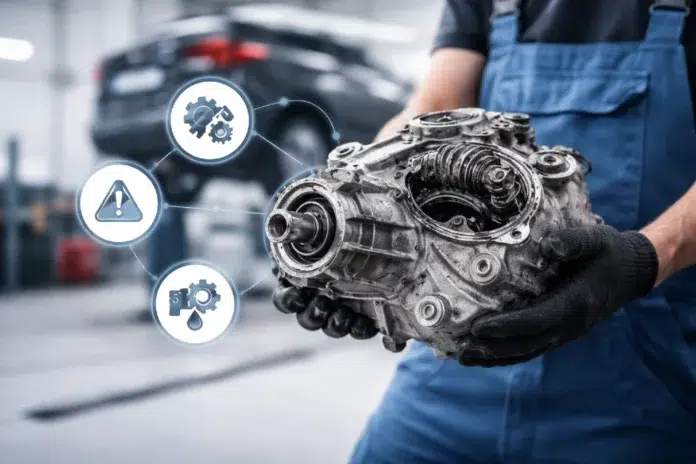
If you drive a 4WD or AWD vehicle, the transfer case is one of those components you probably never think about until something starts feeling off. Then suddenly you notice a clunk when shifting, a strange vibration at highway speed, or a leak under the middle of the vehicle, and the question becomes a lot more urgent. That is where understanding Transfer Case Transfer Case issues can save you time, money, and a much bigger repair bill.
The transfer case sits in the drivetrain and sends power from the transmission to the front and rear axles. In many vehicles, it also manages high and low range settings that help with traction, towing, or off road driving. In simple terms, it is a critical link between engine power and the wheels that need it most. Authoritative vehicle references and maintenance materials consistently treat the transfer case as a distinct drivetrain component that needs inspection in 4WD and AWD vehicles.
When the transfer case starts going bad, the symptoms are often easy to confuse with transmission trouble, bad U joints, worn axles, or differential problems. That confusion is one reason many drivers keep using the vehicle longer than they should. The longer a damaged transfer case runs with low fluid, internal wear, or shifting issues, the more expensive the repair usually becomes. Inspection checklists from major manufacturers and service organizations specifically include transfer case fluid and related drivetrain checks because these problems can escalate if ignored.
What a Transfer Case Actually Does
A transfer case is an intermediate gearbox used in four wheel drive, all wheel drive, and some multi axle vehicles. Its main job is to distribute power from the transmission to the appropriate axles. Depending on the design, it may be gear driven or chain driven, manually shifted or electronically controlled, and it may include a low range for extra torque at lower speeds.
That last point matters because not every vehicle uses the transfer case in the same way. A traditional part time 4WD truck may let you switch between 2WD, 4HI, and 4LO. Some full time systems work more automatically. Others use electronic motors, clutch packs, or control modules to decide when and how torque gets sent to the front axle. That means the symptoms of failure can vary from one make and model to another, even when the root issue still traces back to the transfer case.
Common Problems That Affect the Transfer Case
The most common transfer case transfer case problems usually begin with one of a few basic issues. Fluid breakdown is high on the list. Like other drivetrain components, the transfer case depends on the correct lubricant to reduce heat and friction. Some manufacturers specify inspections, while others include replacement intervals depending on vehicle use and design, which is why the owner’s manual matters so much.
Fluid leaks are another major problem. Seals can wear out, gaskets can harden, and housings can sometimes crack from impact or age. If fluid level drops too far, internal parts such as bearings, chains, gears, or clutch components can wear much faster than normal. Once that happens, what started as a relatively manageable leak can turn into a major rebuild or replacement.
Electronic shift problems are also common in newer vehicles. A bad encoder motor, damaged wiring, failed position sensor, or software related issue can stop the transfer case from shifting properly between modes. In real world driving, that can show up as flashing 4WD lights, failure to engage 4HI or 4LO, or the vehicle getting stuck in one mode. Technical service material and manufacturer bulletins show that transfer case shift and module faults are not unusual in electronically controlled systems.
Mechanical wear is the other big category. Over time, stretched chains, worn bearings, damaged gears, and internal clutch wear can create noise, vibration, and driveline slop. Those problems may start subtly, especially under acceleration, when towing, or during tight turns. Left alone, they often become impossible to ignore.
Transfer Case Transfer Case Symptoms You Should Not Ignore
One of the earliest signs is unusual noise. A healthy transfer case should not make loud whining, grinding, growling, or clunking sounds during normal driving. If you hear a clunk when shifting from drive to reverse, a grinding sound under load, or a rhythmic noise that changes with speed, it is worth having the drivetrain inspected. Noise and vibration are common markers of driveline wear in inspection standards and repair references.
Another common symptom is vibration. Drivers often describe it as a shudder through the floor, seat, or center of the vehicle. At first, it may only show up at certain speeds or when accelerating. Because vibration can also come from tires, driveshafts, axles, or U joints, it takes a proper inspection to confirm the source, but the transfer case should absolutely be on the list.
Fluid leaks are easier to spot. If you see reddish or amber fluid beneath the center area of the vehicle, or if the underside looks wet around the transfer case, something needs attention. Even a slow seep matters because transfer case fluid capacity is often not very large, so small losses can become serious over time. Manufacturer inspection checklists specifically call for transfer case fluid checks because leaks and fluid condition matter to serviceability.
Shifting trouble is another strong warning sign. Maybe the 4WD system does not engage. Maybe it engages but does not disengage. Maybe the switch or selector works sometimes but not others. In electronically controlled systems, these symptoms can point to the transfer case shift motor, control module, or sensor inputs rather than catastrophic internal failure, but they still deserve quick diagnosis.
You might also notice warning lights. Some vehicles trigger a 4WD service light, drivetrain warning, or a related message on the dash. Not every warning means the transfer case itself is failing, but it does mean the system has detected a fault that could involve the transfer case, its electronics, or related drivetrain hardware.
Finally, there is poor performance in low traction conditions. If your vehicle no longer feels like it is distributing power properly on snow, mud, or loose surfaces, or if low range does not function the way it used to, the transfer case may not be doing its job. Since the transfer case is central to torque distribution in many 4WD and AWD systems, failure here can directly affect traction and drivability.
What Usually Causes These Symptoms
Low or contaminated fluid is one of the most common causes. Over time, fluid can degrade from heat and wear particles. If a leak develops, the problem becomes worse. Internal components depend on that fluid film for protection, so low fluid often starts a chain reaction of wear. Some manufacturers treat transfer case fluid as an inspect item, while others call for changes under certain service plans, which shows there is no one size fits all schedule.
Another common cause is seal wear. Rubber seals age, especially in high heat or harsh environments. Off road use, towing, and exposure to water or debris can all increase wear on the housing and seals. Once fluid escapes, internal temperatures rise and components that should last a long time start wearing faster.
Electrical and actuator faults are very common in modern systems. The transfer case may rely on a shift motor or actuator, an encoder or position sensor, and communication with vehicle modules. If any one of those pieces fails, the vehicle may refuse to change modes or may indicate a false engagement problem. Technical bulletins about transfer case codes and shifting issues show how often these electronically controlled faults come up in service work.
Mechanical damage can happen from heavy use or incorrect operation. Driving part time 4WD on dry, high traction pavement can stress certain systems because some setups are meant for slippery surfaces only. That can increase wear in the drivetrain and make existing transfer case problems worse. Vehicle specific 4WD system descriptions emphasize that some modes are intended only for low traction conditions.
How to Diagnose the Problem the Smart Way
The smartest first step is not to assume it is definitely the transfer case. A bad U joint, worn wheel bearing, differential issue, or even a driveshaft problem can create similar symptoms. That is why a proper diagnosis should include checking fluid condition, scanning for trouble codes, inspecting for leaks, testing 4WD engagement, and evaluating surrounding drivetrain components. Multi point inspection guidance from AAA and manufacturer inspection lists both place transfer case checks within a broader drivetrain inspection for exactly this reason.
A technician will often start by inspecting fluid level and condition. Burnt smelling, dirty, or metallic fluid is a bad sign. The next step is usually looking for seal leaks, checking the housing, and examining the driveshafts and U joints. On electronically controlled systems, a scan tool can reveal stored codes related to shift motor performance or mode position errors.
Road testing matters too. Sometimes a transfer case only acts up under load, at highway speeds, or during turns. A good diagnosis should recreate the exact condition where the owner notices the problem. That kind of real world testing often separates transfer case symptoms from transmission or axle complaints.
Realistic Fixes for Transfer Case Problems
The right fix depends on the actual cause. If the issue is simply old or contaminated fluid, a fluid service may restore smoother operation, especially when the problem is caught early. The key is using the correct fluid specification for the exact make and model, because manufacturers do not all use the same product. Ford’s owner support materials specifically direct owners to the manual or official lubricant references for the proper fluid type.
If the transfer case is leaking, replacing output shaft seals, input seals, gaskets, or damaged fittings may solve the issue before internal damage gets worse. This is one of the best case scenarios because the repair is often much cheaper than replacing the full unit. The catch is timing. Ignore the leak too long, and the next repair may involve bearings, gears, or the entire assembly.
When the problem is electrical, the fix may involve a shift motor, actuator, sensor, module update, or wiring repair. These issues can feel dramatic to the driver because the 4WD system may stop responding, but they are not always signs of total mechanical failure inside the case itself. Service bulletins involving transfer case codes support that distinction.
If internal mechanical damage has already occurred, repair becomes more serious. A stretched chain, worn bearing, broken gear teeth, or clutch pack damage may require a rebuild or replacement transfer case. In many shops, replacement is often chosen over a full rebuild depending on parts availability, labor time, and the condition of the original unit. That decision usually comes down to cost, warranty, and how badly the internal parts are worn. Inspection standards that call out gear noise and vibration reflect the kinds of issues that often push a unit toward major repair.
Can You Keep Driving With a Bad Transfer Case?
Sometimes, but that does not mean you should.
If the problem is a minor electronic issue and the vehicle still drives normally in a safe mode, you may be able to move it short distances. But if there is grinding, major vibration, leaking fluid, difficulty shifting, or obvious drivetrain binding, continuing to drive can make the damage worse and may create a safety risk. NHTSA complaint and recall records show that severe transfer case related drivetrain failures can lead to harsh jerking, loss of drive function, or other serious drivability problems in affected vehicles.
A practical rule is simple. If the vehicle feels mechanically wrong, sounds wrong, or leaves fluid behind, do not treat it like a minor annoyance. Drivetrain problems almost never get cheaper by waiting.
Preventive Tips That Actually Help
The first and best tip is to follow the owner’s manual. Transfer case service intervals vary by vehicle, and the correct fluid matters. Some vehicles call for periodic checks, some specify replacement under certain schedules, and others vary by duty cycle. That is why guessing is a bad plan.
The second tip is to pay attention to small leaks and new noises. A tiny seep today can become a low fluid condition later. A small clunk can turn into major internal wear. Drivers who respond early usually have more repair options and lower bills.
Third, use 4WD modes correctly. Some part time systems should not be used on dry pavement because the drivetrain can bind when traction is high. Knowing when to use 2WD, 4HI, 4AUTO, or 4LO is not just about performance. It can also reduce unnecessary stress on the system.
Fourth, have the drivetrain inspected during routine service, especially if you tow, drive off road, or live in an area with snow and rough road conditions. AAA and manufacturer inspection materials both show that transfer case checks belong in a proper drivetrain review, not as an afterthought.
Frequently Asked Questions
Is a transfer case the same as a transmission?
No. The transmission manages gear ratios and sends power out through the drivetrain. The transfer case sits behind the transmission in many 4WD and AWD vehicles and distributes that power to the front and rear axles as needed.
What does a bad transfer case sound like?
Common sounds include whining, grinding, growling, or clunking, especially during shifting, acceleration, or tight turns. Similar sounds can also come from U joints, driveshafts, or differentials, so diagnosis matters.
Can low transfer case fluid cause vibration?
Yes, it can contribute to wear and poor lubrication that lead to noise and vibration. However, vibration can also come from other drivetrain parts, which is why a full inspection is important.
How often should transfer case fluid be changed?
There is no single universal interval. It depends on the make, model, drivetrain design, and service conditions. The correct answer is the interval listed in your vehicle’s maintenance schedule and fluid specification reference.
Is transfer case repair expensive?
It can be. A fluid service or seal replacement is far cheaper than replacing a worn or damaged unit. Costs rise quickly once internal bearings, chains, gears, or electronic components are involved. That is why catching symptoms early matters.
Final Thoughts
Most drivers do not think much about the transfer case until the vehicle starts clunking, leaking, or refusing to shift into four wheel drive. But once symptoms show up, acting quickly makes a huge difference. The smartest approach is to stop guessing, inspect the full drivetrain, and deal with the issue while it is still small.
A solid understanding of Transfer Case Transfer Case problems comes down to recognizing the warning signs early, knowing that symptoms often overlap with other drivetrain faults, and fixing the real cause instead of hoping it goes away. In the end, a well maintained transfer case helps your vehicle stay smoother, safer, and more capable in the conditions where 4WD or AWD really matters.
If you want a simple starting point for context, reading about the broader transfer case system can help you understand where this component fits in the overall vehicle drivetrain before you compare that basic definition with your own model’s service manual.

