


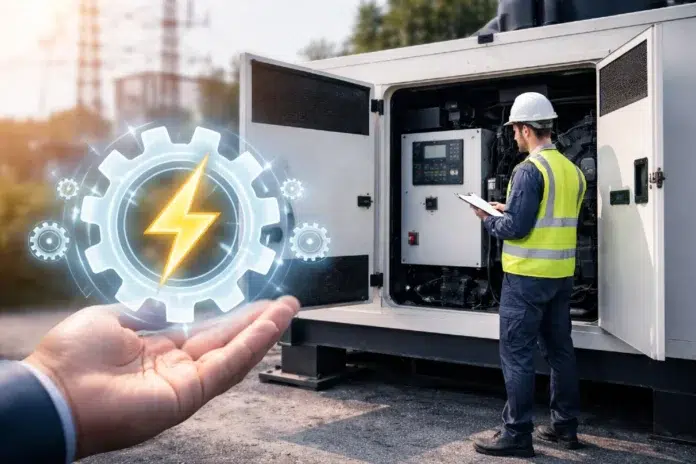
Power outages are frustrating on a good day and expensive on a bad one. That is exactly why Auto Mains Failure matters so much in generator systems. When utility power drops, becomes unstable, or disappears completely, an Auto Mains Failure setup helps a generator detect the issue, start up, and transfer the load with minimal human involvement. That simple sequence can protect homes, offices, hospitals, data rooms, factories, and commercial buildings from long interruptions and costly downtime.
In plain terms, Auto Mains Failure, often shortened to AMF, is the logic and control process that watches incoming mains power and reacts automatically when that supply fails or moves outside safe limits. Modern AMF controllers are built to monitor both utility and generator conditions, manage engine starting, and coordinate with transfer switching so the connected load receives backup power as safely as possible.
If you have ever wondered why some generators start by themselves during an outage while others need manual intervention, the answer usually comes down to whether an AMF controller and an automatic transfer arrangement are part of the system. That combination is what turns a basic generator into a reliable standby power solution.
What Auto Mains Failure means in generators
In generator language, Auto Mains Failure refers to the automatic detection of utility power loss or abnormality and the resulting control actions that bring a standby generator online. It is not just a fancy label. It is the working intelligence behind automatic backup power.
An AMF-enabled setup typically watches for conditions such as under-voltage, over-voltage, under-frequency, over-frequency, or even phase loss in three-phase systems. If the problem lasts longer than the preset delay, the controller sends a start command to the generator, checks that the generator output is stable, and then signals the transfer switch or breaker logic to move the electrical load from the mains source to the generator source.
When normal utility power returns and remains stable for the configured return delay, the system transfers the load back to mains and allows the generator to run for a short cool-down period before shutting it down. This is standard behavior in many AMF and automatic transfer systems because it helps protect the engine and reduces abrupt stopping under hot operating conditions.
How Auto Mains Failure works step by step
At first glance, Auto Mains Failure seems simple. In practice, it follows a carefully timed sequence.
1. Mains monitoring
The controller continuously monitors the utility supply. It is not only checking whether power exists, but also whether voltage and frequency stay within acceptable limits. In a three-phase installation, it may also monitor phase sequence and phase failure.
2. Fault detection and delay
If the mains supply fails or drifts outside the preset thresholds, the system usually waits for a short delay before acting. That delay is important because it filters out brief dips, momentary flickers, and nuisance events. For example, Generac notes a five-second line interrupt delay in one of its standby transfer sequences before the engine crank begins.
3. Generator start command
Once the delay expires, the AMF controller starts the generator. Depending on the design, it may control preheat, multiple crank attempts, engine safety checks, and alarm monitoring during startup. If the generator fails to start, the controller can trigger an alarm or lockout condition.
4. Generator stabilization
The controller waits until generator voltage and frequency stabilize. This matters because transferring a live load onto an unstable source can damage equipment or create operational problems.
5. Load transfer
Once the generator is healthy, the transfer switch moves the load away from the mains source and onto generator power. Schneider Electric defines a transfer switch as a device designed to transfer electrical loads between power sources such as utility power and generator power.
6. Return to mains
When utility power comes back and remains stable long enough, the switch transfers the load back to mains. The generator then runs unloaded for a cool-down period before stopping.
That entire process is what most people are referring to when they talk about Auto Mains Failure in generator systems.
AMF panel vs ATS: what is the difference?
This is where a lot of readers get confused, and honestly, it is understandable because the terms are often used together.
An AMF panel or AMF controller handles the intelligence side of the process. It monitors incoming utility power, decides when the generator should start, supervises the engine, and often manages alarms and protections.
An ATS, or automatic transfer switch, handles the physical switching of the electrical load between the utility source and the generator source. In some compact systems the functions can be integrated, but conceptually they are different parts of the same automatic backup strategy.
So when someone asks, “Does my generator have Auto Mains Failure?” the practical question is whether the system can both detect utility loss automatically and transfer load safely without manual help.
Why Auto Mains Failure matters more than ever
Reliable backup power is no longer a luxury only for hospitals and heavy industry. It matters in everyday business operations too.
The U.S. Energy Information Administration reported that U.S. electricity customers experienced about five and a half hours of interruptions on average in 2022, and major events can drive outage hours much higher in some years. In a later EIA update on 2024 major-event interruptions, outage time tied to major events averaged nearly nine hours, compared with about four hours annually over the prior decade.
For organizations with sensitive operations, downtime is expensive. Uptime Institute’s 2025 outage analysis says more than half of respondents reported their most recent significant outage cost over $100,000, and some outages cost far more. That is data-center focused, but the underlying lesson applies broadly: when power stops unexpectedly, losses can escalate fast.
That is exactly why an Auto Mains Failure system has so much value. It reduces response time, limits dependence on on-site staff, and helps essential loads stay alive during utility failure.
Key benefits of Auto Mains Failure in generators
Faster response during outages
The biggest advantage is speed. A manual setup depends on someone noticing the outage, walking to the generator, starting it, and switching the load. An AMF system does all of that automatically within preset timings.
Better business continuity
In offices, shops, plants, server rooms, and medical facilities, even a short power cut can interrupt operations, damage ongoing work, or create safety risks. AMF helps maintain continuity by reducing the gap between mains failure and restored backup power.
Less human error
Manual changeover systems are more dependent on operator training and quick response. Under stress, people can make mistakes. Automatic logic reduces that risk by following a defined sequence every time.
Protection for sensitive loads
Many AMF controllers monitor voltage, frequency, phase conditions, and generator health before allowing transfer. That means the connected load is less likely to be exposed to unstable power than it would be in a poorly managed manual arrangement.
Convenient unattended operation
One of the strongest practical benefits is unattended operation. The AMF system can watch the mains supply day and night, even when nobody is nearby. That is especially useful for telecom sites, remote facilities, apartment buildings, commercial properties, and backup systems installed for after-hours protection.
Controlled return to normal power
A good AMF system does not instantly jump back to mains the moment voltage flickers back. It waits for the utility to stabilize, then transfers back cleanly and lets the generator cool down. That controlled return is one reason automatic systems are trusted in professional standby applications.
Common places where AMF generators are used
Auto Mains Failure is relevant anywhere power continuity matters. Some of the most common examples include:
- Hospitals and clinics
- Data rooms and server facilities
- Factories and processing plants
- Banks and commercial buildings
- Hotels and apartment complexes
- Telecom sites
- Schools and training centers
- Large homes with standby generators
The exact system size and complexity vary, but the reason is always similar: keep essential loads supplied when the utility fails. NFPA 110 covers performance requirements for emergency and standby power systems in buildings, which reflects how important dependable backup arrangements are in critical settings.
Features you usually find in a modern AMF controller
Different manufacturers package things differently, but many current AMF controllers include a similar set of core functions.
| Feature | Why it matters |
|---|---|
| Mains voltage and frequency sensing | Detects utility failure or abnormal supply |
| Generator voltage and frequency sensing | Confirms generator is safe to accept load |
| Auto start logic | Starts the engine after preset delays |
| Alarm and shutdown protection | Protects engine from low oil pressure, temperature issues, overspeed, and failed start |
| Load transfer control | Coordinates switching between utility and generator |
| Cool-down timer | Protects engine before shutdown |
| Event logging and display | Helps troubleshooting and maintenance |
| Manual and test modes | Allows operation without full automatic transfer |
DSE product pages for AMF modules describe functions such as engine monitoring, true generator and utility sensing, breaker control, and protection features. Those are good examples of what the market considers standard AMF capability today.
Real-world example of how AMF helps
Picture a mid-sized office with a standby diesel generator and an AMF panel. At 2:15 a.m., utility voltage drops below the acceptable threshold and remains unstable. No staff are present. The AMF controller detects the problem, waits through its programmed delay to confirm the fault is real, starts the generator, checks the output, and transfers the critical building loads to generator power.
By the time employees arrive, internet, security systems, refrigerated storage, and key equipment are still operating. Without AMF, that same outage could mean spoiled inventory, failed access control, network downtime, and a delayed start to the workday. This is the kind of everyday value that rarely shows up in marketing copy but matters a lot in practice.
Common problems and limitations to keep in mind
Auto Mains Failure is valuable, but it is not magic. The system is only as reliable as its design, testing, and maintenance.
A neglected battery can stop the generator from starting. Poor settings can cause nuisance starts. A faulty sensing circuit can misread the mains supply. Dirty or worn switching components can also prevent proper transfer. Generac’s support material shows that incorrect utility sensing and transfer switch issues can interfere with expected auto behavior.
This is why standards and maintenance matter. NFPA notes that emergency power supply systems and related transfer equipment need inspection, maintenance, and testing to remain dependable.
Tips for choosing the right Auto Mains Failure setup
If you are selecting or writing about an AMF generator system, a few factors matter more than flashy specs.
First, think about the load. Are you backing up the whole site or only essential circuits? Second, check whether the installation is single-phase or three-phase. Third, look at how the controller handles voltage sensing, delays, alarms, event logs, and remote monitoring. Fourth, confirm compatibility between the generator, controller, and transfer equipment.
It is also wise to ask how the system behaves during brownouts, brief voltage dips, and return-to-mains conditions. Those details can shape real-world performance more than the headline rating of the generator itself.
Is Auto Mains Failure worth it?
For any site where power continuity has real value, yes, it usually is. A manual generator may be cheaper upfront, but AMF delivers automation, faster response, lower dependence on people, and more predictable operation. In homes, it adds convenience. In businesses, it can protect revenue. In critical facilities, it can support safety and compliance goals.
Conclusion
Auto Mains Failure is one of those generator features that sounds technical until you see what it actually does. It watches the utility supply, reacts when power fails or becomes unsafe, starts the generator automatically, and helps transfer the load to backup power with the right sequence and timing. That makes it a core part of modern standby power design rather than a minor extra.
For homes, businesses, and critical facilities, the real benefit of Auto Mains Failure is reliability when people need it most. It helps reduce downtime, improves power continuity, and supports safer, more consistent generator operation. In practical terms, it is the difference between owning a generator and having a backup power system that can truly look after itself. If you want to understand the broader role of a transfer switch in that process, it helps complete the picture.

