


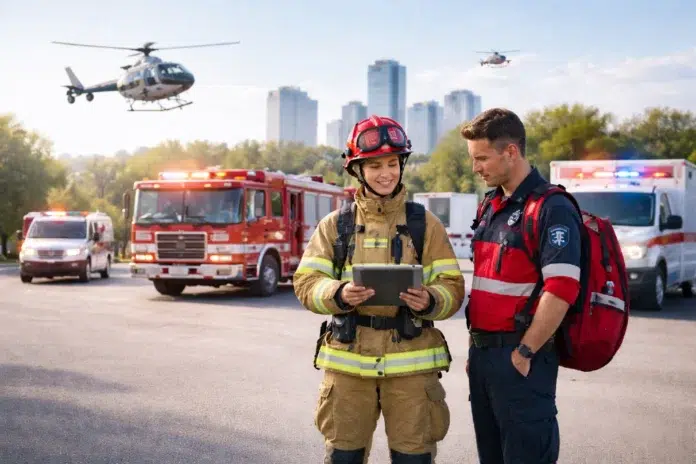
When people talk about public safety, they usually think about the people first. Police officers. Firefighters. Paramedics. Rescue teams. What often gets overlooked is the machine that gets those people where they need to go, with the right equipment, at the right time. That is where Bos Fahrzeugen comes in.
The term is closely connected to Germany’s public safety ecosystem and is commonly associated with the vehicles used by authorities and organizations responsible for security and emergency response. In practice, that means the vehicles serving police, fire brigades, rescue services, disaster relief, and related agencies that depend on fast, reliable coordination in high-pressure situations. Germany’s federal public safety communications authority describes these services as operating every day and around the clock, with secure communication at the center of their work.
That may sound technical at first, but the reality is simple. If a vehicle fails, arrives late, carries the wrong tools, or cannot stay connected in the middle of an incident, the whole response suffers. In modern operations, vehicles are no longer just transportation. They are mobile workspaces, communication hubs, data points, logistics platforms, and in some cases temporary command centers. That shift is exactly why Bos Fahrzeugen has become such an important topic in conversations about safety, readiness, and emergency modernization.
What Bos Fahrzeugen Really Means
In practical terms, Bos Fahrzeugen refers to the specialized vehicles used by public safety bodies to prevent harm, respond to incidents, and support recovery. In the German context, BOS is tied to “authorities and organizations with safety and security responsibilities,” which includes police, fire, rescue, and other approved users of the secure public safety communications network.
That matters because these vehicles are designed for work that normal passenger vehicles simply cannot handle. A patrol unit may need secure radios, mounted cameras, rapid access storage, and safe ergonomics for long shifts. A fire appliance must move personnel, water, tools, protective gear, and technical rescue equipment. An ambulance needs a treatment-ready interior where medical care can begin before the patient reaches a hospital. A disaster response vehicle may act as a field support point when fixed infrastructure is damaged or overwhelmed.
So when we talk about Bos Fahrzeugen today, we are not just describing official vehicles with lights and sirens. We are describing purpose-built systems that connect mobility, communications, safety engineering, and operational planning.
Why These Vehicles Matter More Than Ever
Emergency response has become more demanding. Cities are denser. Roads are more congested. Weather events are less predictable. Vehicle technology is changing quickly, especially with the growth of electric drivetrains, digital systems, and connected safety features. At the same time, public expectations are higher. People expect quicker response, better coordination, and more visible preparedness.
This is why vehicle quality matters so much. A public safety team can only be as effective as the platform that carries its people and gear. If the cabin layout slows down access to equipment, seconds are lost. If the digital radio is unreliable in a complex environment, teams can become fragmented. If the vehicle was not designed for modern hazards, responder safety can be compromised. German public safety communications authorities emphasize that secure and highly available communications are essential to day-to-day emergency operations, while EU transport authorities highlight that modern vehicle safety systems are now central to reducing road risk.
There is also a broader scale issue. Public safety systems are under constant pressure from call volume and complex mission types. In Berlin alone, the fire department reported more than half a million deployments in 2022 for emergencies, illness, and fires, showing how stretched urban response systems can become. Germany also relies heavily on volunteer strength in emergency relief, with the Federal Environment Agency noting that around 1.7 million voluntary helpers are involved across emergency relief organizations and that about 94 percent of active fire brigade members are in volunteer brigades. When so much depends on mixed professional and volunteer response capacity, dependable vehicles become even more important.
The Different Roles Bos Fahrzeugen Play in the Field
Not all emergency vehicles do the same job, and that is exactly the point. A modern fleet works because each vehicle is designed around a clear operational role.
Police and Security Operations
Police vehicles need flexibility. They may be used for patrol, rapid response, traffic control, evidence transport, area security, or event operations. A vehicle in this setting must support communication, visibility, endurance, and officer safety. It also needs to perform in ordinary urban traffic one moment and an urgent response environment the next.
That is one reason connected systems are becoming so important. Vehicles are now part of a wider operational network rather than isolated units. A patrol vehicle can be a moving node that links field officers with dispatch, command systems, and surrounding units.
Fire and Technical Rescue
Fire service vehicles are perhaps the clearest example of how Bos Fahrzeugen has evolved. They are no longer just trucks carrying hoses and ladders. Many are highly specialized platforms built for firefighting, rescue, hazardous materials response, water supply, command support, or technical intervention after crashes and infrastructure failures.
The pressure on these vehicles is intense. NFPA research shows that roadway incidents and vehicle-related calls represent a major share of fire department activity, with 68 percent of roadway incidents in one statistical review involving emergency medical services calls or rescues. That mix of duties means fire service vehicles must be versatile, durable, and safe to operate in unstable roadside conditions.
Ambulance and Rescue Services
In ambulance operations, vehicle design affects patient outcomes more directly than many people realize. Space, equipment placement, ride stability, onboard power, infection control surfaces, lighting, and communications all matter. The ambulance is not simply a transport van. It is the first treatment environment in many critical cases.
As emergency medicine evolves, ambulance vehicles also have to adapt to new tools, monitoring devices, and digital reporting workflows. The push toward faster information sharing between field responders and receiving facilities makes vehicle connectivity a real operational asset, not just a convenience. EU-level work on emergency communications and in-vehicle emergency systems reflects this wider shift toward integrated response.
Disaster Relief and Large-Scale Incidents
Some Bos Fahrzeugen are meant for the moments when normal systems are disrupted. Floods, storms, industrial incidents, mass gatherings, infrastructure failure, or prolonged outages all require vehicles that can do more than move personnel. They may need to provide power, shelter, communication capability, supplies, or temporary command functions.
German civil protection publications show how emergency support can depend on mobile services and adaptable municipal infrastructure when normal conditions break down. That wider resilience logic carries directly into vehicle planning. A good fleet is not only built for routine calls. It is also built for bad days.
How Technology Is Changing Bos Fahrzeugen
The biggest change in Bos Fahrzeugen is that the vehicle has become smarter. In the past, performance was mostly about engine strength, carrying capacity, and physical durability. Those things still matter, but digital capability now matters just as much.
Modern public safety vehicles increasingly depend on:
- secure digital radio systems
- onboard navigation and dispatch integration
- scene lighting and power management
- telematics for fleet monitoring
- cameras and data recording systems
- advanced driver assistance features
- compatibility with electric vehicle incident response protocols
The European Commission notes that the General Safety Regulation has introduced mandatory advanced driver assistance systems for road safety, while its road safety materials explain that ADAS can improve crash avoidance, reduce crash severity, and support post-crash phases. For emergency fleets that spend long hours in difficult traffic conditions, these systems are not cosmetic upgrades. They can reduce risk for responders and the public alike.
Event data recording and safety monitoring are part of that same trend. Better data helps agencies understand collisions, vehicle handling issues, and operational patterns. It supports procurement decisions and training changes rather than forcing agencies to rely only on anecdotal experience.
Another major issue is the rise of electric vehicles on public roads. This changes the incident landscape for responders. NFPA has published dedicated emergency response resources and guidance for responders dealing with electric and hybrid vehicles, including EV fire situations and emergency response guides from manufacturers. That is a reminder that Bos Fahrzeugen must evolve not only because public safety agencies are modernizing, but also because the road environment around them is changing.
Communication Is the Hidden Backbone
A public safety vehicle without reliable communications is only doing half the job. The German federal authority responsible for public safety digital radio makes this point very clearly. Police, fire brigades, and rescue services work nonstop, and communication is indispensable to what they do. That is why digital radio infrastructure is such a core part of the broader BOS concept.
This changes how we should think about Bos Fahrzeugen. The real value is not only in horsepower or payload. It is also in how well the vehicle connects into a live incident picture. Can crews stay in contact across agencies? Can they operate in dense urban areas or complex venues? Can the vehicle support a command function when events escalate?
That communication layer is especially important during major incidents, cross-agency operations, and large public events. Recent BDBOS updates have highlighted continued work on public safety digital radio capacity and network expansion, which reinforces how central communications remain to operational readiness.
What Makes a Good Public Safety Vehicle Today
The best Bos Fahrzeugen are not defined by flashy specifications. They are defined by operational fit. A vehicle is good if it helps crews do their jobs faster, safer, and with less friction.
That usually comes down to a few practical qualities:
| Operational need | Why it matters in modern public safety |
|---|---|
| Reliability | Breakdowns or system failures can delay life-critical response |
| Safe cabin design | Crew protection and ergonomic access reduce mistakes under stress |
| Communication integration | Dispatch and inter-agency coordination depend on constant connectivity |
| Flexible storage | Equipment has to be reachable, secure, and logically arranged |
| Road safety systems | Emergency driving is high risk, so crash prevention tools matter |
| Mission-specific build | Police, fire, EMS, and disaster relief all need different vehicle priorities |
| Maintainability | Vehicles that are hard to service create downtime and budget pressure |
These are not abstract procurement ideals. They shape what happens on actual calls. A better layout can save seconds. Better visibility can prevent a collision. Better power management can keep medical devices running. Better connectivity can stop crews from working with outdated information.
Real-World Pressure Points Agencies Face
Even well-equipped fleets face trade-offs. Budgets are limited. Vehicle lead times can be long. Urban environments demand compact agility, while rural coverage often needs endurance and multi-role capability. There is also growing pressure to balance sustainability with performance.
That means agencies are asking harder questions. Should a fleet move toward low-emission vehicles now, or wait for charging and support infrastructure to improve further? How much digital complexity is useful before it starts creating new maintenance burdens? How do agencies standardize equipment without making vehicles too rigid for local needs?
These are real operational questions, not theory. Public safety fleets sit at the intersection of procurement, engineering, staffing, infrastructure, and policy. The conversation around Bos Fahrzeugen is really a conversation about how prepared a society wants to be.
Frequently Asked Questions About Bos Fahrzeugen
Are Bos Fahrzeugen only used in Germany?
The terminology is most closely tied to the German BOS framework, but the underlying idea applies everywhere. Every country depends on specialized public safety vehicles for police, fire, rescue, and disaster response.
Are these vehicles mainly about transportation?
No. Transportation is only one part of the job. Modern Bos Fahrzeugen often function as mobile communication units, treatment spaces, rescue platforms, equipment carriers, and command tools.
Why is communication mentioned so often?
Because without secure communication, even a fast response can become disorganized. Official public safety communications authorities in Germany treat reliable connectivity as fundamental to police, fire, and rescue operations.
How is vehicle technology changing this field?
Advanced driver assistance systems, telematics, onboard data tools, digital dispatch links, and evolving emergency call systems are all changing how fleets are designed and managed. EU institutions have tied many of these technologies directly to safer roads and better post-crash response.
Conclusion
In the end, Bos Fahrzeugen is about much more than official vehicles with special markings. It is about how modern societies move safety into motion. These vehicles carry the people, tools, and systems that make emergency response possible. They support police patrols, fire suppression, medical care, technical rescue, and disaster operations in ways that are easy to miss until something goes wrong.
What makes the topic so important today is the fact that public safety work is becoming more connected, more technical, and more demanding. Secure radio networks, safer vehicle systems, changing road conditions, and rising expectations have all raised the standard. A strong fleet is no longer just a matter of transportation. It is a matter of readiness.
That is why Bos Fahrzeugen deserves serious attention in any conversation about modern public safety. The vehicle may not be the first thing people think about in an emergency, but it is often one of the first things that makes an effective response possible.
A well-designed public safety vehicle does not only arrive. It arrives prepared, connected, and ready to work. That is the real role of Bos Fahrzeugen in modern public safety operations.

